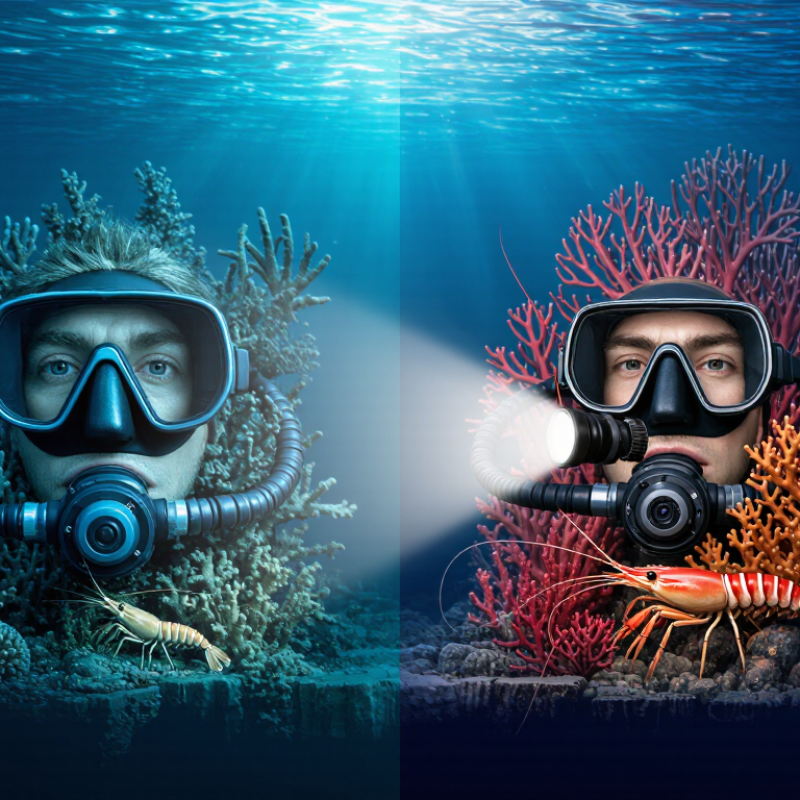
| Light output | Water absorbs and scatters light, and natural colors become less vivid with increasing depth and distance. A camera light restores color to nearby subjects. | Output is commonly specified in lumens. Video lights range from compact, lower-output models to high-output lights with several thousand lumens or more. | Choose output for your subject and shooting distance. More lumens can help illuminate larger scenes, but do not guarantee better footage if the beam is poorly matched to the lens. |
| Beam angle | A beam that is too narrow can create a bright central spot; a beam that is too wide may waste light outside the frame. | Manufacturers may list beam angle in air or underwater; these figures are not always directly comparable. Wide beams are often preferred for video. | Match the underwater beam to the camera’s field of view. For wide-angle lenses, look for a broad, even beam that covers the frame without hard edges. |
| Color temperature | Color temperature affects the appearance of illuminated subjects and how the light blends with ambient sunlight. | Many underwater video lights are rated around 5,000–6,500 K, though available settings vary by model. | A neutral daylight setting is a versatile starting point. Adjustable color temperature can help balance light in changing conditions. |
| Color rendering | High-quality color rendering helps reds, oranges, and other hues look more natural in recorded images. | Check the Color Rendering Index (CRI) or other published color-rendering measurements. Ratings and test methods may differ between manufacturers. | Compare published measurements when available, but also review underwater sample footage made at similar depth and distance. |
| Brightness control | Adjustable output helps prevent close subjects from appearing overexposed and can extend battery life. | Look for multiple power levels or smooth dimming, clearly marked controls, and buttons that are easy to operate with gloves. | Choose a light with a low setting for nearby subjects and a higher setting for larger scenes or greater working distances. |
| Continuous runtime | Battery life determines how long the light can operate during a dive. Maximum-output runtime is usually shorter than runtime at reduced power. | Check the stated runtime at each brightness level, charging time, battery type, and whether the battery is replaceable. | Allow a reserve for setup and unexpected delays. Treat published runtime as a guide because temperature, battery age, and output settings affect performance. |
| Depth rating | Water pressure increases with depth, so the housing and seals must be suitable for the intended dive depth. | Check the stated maximum operating depth and follow the manufacturer’s inspection and maintenance instructions. | Select a rating that exceeds your planned maximum depth. A depth rating does not remove the need to inspect seals and close the housing correctly. |
| Mounting and positioning | Light placement affects shadows, reflections, and backscatter—the visible specks caused when light illuminates particles close to the lens. | Check compatibility with your tray, arms, clamps, and ball or other mounting connections. | Position lights away from the lens and angle them outward when practical. This can reduce backscatter, especially in water with suspended particles. |
| Build and controls | Salt water, repeated handling, and low visibility make dependable construction and simple operation important. | Look for a corrosion-resistant housing, secure seals, clear battery-status indicators, and controls that remain usable with gloves. | Rinse the light in fresh water after use and follow its care instructions. Inspect O-rings and sealing surfaces before closing the housing. |
| Strobe compatibility | Video lights provide continuous illumination, while strobes produce brief flashes for still photography. A continuous light may also be useful for focusing or close-up work. | Confirm whether your camera setup needs continuous light, a strobe, or both; they serve different photographic purposes. | For video, prioritize an even continuous beam. For still photographs in daylight or at greater distances, a compatible strobe may be more effective. |



 Close
Close