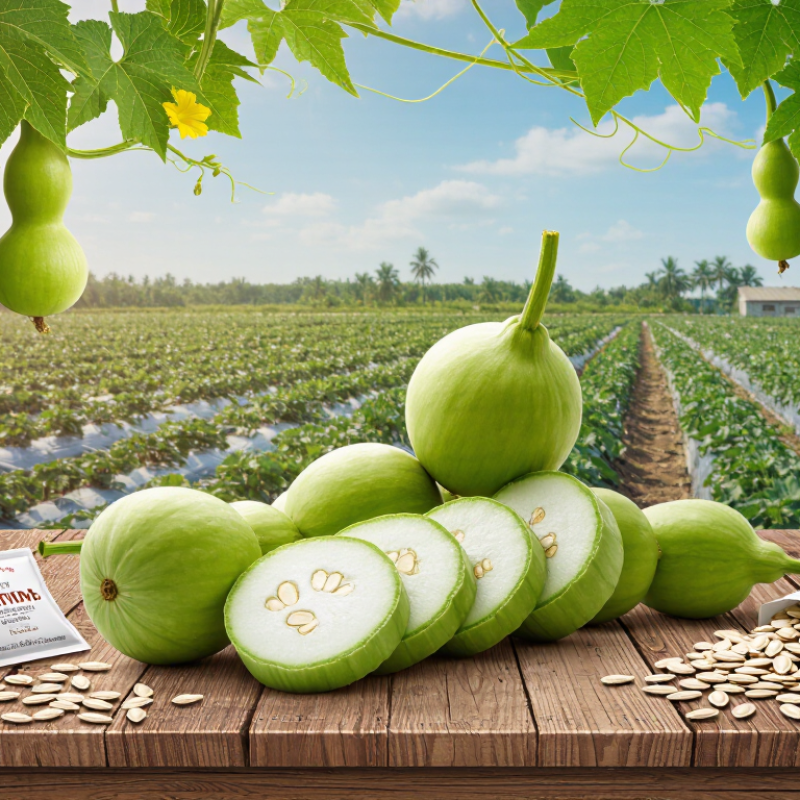
| Botanical identity | Lagenaria siceraria (Molina) Standl.; lot identity and variety should match the purchase specification. | — | Seed lot identity and purity examination under the current ISTA Rules. | Prevents varietal substitution and supports accurate customs, labeling, and production planning. |
| Physical purity | Target at least 98.0% pure seed by mass; inert matter and other seeds should be separately reported. | % by mass | ISTA purity analysis: pure seed, other seeds, and inert matter fractions. | Reduces cleaning losses, sowing-rate errors, and the risk of unwanted plant material entering the crop. |
| Germination capacity | Target at least 85% normal seedlings under the specified laboratory method; record normal and abnormal seedlings separately. | % normal seedlings | ISTA germination testing using the prescribed method for the species or an agreed validated method. | Provides a direct basis for calculating field sowing rates and expected plant establishment. |
| Analytical purity of the test sample | Test results should reconcile to approximately 100% across pure seed, other seeds, and inert matter fractions, subject to permitted rounding. | % by mass | ISTA purity reporting and result calculation principles. | Improves traceability and helps identify weighing, sampling, or classification inconsistencies. |
| Seed moisture | Preferred shipment range: 6–9%, unless the buyer’s validated storage protocol specifies another range. | % fresh mass | ISTA moisture determination method appropriate to the seed and laboratory equipment. | Supports safer storage and transport; moisture outside the agreed range can accelerate deterioration or increase mechanical risk. |
| Seed health | No regulated quarantine pests or pathogens detected in the submitted sample; test targets must follow the destination country’s import requirements. | As required | ISTA seed-health testing methods, together with official phytosanitary requirements. | Reduces border rejection, quarantine delays, and the risk of introducing seed-borne organisms. |
| Physical damage | Visually sound lot with no evidence of widespread cracking, insect damage, mold, or severe abrasion; damaged seeds should be quantified when material. | Visual and % when quantified | Sample inspection supporting purity and quality assessment; use a documented grading protocol. | Protects germination performance and lowers the probability of hidden storage or handling damage. |
| Seed size uniformity | Report thousand-seed weight and size distribution for each lot; establish a buyer-specific tolerance around the agreed lot profile. | g / 1,000 seeds | Seed weight determination and documented lot sampling procedure. | Helps calibrate precision seeders, estimate seed counts per package, and compare lots consistently. |
| Lot traceability | Each lot should have a unique lot code, harvest or production year, test date, sample date, origin, and storage history. | Documented record | ISTA sampling, sample identification, reporting, and laboratory record-control practices. | Enables claim investigation, stock rotation, repeat testing, and regulatory documentation across borders. |
| Sampling integrity | Submit a representative composite sample drawn from multiple positions in the lot using a documented sampling plan. | Documented procedure | ISTA Rules for obtaining primary samples, composite samples, and submitted samples. | Reduces sampling bias and makes laboratory results more representative of the commercial lot. |
| Test report completeness | Report species, lot reference, sample details, test methods, results, units, laboratory identification, and test date. | Complete report | ISTA-oriented seed analysis reporting and certificate documentation. | Creates a consistent quality record for suppliers, importers, customs authorities, and growers. |



 Close
Close