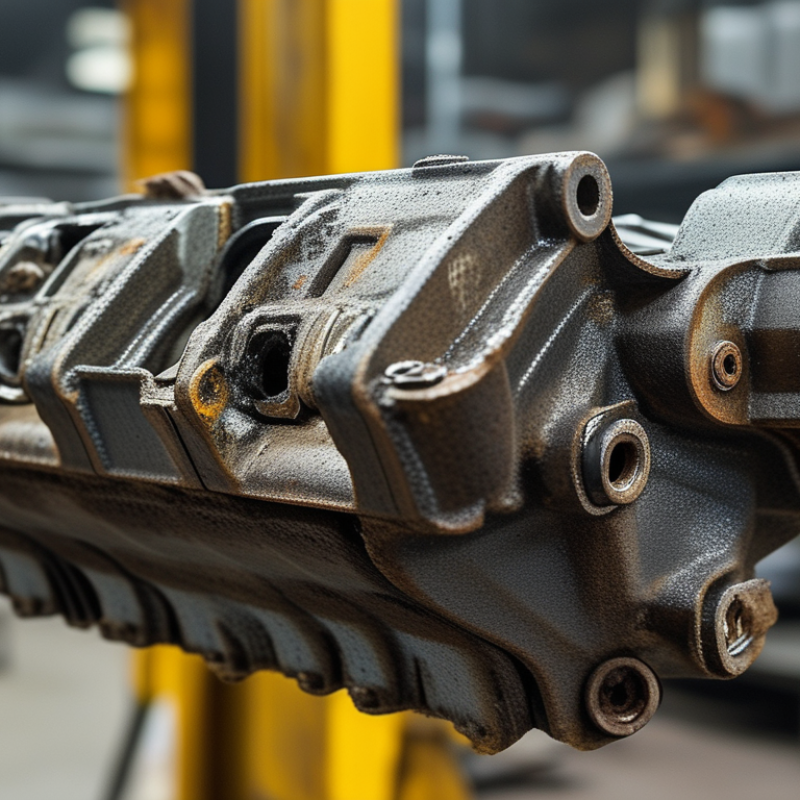
| Rubber cracking or splitting | The rubber cushion loses elasticity and develops surface cracks, deep splits, or separation from its bonded metal sleeve. | Age, heat from the engine or exhaust system, ozone exposure, repeated vibration, and normal material fatigue. | Increased vibration at idle, a harsh feel through the body, and clunking during acceleration or braking. | Visible cracks, hardened rubber, torn edges, or excessive movement when the engine is gently loaded. | Replace the damaged mount cushion and inspect nearby mounts for similar aging. |
| Rubber collapse or compression set | Continuous engine weight and vibration permanently compress the rubber, reducing the designed clearance and support height. | Long-term loading, excessive engine weight on the mount, heat exposure, and weakened rubber material. | Low-frequency vibration, uneven engine position, contact between components, or a noticeable change in drivetrain alignment. | The engine appears lower on one side, the rubber looks flattened, or the mount has little remaining clearance. | Replace the collapsed mount and check for exhaust, hose, wiring, or drivetrain contact. |
| Hydraulic fluid leakage | A hydraulic engine mount loses its damping fluid after the internal diaphragm, seal, or housing develops a leak. | Rubber diaphragm deterioration, impact damage, excessive heat, age, or contamination from oil and other fluids. | More engine shake at idle, vibration during gear engagement, and increased movement during acceleration. | Wet or oily residue on the mount itself; first verify that the fluid is not leaking from above. | Replace the hydraulic mount. Clean the area and repair any external oil or coolant leak that could cause repeat damage. |
| Metal-to-metal contact | The cushion loses enough material or support that the inner and outer metal sections touch under load. | Severe rubber deterioration, incorrect installation, overloading, or a broken mounting bracket. | Sharp clunks, knocking sounds, harsh vibration, and impact noises when starting, stopping, or changing direction. | Polished impact marks, chipped metal, damaged fasteners, or movement that is much greater than normal. | Avoid continued heavy use and replace the failed mount after checking the brackets and fasteners. |
| Bond separation | The adhesive bond between the rubber cushion and metal plate or sleeve breaks, allowing the components to move independently. | Repeated torsional loading, heat, oil contamination, manufacturing-age deterioration, or impact stress. | Sudden clunking, excessive engine rocking, vibration changes, and movement when torque is applied. | A visible gap, lifted rubber edge, shifted metal plate, or rubber that moves separately from the mount housing. | Replace the mount; bonded rubber mounts are not reliably repaired with adhesive. |
| Oil, fuel, or coolant contamination | Chemical exposure softens, swells, or weakens the rubber and reduces its ability to control engine movement. | Leaking valve covers, seals, hoses, cooling-system components, or fuel-system parts located above the mount. | Soft or swollen rubber, increased vibration, and premature failure after a fluid leak. | Oily, wet, glossy, swollen, or unusually soft rubber; fluid trails may lead from a higher component. | Repair the leak, replace the contaminated cushion, and remove residue without damaging surrounding components. |
| Excessive engine movement | The mount no longer limits rotational movement produced by engine torque, especially during acceleration and load changes. | A failed mount, worn transmission mount, damaged torque rod, loose fastener, or incorrect alignment. | A noticeable lurch, clunk, drivetrain shudder, or movement of the engine when the throttle is applied. | With the parking brake applied and appropriate safety precautions, a qualified technician can observe movement during controlled loading. | Inspect the complete mounting system rather than replacing only the mount that is easiest to see. |
| Loose, stretched, or damaged fasteners | The cushion may be intact, but insufficient clamping force or damaged threads allows the mount to shift and transmit impact loads. | Incorrect tightening, repeated vibration, collision damage, corroded threads, or reuse of a fastener where replacement is required. | Clicking, clunking, shifting noise, unusual vibration, or movement around the mounting bolt. | Visible bolt movement, damaged threads, missing hardware, elongated holes, or witness marks around the bracket. | Repair the mounting interface and tighten fasteners to the vehicle manufacturer’s specified procedure and torque. |
| Bracket or mounting structure damage | A bent, cracked, or corroded bracket changes the load path and can overload an otherwise serviceable cushion. | Collision impact, severe vibration, corrosion, overloading, or a previous repair performed without correct alignment. | Persistent vibration after mount replacement, misalignment, unusual noises, or rapid repeat failure. | Cracks, bends, corrosion perforation, fresh scoring, uneven bolt-hole alignment, or abnormal contact marks. | Repair or replace the damaged structure before installing a new engine mount cushion. |
| Excessive heat damage | High temperatures accelerate rubber hardening, drying, cracking, and loss of damping performance. | Poor heat shielding, exhaust leaks, restricted airflow, high under-hood temperatures, or prolonged heavy-duty operation. | Vibration that worsens as the engine warms, brittle rubber, and recurring mount deterioration. | Discoloration, glazing, brittleness, melted areas, or evidence of direct exhaust heat exposure. | Correct the heat source or shielding problem and replace the heat-damaged cushion. |



 Close
Close