Why Do Hotels Use DND Signs for Guest Room Privacy?
A quiet hallway can still feel busy: a housekeeping cart rolls past, a guest pauses at a door, and a small sign sends a clear message. Hotel Dnd Signs help guests request privacy without needing to explain themselves. The familiar “Do Not Disturb” notice can also help staff coordinate room visits and respect a guest’s stated preference. Small signal. Real impact.
For this introduction, hotel operations specialist Jordan Lee is a fictional illustrative voice, not a cited industry source. Lee’s example observation is: “A DND sign is a simple request; good service means noticing it and responding with care.” That principle matters because privacy is personal, while hotel service depends on communication. A sign cannot explain every situation, and staff procedures vary. It should not be treated as a promise that no one will enter under any circumstances.
The practical details are easy to picture: a sign hangs from the handle, facing the corridor, while a guest rests or takes a private call. Staff can check the displayed request before knocking, following the property’s procedures. Clear wording helps. So does a clean, visible sign that fits the door and is easy to read. Yet the system is not perfect. Signs can fall, go unnoticed, or remain in place after a guest leaves. That deserves reflection. Why do hotels use DND signs for guest room privacy? The answer begins with a modest tool, but it also depends on attentive people, consistent communication, and respect for the guest’s space.
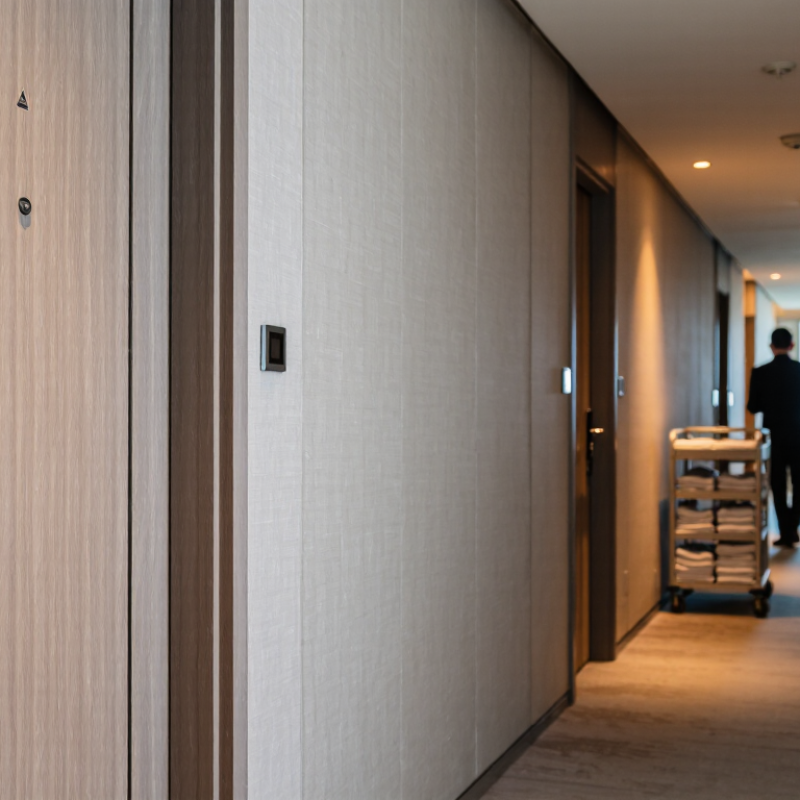
What a Do Not Disturb Sign Means in a Hotel
A Do Not Disturb sign tells hotel staff that a guest wants privacy and does not want routine room visits. It usually hangs on the outside door handle, where housekeeping can see it before knocking. The message is simple, but it can cover different needs: sleeping after a late arrival, taking a private call, or resting between outings.
A sign does not always mean the guest needs nothing. They may still want fresh towels or have a question for the front desk. Guests can call or visit reception to ask about service without removing the sign. Hotel procedures vary, so staff may follow specific steps when a sign stays up for a long time. For urgent concerns, staff may need to check on a room according to the property’s safety procedures. Privacy matters. So does wellbeing.
For a smoother stay, place the sign clearly on the outside handle, not inside the room. If you want cleaning later, check whether the hotel offers a preferred service time or another way to request it. A small detail can help: remove the sign when you leave if you are comfortable with staff servicing the room. Still, plans change, and the sign’s meaning can feel less clear during a busy day. A quick call to the front desk can prevent confusion.
How Guests Use DND Signs to Control Room Access
A “Do Not Disturb” sign gives guests a simple way to signal that they want their room left undisturbed. It can be useful during a nap, a work call, or a quiet morning. Hung on the outside handle, the sign helps housekeeping and other hotel staff recognize a guest’s preference before knocking or entering. It is a request, not a replacement for checking the hotel’s room-access procedures.
Guests can use the sign to manage access during their stay. For example, someone taking a video call might hang it before settling at the desk, while a family may use it during a child’s nap. Remove the sign when you are ready for routine service. If you need fresh towels or have a time-sensitive request, contact the front desk directly rather than assuming staff will know when to return. Small detail, big difference. Still, signs can be missed, so guests should follow any hotel guidance and secure personal belongings.
Tips: Hang the sign where it is easy to see, usually on the room’s exterior handle. Check the hotel’s service options if you want cleaning at a particular time. If you feel unsure about who is at the door, call the front desk using the number provided in your room. A sign helps set a boundary, but clear communication works better.
Why DND Signs Help Protect Guest Privacy
Why DND Signs Help Protect Guest Privacy
A Do Not Disturb sign gives guests a simple way to signal that they want their room left undisturbed. Hung on the outside doorknob, it tells housekeeping staff to pause before entering for routine cleaning. That small visual cue can protect quiet time during a call, a nap, or a private conversation. No explanation is needed.
Clear signals matter. Hotel staff may not know whether a guest is sleeping, changing clothes, or simply taking a quiet break. The sign helps reduce unnecessary interruptions and gives guests more control over their personal space. It can also prevent the awkward moment of a knock being followed by a door opening too soon. Details vary, and signs cannot replace careful staff procedures, but they offer a useful reminder to check before entering.
Guests should place the sign where it is easy to see, rather than leaving it on a desk inside the room. A clearly displayed sign helps staff notice it from the hallway. It is not a perfect system: a sign can fall, or someone may overlook it. Still, it makes a private preference visible without requiring a conversation.
How Hotel Staff Respond to a DND Sign
When a “Do Not Disturb” sign hangs from a handle, staff should treat it as a clear request for privacy, not an invitation to knock repeatedly. Housekeeping typically skips that room and records the missed service according to hotel procedure. The room may stay untouched. If the sign remains up for hours, a supervisor may check the room’s status through approved internal channels, without entering simply to satisfy curiosity.
A delay can affect service. The American Hotel & Lodging Association’s 2023 member survey found that 76% of responding hotels reported staffing shortages. That figure does not measure DND incidents, but it helps explain why teams may need to reschedule cleaning rather than send another attendant immediately. At a practical level, staff can leave a discreet message, note the room for a later pass, or contact the guest through the hotel’s usual service channel. No pressure.
If a guest needs towels or fresh linens, they can contact the desk and request a drop-off without room entry. Staff should confirm the preferred method, document the request, and avoid promising an exact time unless the team can meet it. Small details matter: a quiet knock, a clear note, and no repeated interruptions. Procedures differ between properties, and a missed service can still happen. That deserves a thoughtful response, not blame.
When DND Signs May Be Overridden for Safety or Emergencies
A “Do Not Disturb” sign protects a guest’s rest and gives staff a clear signal to pause routine service. It is not an absolute barrier during an urgent safety concern. The National Fire Protection Association reported an average of 3,900 hotel and motel structure fires annually in the United States from 2014 to 2018. That figure supports clear emergency procedures, not casual room entry.
If smoke, an alarm, a medical call, or another credible danger raises concern, trained staff may follow hotel policy to check the room, contact emergency responders, or use an authorized key. Procedures vary by property and situation. Staff should announce themselves, explain the reason, and limit entry to what the response requires. A sign alone cannot tell staff whether a guest is safe. Still, overriding it without a real concern can undermine trust.
Tips: If you need uninterrupted rest, tell the front desk when you expect to be available. Keep your phone nearby and respond to calls when possible. For hotel teams, document the concern, follow the property’s emergency protocol, and involve a supervisor when time allows. Small details matter: a calm knock and a clear explanation can reduce alarm. Policies are imperfect; reviewing them after unusual incidents helps reveal gaps.
Why Do Hotels Use DND Signs for Guest Room Privacy? — When DND Signs May Be Overridden for Safety or Emergencies
| Situation | Purpose or concern | Typical staff response | Privacy and safety consideration |
| Guest displays a “Do Not Disturb” sign | Signals that the guest does not want routine interruptions, such as housekeeping or non-urgent service visits. | Staff generally defer routine entry and follow the property’s procedures for checking on the room. | The sign communicates a preference; it does not necessarily prevent all contact or override emergency procedures. |
| Routine housekeeping or maintenance request | Allows the guest to rest, work, or enjoy time in the room without an unexpected visit. | Staff may postpone service, leave a notice, or contact the guest through an approved method. | Respecting the sign helps protect guest privacy and reduces unnecessary room entry. |
| Guest requests a specific service time | Balances the guest’s preference for privacy with the need to provide requested services. | Staff can arrange a suitable time with the guest, subject to operational procedures. | Clear communication helps avoid avoidable interruptions and misunderstandings. |
| Credible indication of an immediate medical emergency | A person inside may need urgent assistance or may be unable to respond. | Staff follow emergency procedures, which may include contacting emergency services and entering when justified and authorized. | Any entry should be limited to what is reasonably necessary to address the immediate risk. |
| Fire, smoke, flooding, or another immediate hazard | Delay could put the guest or others at risk or cause serious property damage. | Staff follow the property’s emergency plan and applicable instructions from emergency responders. | Life safety takes priority during a genuine emergency; staff should document and report actions according to procedure. |
| Welfare concern after repeated unanswered contact | Unusual circumstances may raise concern that a guest needs assistance. | Staff follow established escalation steps, which may include a supervisor check or contacting emergency services, depending on the circumstances. | A DND sign alone is not proof of an emergency; decisions should be based on specific, credible information. |
| Legal or official emergency direction | An authorized official may need access under applicable law or emergency procedures. | Staff verify the request as practicable and follow applicable law and property policy. | Access should be handled discreetly, with the guest’s privacy protected as far as circumstances allow. |
Note: Hotel procedures and legal requirements vary by location and situation. A DND sign normally discourages routine visits, while credible emergencies may require a different response under applicable law and established safety procedures.



 Close
Close