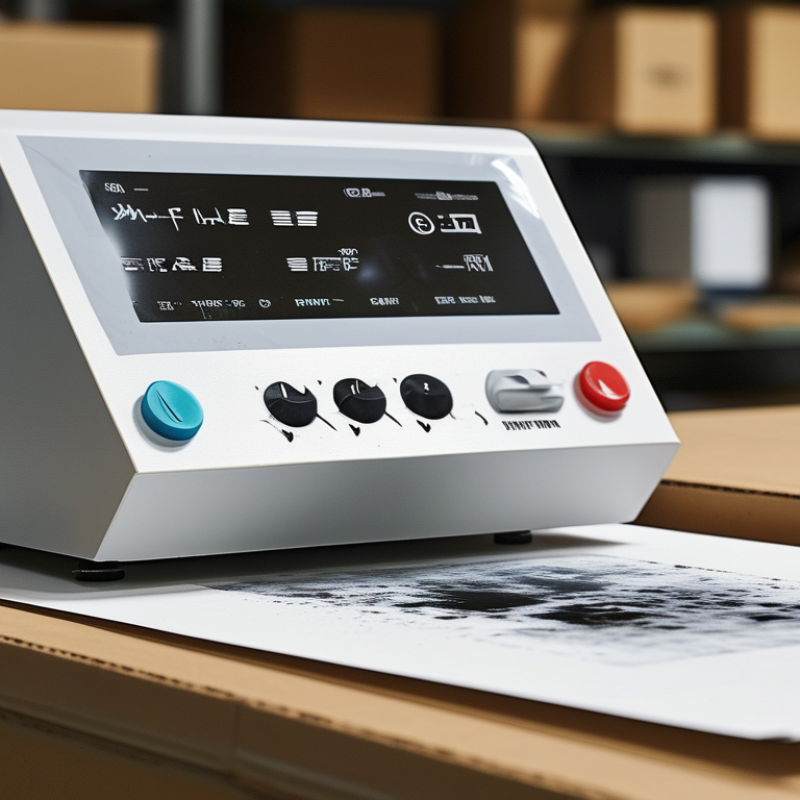
| Purpose of the tester | Measures the resistance of a printed ink film to rubbing, scuffing, and transfer. | A printed specimen is rubbed against a specified counter-surface under controlled conditions. | Helps determine whether printed graphics can withstand handling, stacking, transport, and use. |
| Common test modes | Dry rub, wet rub, and wet-transfer testing. | The counter-surface may be dry or conditioned with water or another specified liquid, depending on the applicable method. | Different environments can affect ink adhesion, abrasion, and color transfer. |
| Typical specimen size | Often approximately 100 mm × 150 mm, or the size required by the selected standard. | The printed area must be large enough to complete the specified rubbing path without edge interference. | Consistent specimen dimensions improve repeatability between tests. |
| Counter-surface | Unprinted paper, coated paper, board, or another specified rubbing material. | The counter-surface is fixed to the rubbing head and replaced when the method requires a fresh surface. | Surface roughness, absorbency, and cleanliness can change the measured result. |
| Applied load | Common laboratory settings are about 2 N to 20 N, depending on the method and application. | A calibrated weight or loading mechanism applies a defined force during the rubbing cycle. | Higher force generally produces more severe mechanical stress and may increase ink transfer or surface damage. |
| Rubbing stroke length | Typically about 100 mm per forward-and-back movement, subject to the selected test procedure. | The instrument moves the rubbing head over a defined linear distance. | A fixed stroke length ensures that results from different specimens can be compared. |
| Rubbing speed | Frequently controlled within approximately 20–100 cycles per minute, depending on the method. | The drive system maintains a repeatable speed throughout the test. | Speed influences frictional heat, contact time, and the severity of abrasion. |
| Number of rub cycles | Common checkpoints include 10, 20, 50, 100, 200, or 500 cycles. | The specimen is inspected at the required cycle count or tested until a defined failure criterion is reached. | More cycles represent repeated handling and provide a basis for durability comparisons. |
| Conditioning environment | A common laboratory condition is 23 ± 2 °C and 50 ± 5% relative humidity. | Specimens and counter-sheets are conditioned before testing when required by the procedure. | Paper moisture and ink-film properties can change with temperature and humidity. |
| Primary visual result | Ink transfer, scuffing, whitening, gloss change, exposed substrate, or loss of printed detail. | The tested print and rubbing surface are examined under consistent lighting and viewing conditions. | Visual inspection identifies practical damage that may not be captured by a single numerical value. |
| Instrumental result | Change in optical density, color difference, reflectance, or image coverage. | Measurements are taken before and after rubbing using suitable optical or image-analysis equipment. | Numerical measurements support objective comparison between ink, substrate, and curing conditions. |
| Example rating scale | 1 = severe transfer or damage; 5 = no readily visible transfer or damage. | A rating is assigned using a documented visual reference or laboratory acceptance criteria. | A defined scale makes pass/fail decisions easier, but the scale must be reported with the result. |
| Key factors affecting performance | Ink formulation, pigment concentration, drying or curing, coating, substrate porosity, and print-film thickness. | Variables are controlled or recorded so that changes in rub resistance can be traced to the process. | Rub resistance is a system property rather than a characteristic of ink alone. |
| Recommended report items | Specimen identification, substrate, ink type, print date, conditioning, load, speed, stroke, cycles, counter-surface, and result. | All test conditions and observations are recorded with representative images when appropriate. | Complete reporting improves traceability and prevents misleading comparisons between different test setups. |



 Close
Close