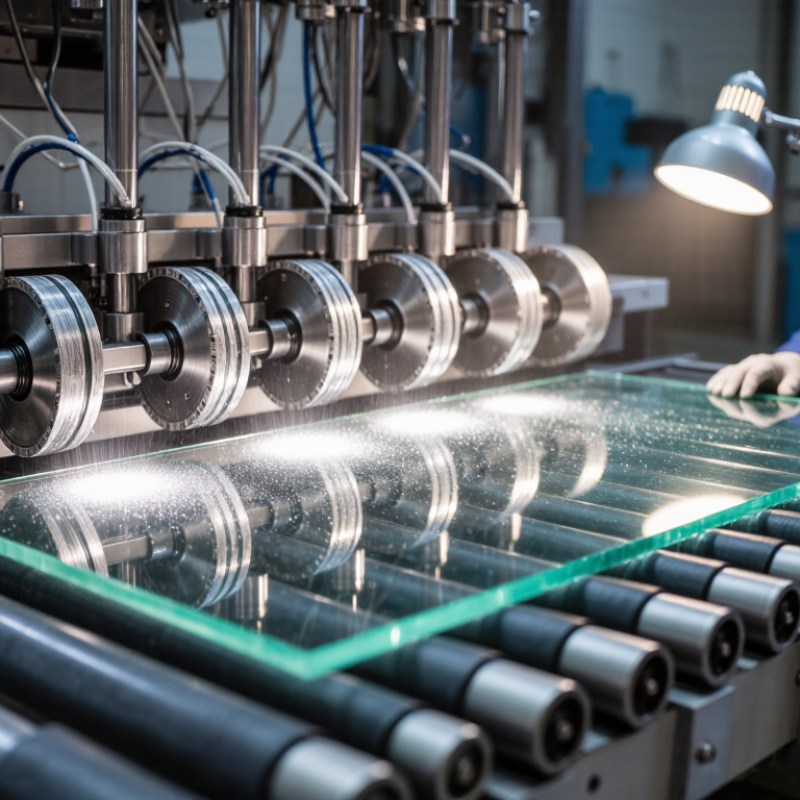
| Conveyor or Worktable | Supports and moves the glass through the machine. | Rollers or a supported table guide the glass at a controlled feed rate so the edge meets the grinding tools consistently. |
| Guide Rails and Clamping System | Keeps the glass aligned and stable. | Adjustable guides and clamps help prevent unwanted movement while the edge is being processed. Correct setup helps produce a more even chamfer. |
| Abrasive Grinding Wheels | Remove material from the edge to form the chamfer. | Rotating wheels contact the glass edge. Depending on the machine setup, successive abrasive stages can shape the bevel, smooth the ground surface, and refine its finish. |
| Spindles and Drive Motors | Rotate the grinding wheels. | Motors drive the spindles, which hold and turn the wheels. The wheel position and machine settings determine where and how the abrasive contacts the glass. |
| Water-Cooling and Rinse System | Cools the grinding area and carries away glass particles. | Water is directed toward the wheel-to-glass contact point during processing. This helps limit heat buildup and flush away abrasive residue and glass debris. |
| Angle and Position Adjustments | Set the chamfer’s orientation and dimensions. | Adjustments position the glass, guides, or grinding heads to achieve the required bevel angle and width, within the machine’s design limits. |
| Control Panel | Sets and monitors operating parameters. | The operator uses the controls to start and stop the machine and, where supported, adjust settings such as feed speed and grinding-head position. |
| Guards and Emergency Stop | Help protect the operator during operation. | Guards separate the operator from moving parts and the grinding area. An emergency-stop control provides a way to halt machine operation quickly when needed. |



 Close
Close