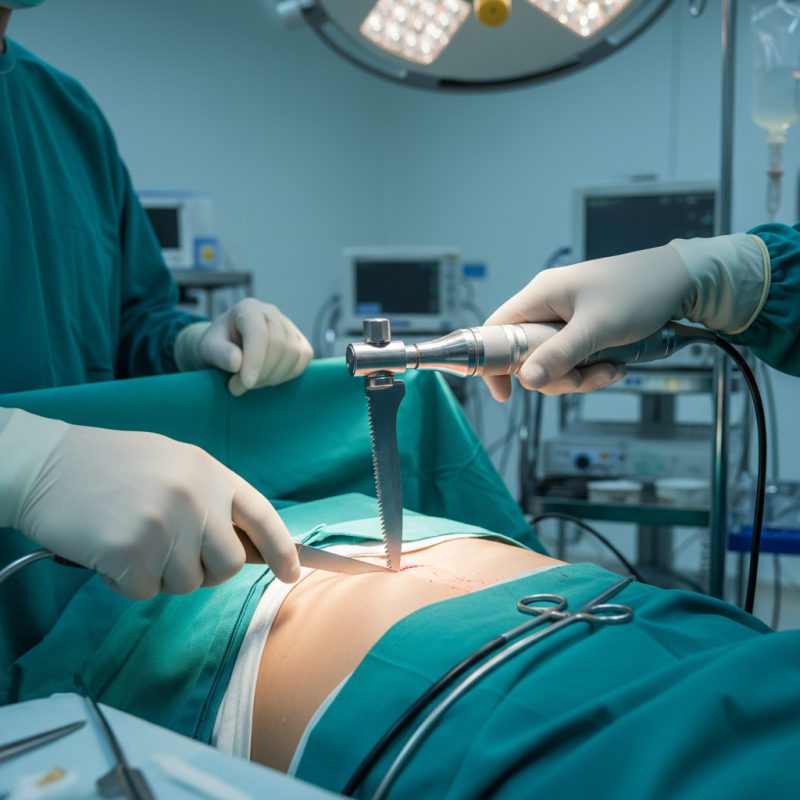
| Cardiac Surgery | Used to access the heart for various procedures. | Ensure proper alignment of the saw for a clean cut. | Wear protective gear and maintain a sterile field. |
| Thoracic Surgery | Accessing the lungs and mediastinum. | Use padding to stabilize the saw and prevent slipping. | Maintain a steady hand and control speed. |
| Heart Transplant | Essential for exposing the heart during transplantation. | Mark incision points carefully to avoid tissue damage. | Use suction to minimize blood loss and visibility issues. |
| Sternal Reconstruction | Repairing sternal defects due to injury or infection. | Evaluate the angle of approach for optimal cutting. | Check for any underlying structures before cutting. |
| Pediatric Cardiac Surgery | For procedures in children with heart defects. | Use a smaller saw blade for precision. | Monitor vitals closely during the procedure. |
| Pulmonary Procedures | Accessing pulmonary arteries and veins. | Remove the bone flaps carefully after cutting. | Maintain high levels of sanitation to prevent infection. |
| Minimally Invasive Surgery | Used in advanced techniques to reduce recovery time. | Incorporate video-assisted methods when applicable. | Ensure high-definition tools are calibrated and functional. |
| Research and Training | Training medical professionals in surgical techniques. | Conduct simulations and hands-on training. | Set strict protocols for practice sessions. |
| Emergency Situations | Vital in trauma cases requiring immediate access. | Work swiftly and efficiently under pressure. | Ensure backup systems are available for essential tools. |



 Close
Close