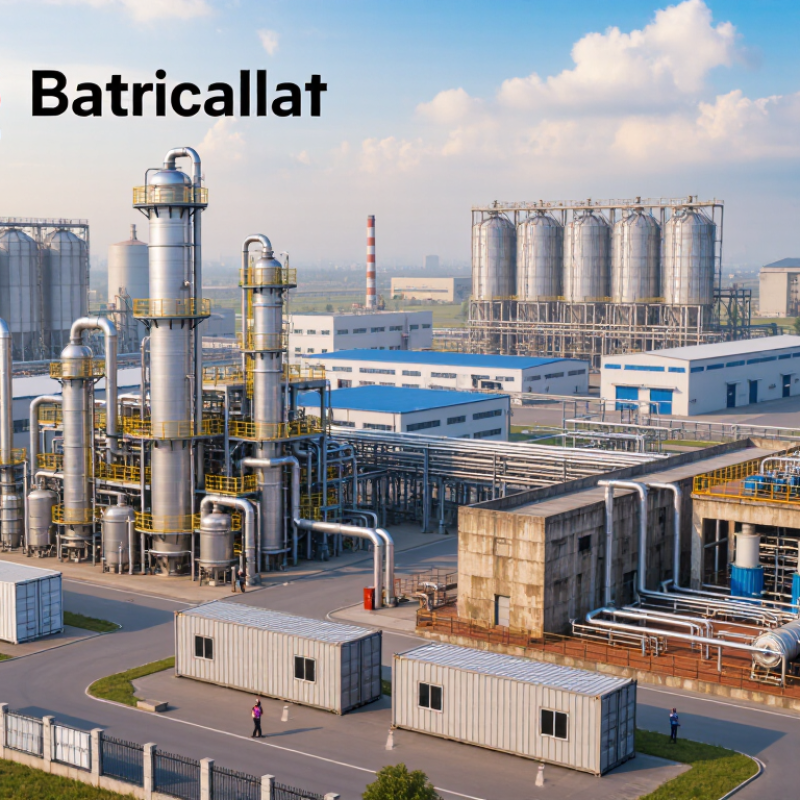
| Formalin Production Unit | Aqueous formaldehyde solution, commonly used in urea-formaldehyde resin, melamine-formaldehyde resin, phenolic resin, disinfectant, and industrial chemical production. | Approximately 10,000–100,000 metric tonnes per year of formaldehyde equivalent, depending on downstream integration. | Medium to high. Investment is driven by methanol storage, silver or metal-oxide catalyst technology, absorption systems, utilities, wastewater treatment, and emission-control equipment. | Continuous methanol oxidation, temperature control, explosion protection, formaldehyde absorption, off-gas treatment, leak detection, and closed loading systems. | Worker exposure control; hazardous-area electrical design; transport and storage classification; safety data sheets; local air-emission permits; wastewater and occupational hygiene requirements. | Proven operating references, catalyst performance, formaldehyde concentration control, low-methanol product specification, emergency shutdown design, maintenance support, and availability of spare parts. | High
Strong base project where local demand for wood panels and formaldehyde-based resins is expanding. |
| Urea-Formaldehyde Resin Plant | Adhesives for particleboard, medium-density fiberboard, plywood, furniture panels, flooring, and construction materials. | Approximately 20,000–150,000 metric tonnes per year of resin, often integrated with a panel mill. | Medium. Capital intensity increases with automated reactors, multiple resin grades, formaldehyde recovery, laboratory facilities, and panel-board integration. | Controlled molar ratio, staged pH and temperature profiles, reactor cooling, viscosity monitoring, storage stability control, and formaldehyde vapor capture. | Low-emission panel requirements such as EN 717-1 E1 classification, CARB Phase 2 or equivalent requirements where applicable, product safety documentation, and workplace exposure controls. | Resin consistency, cure speed, bond strength, free-formaldehyde level, storage life, compatibility with local wood species, technical service, and ability to customize low-emission grades. | High
Large installed user base and continuing demand for lower-emission wood products. |
| Melamine-Formaldehyde Resin Plant | Decorative laminates, impregnating resins, high-moisture-resistant boards, coatings, tableware, and specialty molded products. | Approximately 10,000–80,000 metric tonnes per year of resin. | Medium to high. Requires higher-value raw materials, controlled reaction systems, specialized drying or impregnation equipment, and stronger quality-control capability. | Accurate melamine dosing, reaction endpoint control, color and clarity management, viscosity control, safe handling of hot resin, and vapor containment. | Formaldehyde emissions from finished articles, chemical classification and labeling, food-contact compliance for tableware where relevant, and restrictions on hazardous substances in imported products. | Optical appearance, curing behavior, water and stain resistance, formaldehyde emission performance, batch traceability, formulation flexibility, and application-laboratory support. | Medium to High
Attractive for premium surfaces and specialty applications, but exposed to melamine price volatility. |
| Phenol-Formaldehyde Resin Plant | Exterior-grade plywood, oriented strand board, insulation binders, foundry materials, abrasives, friction materials, and industrial coatings. | Approximately 15,000–100,000 metric tonnes per year of resin. | Medium to high. Costs depend on phenol handling, high-temperature reactors, curing systems, solvent or water-based formulations, and air-pollution controls. | Exothermic reaction management, corrosion-resistant equipment, controlled addition of phenol and formaldehyde, dust and vapor control, and safe resin packaging. | Occupational exposure limits, hazardous chemical labeling, VOC and formaldehyde emissions, fire protection, finished-product performance standards, and waste-resin management. | Heat resistance, weather resistance, cure profile, free-phenol and free-formaldehyde content, compatibility with substrates, technical approvals, and consistency across production batches. | Medium to High
Suitable for durable construction and industrial applications with higher technical barriers. |
| Paraformaldehyde Manufacturing Project | Solid formaldehyde source for agrochemicals, disinfectants, thermosetting resins, specialty chemicals, and laboratory or industrial synthesis. | Approximately 5,000–50,000 metric tonnes per year. | High relative to capacity. Requires concentration, evaporation, polymerization, drying, granulation or flaking, dust control, and moisture-proof packaging. | Controlled polymerization, temperature management, explosion-risk assessment for combustible dust, enclosed conveying, dust extraction, and sealed packaging. | Hazard classification, worker exposure control, dangerous-goods transport, dust emissions, storage stability, packaging integrity, and country-specific import documentation. | Purity, depolymerization performance, particle size, moisture content, packaging quality, shelf life, batch traceability, and reliable export logistics. | Selective
More attractive where solid formaldehyde reduces transport cost or supports specialty-chemical production. |
| Hexamethylenetetramine Project | Intermediate for foundry resin curing, rubber chemicals, explosives-related industrial applications, pharmaceuticals, and specialty chemical synthesis. | Approximately 5,000–40,000 metric tonnes per year. | Medium. Requires formaldehyde and ammonia handling, crystallization, filtration, drying, dust control, and high-quality packaging. | Controlled neutralization and crystallization, ammonia containment, corrosion management, dust explosion prevention, and automated batch monitoring. | Chemical registration, hazardous substance classification, export controls for certain applications, occupational exposure protection, and wastewater management. | Purity, crystal size, residual formaldehyde and ammonia, moisture, dissolution behavior, regulatory documentation, and application-specific technical support. | Selective
Best suited to specialty-chemical hubs with reliable downstream customers. |
| Low-Emission Wood Adhesive Upgrade | Modification of existing UF, MUF, or PF resin lines to reduce formaldehyde emissions while maintaining board strength and production speed. | Retrofit for existing resin capacity; commonly 20,000–150,000 metric tonnes per year of affected production. | Low to medium compared with a greenfield plant. Main costs include reactor controls, scavenger dosing, ventilation, recovery, laboratory equipment, and certification testing. | Precise resin formulation, improved process control, formaldehyde capture, optimized curing, emission testing, and consistent raw-material quality. | EN 717-1 E1 or stricter customer specifications, CARB or equivalent requirements where applicable, indoor-air-quality requirements, and product documentation for imported panels. | Measured emission reduction, retention of mechanical performance, retrofit compatibility, validation data, process training, and total cost per tonne of resin. | High
Often offers faster payback than a new plant because it uses existing reactors and customer channels. |
| Formaldehyde Recovery and Emission-Control System | Absorption, condensation, catalytic oxidation, thermal oxidation, or process-integrated recovery for formaldehyde-containing exhaust streams. | Designed according to exhaust flow; commonly 500–50,000 Nm³ per hour per process section. | Low to medium for a retrofit; medium to high for a complete integrated system with recovery, oxidation, monitoring, and energy integration. | Continuous emission monitoring, reliable fans and scrubbers, corrosion-resistant materials, automatic alarms, bypass prevention, and emergency ventilation. | Local air permits, workplace exposure limits, stack testing, hazardous-area requirements, environmental reporting, and documented control efficiency. | Guaranteed removal efficiency, energy consumption, pressure drop, corrosion resistance, instrument reliability, commissioning support, and lifecycle maintenance cost. | High
Compliance-driven demand is strong for existing plants facing stricter emission limits. |
| Formaldehyde-Based Textile Finishing Resin Plant | Durable-press, crease-resistant, shrink-control, and specialty finishing chemicals for cotton and blended fabrics. | Approximately 5,000–30,000 metric tonnes per year. | Low to medium. Investment is mainly in batch reactors, blending, filtration, packaging, laboratory testing, and wastewater treatment. | Controlled etherification or resin finishing chemistry, low-free-formaldehyde formulations, batch traceability, ventilation, and safe liquid handling. | Restricted-substance lists, finished-garment formaldehyde limits, textile-labeling requirements, wastewater controls, and customer chemical-management protocols. | Fabric hand feel, durability after washing, low residual formaldehyde, shade compatibility, recipe support, testing capability, and customer approval history. | Medium
Suitable for textile-producing regions, but demand depends heavily on export-market requirements. |
| Specialty Formaldehyde Derivatives Plant | Resin modifiers, preservatives, disinfectant intermediates, agricultural intermediates, coating additives, and other downstream chemicals. | Approximately 1,000–20,000 metric tonnes per year per product family. | Medium to high per tonne of capacity because of smaller scale, multipurpose reactors, purification, analytical equipment, and product-development costs. | Flexible batch processing, contamination control, reaction calorimetry, solvent recovery, closed charging, and product-specific waste treatment. | Chemical registration, product-specific hazard classification, customer restricted-substance requirements, transport rules, and environmental permits. | Intellectual-property management, purity and impurity profile, scale-up capability, analytical documentation, minimum order flexibility, and secure raw-material sourcing. | Selective
Potentially high margin, but dependent on validated applications and long customer-qualification cycles. |



 Close
Close