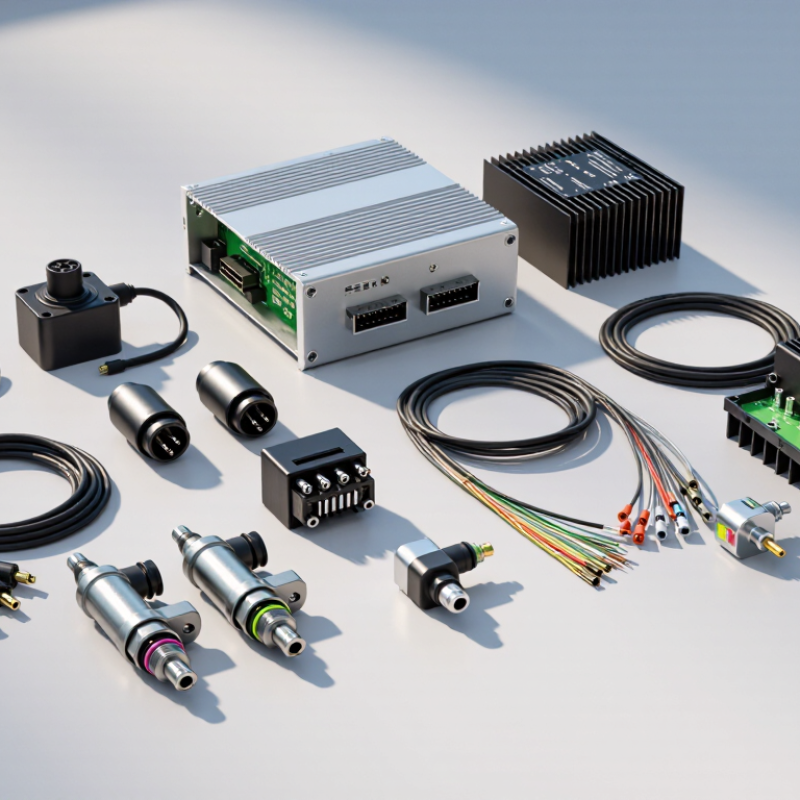
| 1 | Engine Control Unit (ECU) | Processes sensor data and controls fuel injection, ignition, idle speed, emissions functions, and engine protection strategies. | Receives data from sensors, applies programmed control logic, and sends commands to injectors, ignition drivers, throttle actuators, and valves. | Sensor voltage, frequency, temperature data, actuator duty-cycle commands, and network messages. | No-start condition, stalling, poor drivability, warning lamp, or multiple diagnostic trouble codes. | Check power, grounds, connectors, software compatibility, and water or heat damage. |
| 2 | Crankshaft Position Sensor | Reports crankshaft position and rotational speed so the ECU can determine engine timing and synchronization. | Works with the camshaft position sensor to identify cylinder position and coordinate injection and ignition events. | Variable-frequency pulse signal or digital position signal. | Crank-no-start, intermittent stalling, misfire, tachometer drop, or difficult starting. | Inspect sensor clearance, wiring, connector condition, and the trigger wheel for damage. |
| 3 | Camshaft Position Sensor | Identifies camshaft position and helps the ECU determine the operating phase of each cylinder. | Complements crankshaft speed data to support sequential fuel injection, variable valve timing, and cylinder identification. | Digital pulse or Hall-effect position signal. | Extended cranking, reduced power, rough running, misfire codes, or limited variable valve timing. | Check timing alignment, oil contamination, harness routing, and connector security. |
| 4 | Mass Airflow Sensor | Measures the mass of air entering the engine to help calculate the required fuel quantity. | Provides airflow data to the ECU, which compares it with throttle position, engine speed, and oxygen feedback. | Analog voltage or frequency signal proportional to airflow. | Poor acceleration, unstable idle, excessive fuel use, hesitation, or black exhaust smoke. | Check for intake leaks, dust contamination, damaged sensing elements, and incorrect air-filter installation. |
| 5 | Throttle Position Sensor | Measures throttle opening and communicates driver demand or commanded throttle position to the ECU. | Works with the accelerator-pedal sensor, airflow sensor, and electronic throttle actuator to regulate engine torque. | Redundant variable-voltage position signals. | Erratic acceleration, limited throttle response, high or unstable idle, or reduced-power mode. | Inspect signal consistency, throttle-body deposits, wiring, and sensor calibration procedures. |
| 6 | Engine Coolant Temperature Sensor | Measures coolant temperature for cold-start enrichment, cooling-fan control, ignition adjustment, and emissions management. | Supplies temperature data used with airflow, oxygen, and engine-speed information to adjust operating strategy. | Resistance-based thermistor signal converted to temperature. | Hard starting, poor fuel economy, incorrect fan operation, rough idle, or inaccurate temperature readings. | Check coolant level, sensor resistance, connector corrosion, and cooling-system leaks. |
| 7 | Oxygen or Air-Fuel Ratio Sensor | Monitors oxygen content in exhaust gas so the ECU can correct the air-fuel mixture and monitor emissions performance. | Provides feedback for closed-loop fuel control and works with fuel injectors, exhaust components, and catalyst monitoring. | Voltage, current, or pump-cell signal depending on sensor design. | Increased fuel consumption, emissions warning, rough running, or failed emissions testing. | Check exhaust leaks, heater circuit, wiring, contamination, and fuel-mixture faults before replacement. |
| 8 | Fuel Injector | Meters and atomizes fuel into the intake port or combustion chamber according to ECU commands. | Responds to ECU pulse width and timing, while fuel pressure and sensor feedback influence the commanded quantity. | Electrical pulse-width command and pressurized fuel supply. | Misfire, rough idle, hard starting, poor acceleration, fuel odor, or uneven cylinder performance. | Check flow balance, spray pattern, coil resistance, fuel contamination, and sealing rings. |
| 9 | Ignition Coil | Converts low-voltage electrical energy into the high voltage required to create a spark at the plug. | Receives timing and dwell commands from the ECU and operates with the crankshaft and camshaft position signals. | Low-voltage control signal and high-voltage ignition output. | Engine misfire, rough running, reduced power, hard starting, or flashing emissions warning. | Inspect insulation, coil boots, spark-plug condition, supply voltage, and heat-related damage. |
| 10 | Electronic Throttle Actuator | Controls the throttle plate electronically to regulate airflow and engine torque without a direct mechanical cable. | Uses ECU commands and redundant position feedback to coordinate driver demand, idle control, traction functions, and safety limits. | Motor duty-cycle command and dual position-feedback signals. | Reduced power, unstable idle, delayed response, throttle warning, or limited engine speed. | Clean approved surfaces, inspect gear and motor operation, and perform required relearn procedures. |



 Close
Close