Top 10 Electric Car Chargers in China for Global Buyers?
As the electric vehicle market continues to grow, the demand for reliable Electric Cars Chargers has surged. A recent report by the China Passenger Car Association indicates that in 2023, electric vehicle sales in China will surpass 8 million units, further emphasizing the need for efficient charging solutions. According to Dr. Li Wei, a leading expert in electric mobility, "The success of electric vehicles hinges on the infrastructure supporting them, particularly Electric Cars Chargers."
Consumers are looking for chargers that offer speed and accessibility. Many brands now provide innovative solutions, such as fast-charging stations that can replenish a battery in 30 minutes. However, challenges remain. Some areas still have inadequate charging access, causing inconvenience for users. Reports from the World Economic Forum suggest that over 40% of electric vehicle owners experience 'range anxiety' due to these limitations.
Choosing the right Electric Cars Charger is crucial for anyone considering an electric vehicle. As we explore the top chargers available in China, it is essential to recognize that while technology advances, user experience must improve alongside it. The reliability of these chargers significantly impacts user satisfaction and overall adoption rates.
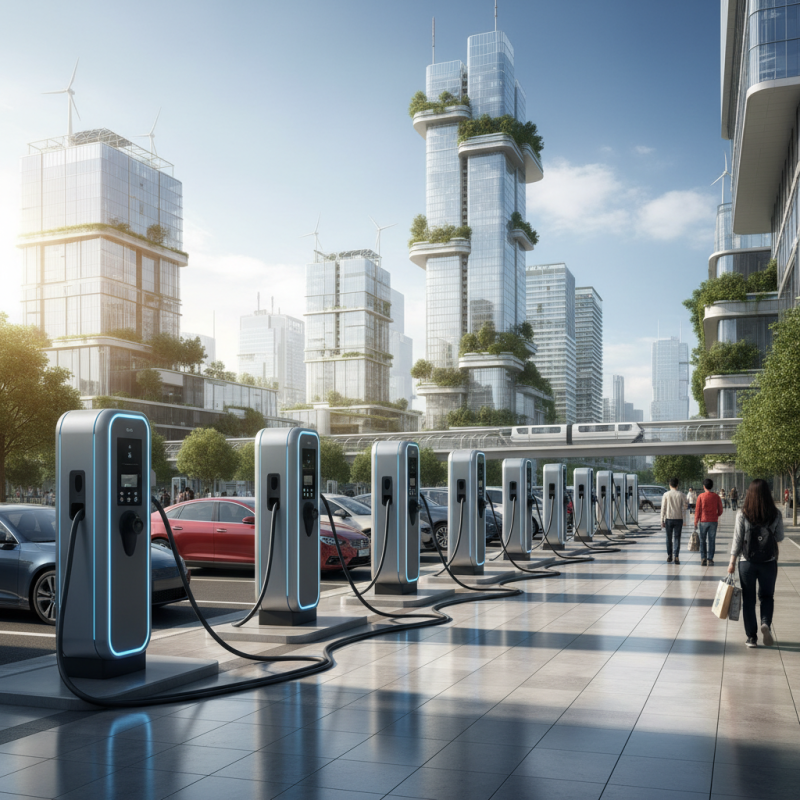
Overview of the Electric Vehicle Market in China
China has emerged as a global leader in the electric vehicle (EV) market. As of 2023, around 55% of all electric cars sold worldwide are from China. The country produced over 6 million EVs in 2022, reflecting a year-on-year increase of 75%. This substantial growth is driven by both domestic demand and international interest in Chinese EV technology.
The market is supported by aggressive government policies aimed at promoting clean energy. Incentives for EV buyers and investments in charging infrastructure have played crucial roles. However, challenges remain. Urban charging stations often face overcrowding, and rural areas still lack sufficient infrastructure. In some cities, only 30% of charging points are operational during peak hours. This highlights the need for continuous improvement in service reliability.
Furthermore, consumer confidence varies. Some buyers express concerns about battery life and range, particularly in harsh weather conditions. As much as 40% of potential buyers cite these issues as deterrents. Addressing these challenges is essential for sustaining growth in China’s electric vehicle sector. The market remains dynamic, requiring constant adaptation to meet evolving consumer needs.
Criteria for Selecting the Best Electric Car Chargers
When selecting electric car chargers in China, various factors come into play. Consider compatibility with multiple vehicle models. Some chargers work better with specific brands, limiting your options. A universal design is ideal for global buyers.
Charging speed is crucial. Fast chargers significantly reduce downtime. However, they may be pricier and less available. It’s essential to balance speed and cost. Think about your typical driving patterns. Will you require daily fast charging, or can you rely on slower options?
The installation process can also be challenging. Some chargers require professional setup, which adds to the overall cost. DIY options exist, but may pose risks if not installed correctly. Investigating local regulations on installations will save you from future hassles. Also, consider the durability of the charger. Poorly constructed models may fail sooner, leading to unplanned expenses.
Top 10 Electric Car Chargers in China for Global Buyers
| Model | Charging Power (kW) | Connector Type | Compatibility | Price (USD) |
| AC Charger Model A | 7.2 | Type 2 | General | 500 |
| DC Fast Charger Model B | 50 | CHAdeMO | Nissan, Mitsubishi | 15000 |
| Ultra Fast Charger Model C | 120 | CCS | Multiple | 30000 |
| Solar Charger Model D | 2.5 | Type 1 | e.g., Toyota | 2000 |
| Portable Charger Model E | 3.5 | Type 2 | Universal | 300 |
| Wall-Mounted Charger Model F | 7.2 | Type 1 | BMW, Ford | 600 |
| Home Charger Model G | 7.4 | Type 2 | All Brands | 700 |
| Fleet Charger Model H | 80 | CCS | Commercial | 20000 |
| Smart Charger Model I | 22 | Type 2 | Smart Connectivity | 900 |
| Workplace Charger Model J | 11 | Type 2 | Corporate | 1200 |
Top 10 Electric Car Chargers for Global Buyers in China
In the growing landscape of electric vehicles, finding reliable charging solutions becomes crucial, especially for global buyers in China. Many factors influence the choice of electric car chargers, including efficiency, compatibility, and availability. Global buyers should consider chargers with fast charging capabilities. This feature significantly reduces downtime, allowing users to recharge vehicles quickly. It is also essential to ensure the chargers are compatible with various electric vehicle models.
Another aspect to consider is the accessibility of charging stations. Urban areas in China may have abundant charging options, while rural regions may have fewer facilities. Users must research the charging network's coverage. Often overlooked are the charging speeds, which can vary widely. A charger may promise fast charging but may underdeliver due to technical issues. Thus, buyer reviews can provide insights into a charger's performance and reliability.
Additionally, the building quality of chargers is significant. Cheaper options may seem appealing but often lead to long-term frustrations regarding durability. Although buyers often favor well-known options, exploring lesser-known but efficient chargers can yield surprising benefits. Electric car charging remains a developing area in China, and ongoing advancements are reshaping the market constantly. Understanding these nuances can guide global buyers to make informed decisions.
Comparison of Charging Technologies: AC vs. DC Chargers
When exploring electric vehicle (EV) charging options, the distinction between AC and DC chargers plays a crucial role. AC chargers are commonly found in homes and public charging stations. They use alternating current to power the car, requiring the vehicle's onboard charger to convert it to the necessary direct current for the battery. This method is generally slower, taking several hours to fully charge a vehicle. However, AC charging is simpler and more widely accessible. It is often the go-to option for overnight charging.
On the other hand, DC chargers provide direct current straight to the vehicle’s battery. This allows for much faster charging times, often within 30 minutes. They are typically seen at dedicated fast-charging stations. The technology behind DC fast charging involves high-powered stations that can deliver a substantial amount of energy quickly. Yet, these chargers are less common and can be pricier to install. Their rapid charging capabilities, while impressive, can lead to potential battery health issues over time.
While both charging types have their pros and cons, the choice ultimately depends on user needs and charging infrastructure availability. The transition to electric vehicles raises further questions on how we can balance rapid charging demands with battery longevity. Exploring these technologies enhances our understanding of the future of EV charging in a rapidly evolving market.
Key Features to Consider When Purchasing an Electric Charger
When buying an electric car charger, several key features deserve attention. First, charging speed is crucial. Look for chargers that offer different power outputs. A faster charger saves time, especially for busy users. Compatibility with various vehicle models is also essential. Ensure that the charger can work with both domestic and international electric vehicles.
Safety features cannot be overlooked. Ideally, chargers should have overcurrent protection and thermal protection to prevent overheating. Having a charger with built-in surge protection adds an extra layer of security. Furthermore, ease of installation is key. Some chargers require professional installation, while others are user-friendly, enabling simple home setups.
Another aspect to consider is connectivity. Smart chargers can connect to mobile apps for monitoring. This feature is helpful for tracking energy usage and costs. Finally, ensure the charger is durable for long-term use. Check for warranties and customer support options. Assessing these factors can make a significant difference in your buying decision.



 Close
Close