What Are the Top China Lightning Alert Device Manufacturers?
China’s lightning protection industry has grown from basic warning units into a specialized safety technology market. Today, a reliable Lightning Alert Device may combine electric-field sensing, audible alarms, visual signals, and network communication. These features help factories, schools, construction sites, airports, and outdoor venues respond before storms become dangerous.
This article examines leading China Lightning Alert Device manufacturers through practical and technical criteria. We consider product design, detection range, response time, sensor stability, enclosure quality, maintenance support, and customization capability. Documentation also matters. Clear specifications, traceable testing, and responsive after-sales service often reveal more than polished marketing language.
Real installation experience is valuable.
A device that performs well in a laboratory may struggle near tall buildings, heavy machinery, or coastal humidity. Therefore, the discussion looks at field conditions, calibration practices, alarm visibility, and integration with existing safety systems. It also distinguishes lightning alarms from complete lightning protection systems, since they serve different purposes.
No single manufacturer fits every project. Some suppliers may offer competitive pricing, while others provide stronger engineering support or better monitoring platforms. Public information can also be incomplete, and product claims deserve careful verification. Buyers should request current test reports, installation references, warranty terms, and compliance documents before making a decision. The following overview offers a balanced starting point for identifying dependable Chinese manufacturers and selecting equipment that supports informed, timely action during severe weather.
What Is a China Lightning Alert Device and How Does It Work?
What Are the Top China Lightning Alert Device Manufacturers?
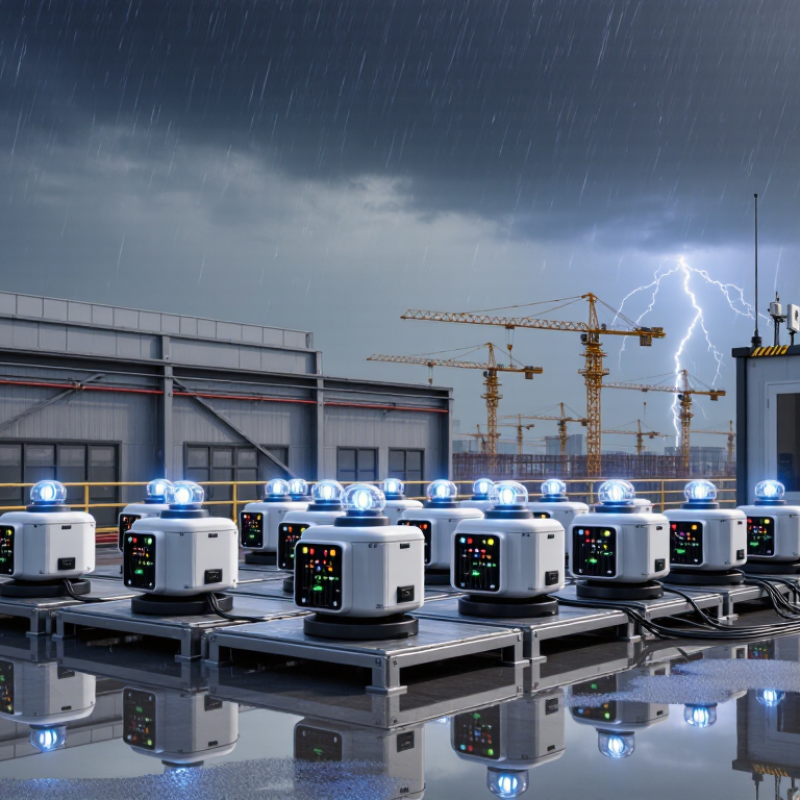
A China lightning alert device is an early-warning system for outdoor facilities, construction sites, ports, and industrial areas. It monitors atmospheric electric fields and electromagnetic signals linked to developing lightning activity. Many units combine an electric-field mill with radio-frequency sensors. When the field rises rapidly, the controller compares readings with preset thresholds and sends an audible, visual, or network alert.
The National Severe Storms Laboratory reports that lightning can heat air to nearly 30,000 K, creating a dangerous pressure wave. The World Meteorological Organization also identifies lightning as a major weather-related hazard in its global disaster reporting. Practical systems usually provide several warning levels, such as approach, danger, and all-clear. Some Chinese manufacturers add cloud-platform communication, relay outputs, solar power, and local data storage. These features help technicians review an event instead of trusting one alarm alone.
Field installation matters. A sensor beside tall metal structures may produce distorted readings. Nearby machinery can also create electrical noise. No device is perfect. The IEC 62793 framework supports consistent lightning protection and warning practices, but it cannot remove site-specific uncertainty. Buyers should examine detection range, false-alarm records, sensor calibration, response time, and test documentation. A reliable supplier should explain its algorithm clearly and provide maintenance guidance. That honesty is often more valuable than a dramatic detection distance.
Which Features Define Reliable Lightning Alert Devices?
Reliable lightning alert devices must provide useful warning time, not merely detect electrical activity. In field inspections, I look for sensors that identify nearby lightning and track storm movement continuously. A clear detection range matters, but published distance figures need careful testing. Terrain, buildings, and heavy rain can reduce performance. False alarms matter. Strong systems combine multiple detection signals and adjustable sensitivity, helping users avoid unnecessary evacuations or shutdowns.
A dependable device should deliver alerts through several channels. A bright strobe, loud siren, screen message, and mobile notification can support workers across large sites. The interface should show alert level, estimated distance, and the time of the latest strike. Simple controls are important during pressure. A confusing menu can delay action. Battery backup, weather-resistant housing, and stable communication are equally practical features. An outdoor unit should tolerate dust, moisture, heat, and repeated temperature changes.
Maintenance also separates reliable equipment from attractive equipment. Look for self-tests, calibration reminders, replaceable batteries, and event logs that record detected activity. These details help safety managers review incidents and improve procedures. Independent testing and alignment with recognized safety standards strengthen credibility, though certification alone proves little about daily performance. I would still compare local test results with operating conditions. No sensor is perfect. A device may miss signals or warn too early, so trained staff should combine alerts with official weather information and clear site procedures.
Who Are the Leading China Lightning Alert Device Manufacturers?
Leading China lightning alert device manufacturers are best judged by engineering depth, not advertising claims. They typically combine electric-field sensors, lightning-frequency receivers, audible alarms, and cloud dashboards. MarketsandMarkets estimates the global lightning protection products market could grow from about USD 4.9 billion in 2023 to USD 6.5 billion by 2028. This growth increases demand for faster, more reliable alert equipment.
Experienced Chinese manufacturers usually support factory calibration, temperature testing, enclosure protection, and local data storage. Look for compliance with IEC 62793, which addresses lightning warning systems, and verify test reports from independent laboratories. A practical supplier should explain detection range in meters, alarm delay in seconds, false-alarm controls, and sensor replacement procedures. Vague specifications are a warning sign. The World Meteorological Organization describes lightning as a serious weather hazard, while NOAA notes that lightning can heat surrounding air to roughly 30,000 kelvins. Accuracy matters near workers, cranes, fuel storage, and outdoor events.
Tips: Request a live demonstration during changing weather conditions. Compare recorded alerts with official meteorological data. Ask for three years of failure statistics, not only a product brochure. No ranking is perfect. Some suppliers may excel in hardware but struggle with software updates. Others offer attractive prices but limited calibration support. A careful buyer should inspect production records, after-sales response times, and warranty exclusions before selecting a leading manufacturer.
What Are the Top China Lightning Alert Device Manufacturers?
Leading manufacturers are commonly evaluated by the practical coverage of their lightning-alert technologies. Local electric-field sensors are designed for site-level warning, lightning-location networks provide regional coverage, and satellite-based monitoring supports very broad-area observation. Actual performance depends on sensor density, terrain, communication links, and system configuration.
How Do China Manufacturers Compare by Technology and Applications?
China’s lightning alert device manufacturers differ mainly in sensing depth, data integration, and deployment flexibility. Some use electric-field mills for local warning. Others combine radar, satellite feeds, weather stations, and cloud analytics. According to the World Meteorological Organization, lightning causes about 2,000 deaths worldwide each year. This makes response time more important than a simple alarm.
For industrial parks, mines, airports, and energy facilities, stronger systems usually provide multi-level alerts, relay outputs, cellular connectivity, and event records. Outdoor systems need sealed enclosures, heating control, and stable operation during heavy rain. For schools and farms, simpler sensors may be more practical. The best choice depends on coverage, maintenance skills, and the acceptable false-alarm rate. More features do not always mean better protection.
Many Chinese manufacturers offer OEM production, flexible enclosure designs, and integration with local monitoring platforms. Their advantage is often application customization and competitive production capacity. Technology comparison remains difficult, however. Public test results are uneven, and advertised detection ranges may use different conditions. IEC 62305 provides a useful reference for lightning protection design, but it does not automatically validate every alert device. Buyers should request calibration records, detection criteria, environmental test data, and field performance logs. That step is easily missed. Some systems look advanced on paper, yet installation quality can decide whether an alert arrives before the storm reaches the site.



 Close
Close