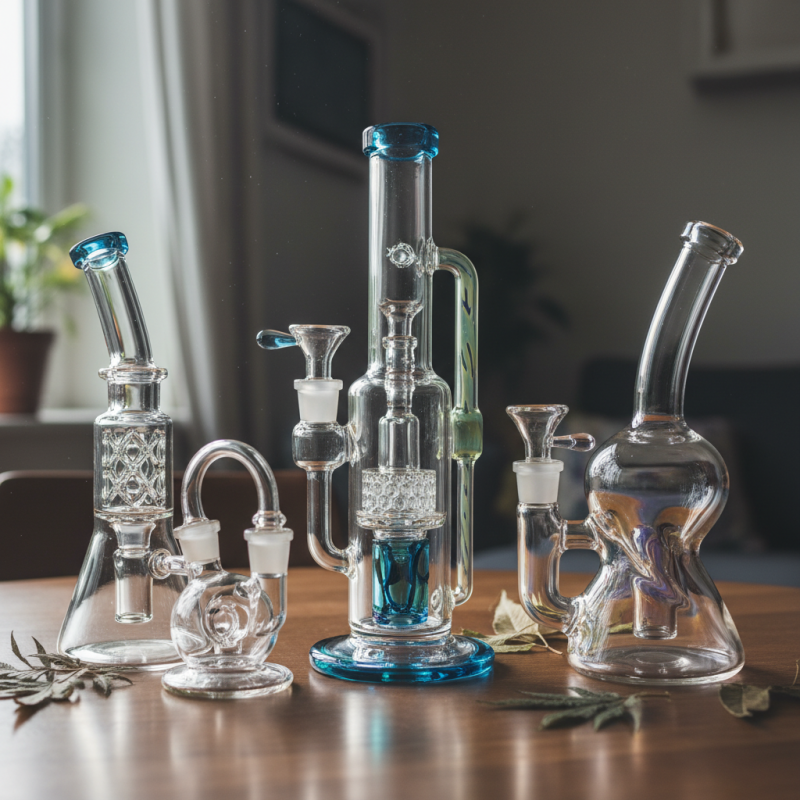
Borosilicate glass
is well-regarded for its durability and heat resistance. This type of glass is often used in scientific instruments. Its low coefficient of thermal expansion makes it less likely to shatter under temperature changes. According to industry reports, borosilicate glass can withstand temperature changes of up to 300 degrees Celsius. This feature is vital for users seeking longevity in their glassware.
Another aspect of borosilicate glass is its chemical resistance. Unlike other types of glass, it does not easily react with chemicals. This property ensures that any flavors and aromas remain pure. Many users appreciate that borosilicate glass can be easily cleaned. It is less porous than regular glass, making it resistant to stains.
Tip: When choosing borosilicate glass, consider the thickness. Thicker glass tends to be more durable but can be heavier. A mid-range thickness strikes a balance between ease of use and robustness.
While borosilicate glass offers many benefits, it’s important to handle it with care. Even with its durability, it can still break under impact. Users should avoid dropping it or exposing it to extreme temperature changes. Think twice before placing it in the freezer, as rapid changes can lead to cracks.
Choosing the right piece requires thought.
Consider your lifestyle and how often you use your glassware. An informed decision can enhance your experience significantly.



 Close
Close