Top Automatic Labeling Machine Suppliers Worldwide?
Choosing the top Automatic Labeling Machine suppliers worldwide requires more than comparing price lists. Packaging lines differ greatly across industries, speeds, container shapes, and labeling materials. A machine that performs smoothly on glass bottles may struggle with flexible pouches or dusty cartons. Real performance matters.
This guide examines established suppliers through practical criteria, including labeling accuracy, production speed, equipment flexibility, service coverage, and operator safety. It also considers installation support, spare-parts availability, software integration, and documented customer experience. Suppliers from Europe, North America, and Asia may offer different strengths. Some focus on pharmaceutical precision, while others specialize in food, beverage, chemical, or logistics applications. Certifications and technical documentation provide useful evidence, but they should not replace factory testing.
Details often reveal the difference. Watch how a machine handles a wrinkled label, a slightly uneven container, or a sudden speed change. Ask whether technicians can respond quickly when a sensor fails during a busy shift. These questions are less glamorous, but they protect long-term investment. No supplier is perfect. Marketing claims can also sound stronger than daily production results. Therefore, buyers should request samples, line trials, maintenance records, and clear warranty terms before deciding. This overview aims to offer a balanced starting point for comparing leading Automatic Labeling Machine suppliers, while recognizing that the best choice depends on product requirements, budget, factory conditions, and future expansion plans. Practical evidence should guide the final decision.
What Is an Automatic Labeling Machine?
What Is an Automatic Labeling Machine?
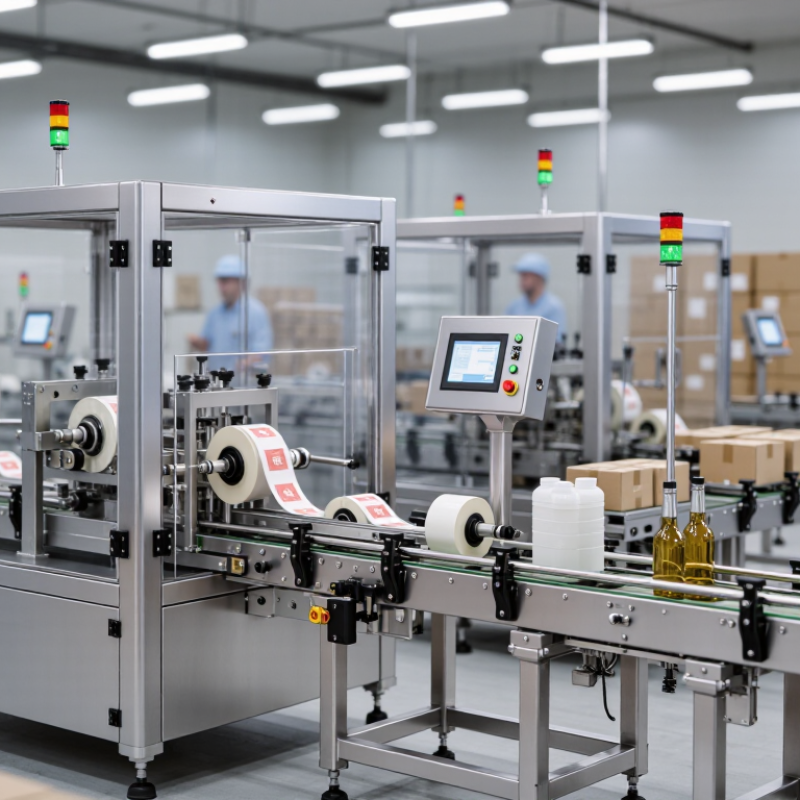
An automatic labeling machine applies printed labels to products without manual placement. It usually combines a conveyor, sensor, label dispenser, applicator, and control system. The sensor detects each container. Software then releases a label at the correct position and speed. Some machines label bottles, cartons, pouches, or cases. Others apply front, back, wraparound, or tamper-evident labels.
It is not magic. Accurate labeling depends on product shape, surface material, label adhesive, and line speed. A practical test should measure placement tolerance, label waste, changeover time, and rejection rates. According to PMMI’s 2023 State of the Industry report, U.S. packaging machinery shipments exceeded 10 billion dollars in 2022. The report also identified labor availability as an important reason for automation investment. The International Federation of Robotics reported 541,302 industrial robot installations worldwide in 2023, showing wider acceptance of automated production.
Operators should still inspect label rolls, clean sensors, and verify printed information during every shift. Poor alignment can result from dust, condensation, uneven containers, or incorrect calibration. Real production lines are messier. A machine may perform well during a demonstration but struggle after several hours of continuous operation. Buyers should request trials using their actual products and labels. They should also review guarding, emergency stops, data records, and maintenance access before comparing suppliers worldwide.
An automatic labeling machine applies self-adhesive or pressure-sensitive labels to products with limited manual intervention. The chart shows representative throughput ranges for common machine configurations. Actual performance depends on container geometry, label size, product spacing, conveyor speed, and inspection requirements.
Key Types of Automatic Labeling Machines
Automatic labeling machines differ by product shape, material, and line speed. Wrap-around systems apply labels around round bottles, jars, and tubes. They work well when containers arrive evenly spaced. Front-and-back machines place separate labels on flat or oval packs. Alignment matters more than many buyers expect. A few millimeters can change shelf appearance. In production trials, stable guides often improved results more than higher speed. That lesson is easy to overlook.
Top labeling machine suppliers worldwide usually offer pressure-sensitive, hot-melt, and wet-glue configurations. Pressure-sensitive models are flexible and need no drying time. They suit cartons, containers, and changing label designs. Hot-melt systems handle high-speed packaging, but adhesive temperature needs close control. Wet-glue machines can reduce material cost for certain glass containers. However, setup may take longer. Speed is not everything. No machine fits every line.
For cylindrical products, rotary or inline wrap systems provide different balances of speed and precision. Corner labeling machines suit cartons, while tamper-evident applicators add a visible security seal.
Check sensor response, conveyor compatibility, cleaning access, and changeover time before purchase. Ask suppliers for sample testing with your real containers and labels. Test real materials. A demonstration using perfect samples can mislead. Actual production surfaces are rarely perfect. Leave room for operator judgment.
Leading Automatic Labeling Machine Suppliers Worldwide
Top Automatic Labeling Machine Suppliers Worldwide
Leading automatic labeling machine suppliers worldwide are judged by more than catalog size. Experienced suppliers study the product shape, label material, container speed, and production environment before recommending equipment. A round bottle needs different handling from a flat carton. Fit matters. Reliable suppliers can explain tolerance ranges, sensor placement, conveyor control, and changeover time in practical language.
Strong suppliers usually provide factory testing, installation guidance, operator training, and responsive maintenance support. Ask for sample-label trials using your own containers. Request clear performance data, including labeling speed, placement accuracy, waste rates, and approved materials. A supplier with engineering depth should also explain cleaning access and replacement-part availability. These details affect daily output more than attractive specifications.
No supplier gets every detail right. I have seen promising machines struggle with dusty surfaces or slightly uneven containers. That weakness should be discussed openly, not hidden behind marketing claims. Buyers should examine service coverage, documentation quality, and communication across time zones. A dependable supplier shares realistic limits and offers measurable adjustments. The best partnership develops through testing, honest feedback, and careful commissioning rather than promises alone.

 Close
Close