| 1 | Rating meaning | Protection against water ingress during temporary immersion under the specified test conditions. | Protection during continuous immersion under conditions agreed for the product and test. | Request the exact IP claim and the test report for the complete intended enclosure configuration. |
| 2 | Baseline immersion conditions | The standard test uses immersion at a depth of 1 m for 30 minutes, with specimen positioning determined by enclosure dimensions. | There is no single universal depth-and-duration pair for IPX8; the conditions are specified for the product and agreed between the parties. | Confirm the tested depth, duration, water conditions, and any application-specific test parameters in writing. |
| 3 | Specimen positioning | For enclosures below 850 mm in height, the lowest point is positioned 1 m below the water surface. For enclosures at least 850 mm high, the highest point is positioned 150 mm below the surface. | Positioning and immersion conditions are defined for the agreed IPX8 test; they depend on the specified test arrangement. | Check that the report identifies the specimen dimensions, orientation, and immersion arrangement used. |
| 4 | Test duration | 30 minutes under the standard IPX7 test conditions. | Set by the agreed IPX8 test conditions; IEC 60529 does not prescribe one duration for every IPX8 application. | Compare the tested duration with the product’s expected immersion time and any customer or regulatory requirements. |
| 5 | Test severity | The defined temporary-immersion test is used to assess the IPX7 claim. | The agreed IPX8 conditions are required to be more severe than those specified for IPX7. | Do not assume that an unspecified “IPX8” claim represents a particular depth or duration; verify the actual test conditions. |
| 6 | Acceptance assessment | The result is assessed against the applicable IEC 60529 requirements and the relevant product acceptance criteria. | Assessment is made against the agreed immersion conditions and applicable acceptance criteria. | Ask how water ingress was assessed and whether any observed ingress affected safety or operation of the tested product. |
| 7 | IPX7 and IPX8 claims | Supports an IPX7 claim only when the product has been tested and assessed for the applicable IPX7 conditions. | An IPX8 claim is tied to its stated test conditions; it should not be treated as proof of a separate IPX7 test without supporting evidence. | If both ratings matter, request documentation showing which tests were completed and which ratings are being declared. |
| 8 | Dust protection | The “X” means the dust-protection characteristic is not specified by this rating. | The “X” likewise means the dust-protection characteristic is not specified; the water rating does not establish a dust rating. | Check for a separately tested first-digit rating if dust protection is required for the application. |
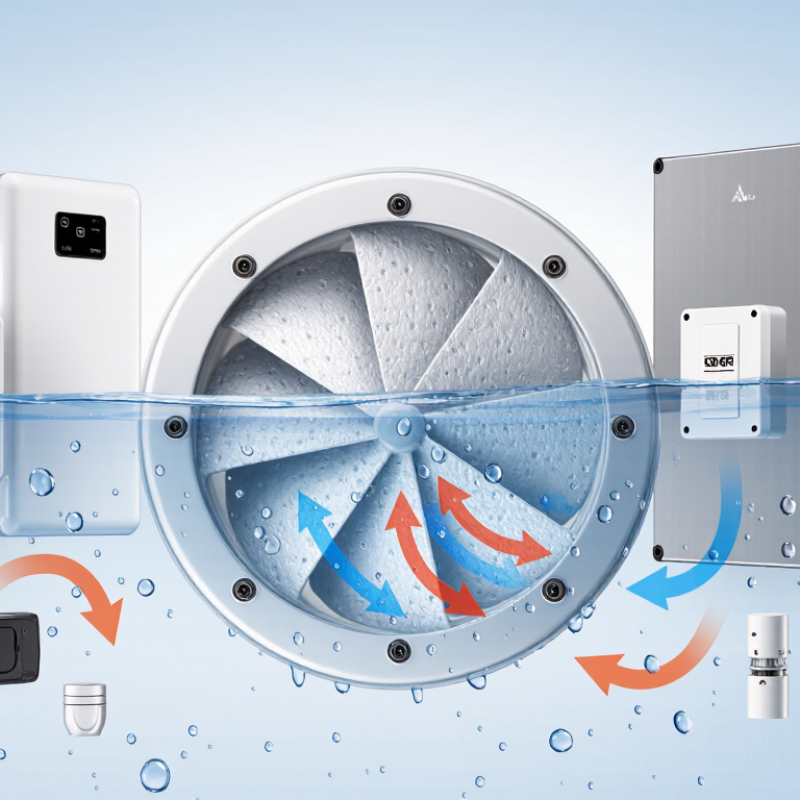
| 9 | Hydrophobic vent function | A hydrophobic membrane can help resist liquid water while allowing air or vapor exchange, but the component alone does not establish the enclosure’s IPX7 rating. | Vent performance must be validated under the enclosure’s agreed IPX8 conditions; a vent’s standalone claim does not establish the complete assembly rating. | Confirm membrane installation, sealing method, housing design, and tested vent configuration match the production assembly. |
| 10 | Supplier documentation | A relevant report should identify the tested product, configuration, method, and result for the IPX7 conditions. | A relevant report should state the agreed depth, duration, and other IPX8 conditions, along with the tested configuration and result. | Prefer traceable test documentation from a competent laboratory and confirm that any changes to materials, bonding, or assembly are covered. |



 Close
Close