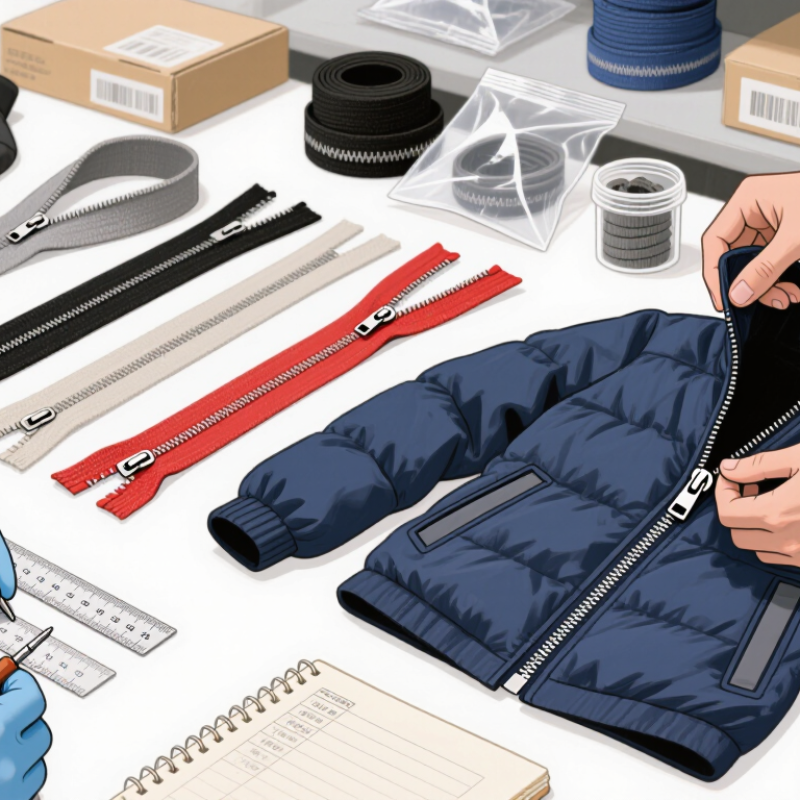
| 1 | Define the product specification | Specify zipper type, finished length, tape material and color, tooth or coil size, slider configuration, magnet placement, and end-stop details. State tolerances for critical dimensions. | Compare the supplier’s written specification with the product drawing and intended installation method before requesting a quotation. | Approved drawing, specification sheet, and tolerance list. |
| 2 | Request representative samples | Ask for samples matching the proposed materials, magnet arrangement, slider, and production finish. For a bulk order, request samples from a production-representative batch when available. | Inspect several samples for consistent length, alignment, stitching or attachment, smooth travel, and secure magnetic engagement. | Sample identification, date received, inspection notes, and approved reference sample. |
| 3 | Test opening and closing durability | Agree on a cycle-test method and pass criteria appropriate to the product. Ask the supplier to identify the test setup, cycle count, sample count, and any failures. | Cycle the zipper repeatedly under the intended use conditions; check for jammed teeth, detached magnets, tape damage, slider loosening, and reduced closure performance. | Test method, agreed cycle target, results, and corrective actions for failures. |
| 4 | Check magnet retention and closure function | Ask how magnets are retained and whether retention or pull tests are available. Set acceptance criteria based on the product’s expected loads and foreseeable handling. | Inspect magnet positions and attachment before and after use testing. Confirm that the closure aligns reliably without excessive force or unintended separation. | Retention-test method, results, magnet placement, and agreed pass/fail limits. |
| 5 | Verify safety and regulatory needs | Identify the destination market, intended user, and product category. Request relevant material declarations and test reports; confirm that applicable requirements are checked for the finished product, not assumed from a component alone. | Assess risks from accessible small magnets, sharp edges, and detachment, especially for products intended for children. Obtain qualified compliance advice where required. | Market, age group, applicable requirements, report scope, and document validity. |
| 6 | Confirm compatibility with the finished product | Check zipper length, tape width, sewing allowance, fabric thickness, seam construction, curvature, and magnet orientation against the product design. | Install samples in a prototype made with the intended materials. Test operation when the product is empty and loaded, and check nearby components for interference. | Prototype version, installation notes, fit result, and any design changes. |
| 7 | Set bulk-order quality controls | Agree on inspection criteria, packaging, lot identification, defect handling, and change approval. Require notification before changes to magnets, tape, slider, construction, or production site. | Review a pre-production sample and define incoming checks for dimensions, appearance, zipper operation, and magnet attachment. Select sampling levels based on risk and order requirements. | Signed-off sample, inspection plan, lot records, and written change-control agreement. |



 Close
Close