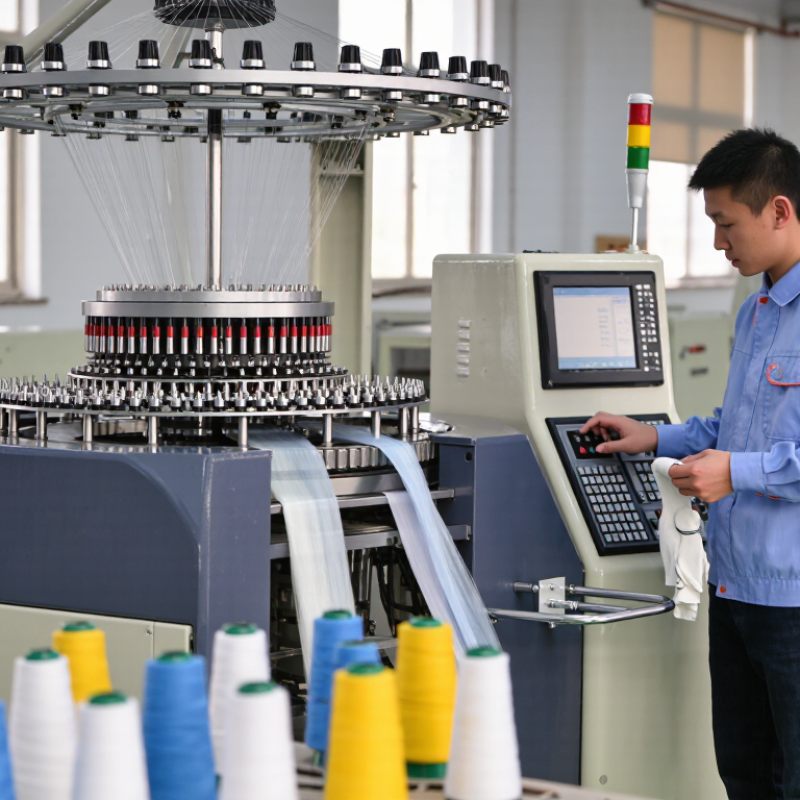
| 1. Match the machine to your sock styles | Confirm the machine can produce your planned range, such as crew, ankle, athletic, or dress socks, including the required size range and construction details. | Can it make the heel, toe, cuff, and patterns your product requires? Which parts or settings are needed for each style? | Machine capability varies by model and configuration; a machine suited to one product may not support every sock design. |
| 2. Check material compatibility | Ask about the yarn types and yarn counts the machine is designed to handle, including cotton, wool, nylon, polyester, and elastane blends. Verify feeder and tensioning options for your yarns. | Can you test our actual yarns? Are there limits related to yarn thickness, elasticity, friction, or feed tension? | Yarn behavior affects feeding, stitch formation, fabric appearance, and the likelihood of machine stops. Compatibility should be confirmed with production trials. |
| 3. Compare gauge and needle configuration | Review the machine's gauge, needle count, cylinder diameter, and available configurations against the fabric density and size range you need. | Which configuration is recommended for our yarn and product? How difficult is it to change needles or cylinders? | These specifications influence the fabrics and sizes a machine can produce; no single configuration is ideal for every product. |
| 4. Evaluate output realistically | Request output estimates for your specific sock design, including setup, changeover, inspection, and downstream linking or finishing time. | Is the quoted rate a theoretical maximum or a demonstrated production result? What assumptions were used? | Actual production depends on design complexity, yarn, machine settings, operator experience, downtime, and finishing operations. |
| 5. Review maintenance requirements | Check the recommended cleaning, lubrication, inspection, and replacement schedule for needles and other wear parts. Ask whether routine tasks are accessible to operators. | Which tasks are performed daily, weekly, or at planned service intervals? Which spare parts should be kept on site? | Regular care helps limit avoidable wear and unplanned downtime. The exact schedule depends on the machine and operating conditions. |
| 6. Verify technical support and training | Confirm commissioning, operator training, troubleshooting resources, service availability, language options, and support hours before purchase. | Who provides support, how are urgent issues handled, and what remote or on-site assistance is available? | Timely training and troubleshooting can help operators resolve setup issues and reduce extended interruptions. |
| 7. Calculate total ownership cost | Include the purchase price, installation, electrical and air requirements, tooling, spare parts, training, maintenance, and any required linking or finishing equipment. | What is included in the quotation? Are utilities, delivery, commissioning, software, and initial spare parts priced separately? | A complete cost comparison makes it easier to assess the investment beyond the machine's initial price. |



 Close
Close