| 1Match the machine to part size | Small castings, forgings, fasteners, and components that can be safely tumbled | Batch tumble or barrel blast machine | Steel shot, conditioned steel grit, or ceramic media | Bulk removal of loose sand, scale, and flash from multiple parts | Use parts with sufficient toughness and rounded geometry. Avoid delicate, thin, or easily entangled components. |
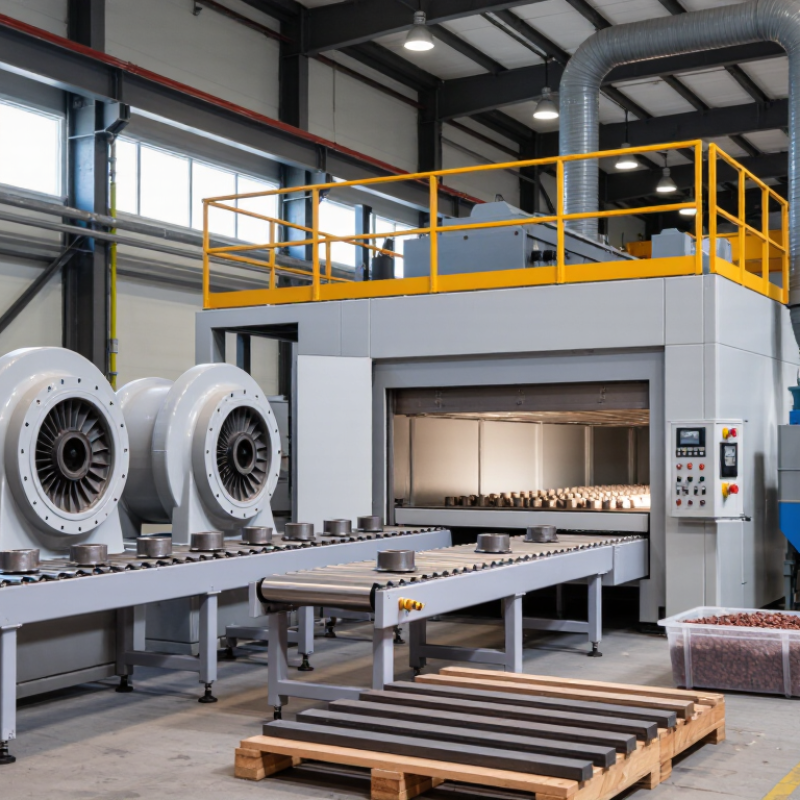
| 2Protect long or flat parts | Long shafts, plates, beams, structural sections, and fabricated frames | Continuous conveyor or pass-through blast machine | Steel shot or steel grit, selected according to the required profile | Uniform cleaning and preparation on accessible surfaces | Check the maximum workpiece length, width, height, weight, and conveyor load. Confirm that shadowed areas will receive adequate coverage. |
| 3Use controlled handling for fragile parts | Thin sheet metal, aluminum components, zinc-based castings, and precision parts | Hanger or cabinet blast machine with adjustable exposure | Fine glass bead, plastic media, ceramic media, or fine non-ferrous abrasive | Light cleaning, deburring, or cosmetic surface refinement | Lower abrasive aggressiveness and reduce impact energy to limit distortion, denting, and dimensional change. |
| 4Choose high-impact cleaning for heavy scale | Carbon-steel forgings, hot-rolled steel, and heat-treated parts with tenacious mill scale | Tumble, hanger, or table blast machine with robust blast wheels | Steel grit for cutting action or steel shot for peening and general cleaning | Removal of mill scale, heat-treatment scale, rust, and foundry residue | Verify blast-wheel capacity, wear-resistant liners, abrasive flow control, and dust-collection performance. |
| 5Account for non-ferrous metals | Aluminum, magnesium, copper, brass, and other relatively soft alloys | Air-blast cabinet or dedicated low-impact continuous system | Glass bead, plastic media, ceramic media, or fine aluminum-oxide abrasive | Oxide removal, coating preparation, blending, or controlled texturing | Prevent ferrous contamination when corrosion resistance or electrical performance matters. Use dedicated media and thorough cleaning. |
| 6Separate cleaning from surface profiling | Steel surfaces requiring paint, thermal spray, or protective coating | Air-blast room, blast cabinet, or wheel-blast machine with profile control | Angular steel grit or mineral abrasive, depending on the required profile and substrate | Removal of rust and old coatings while creating a measurable anchor profile | Specify the required cleanliness grade and surface profile before selecting nozzle size, abrasive size, and operating pressure. |
| 7Consider internal cavities | Castings, valves, pipes, housings, and components with holes or recessed passages | Manual air-blast cabinet with flexible nozzle access or specialized internal-blast equipment | Fine to medium abrasive compatible with the substrate and required finish | Cleaning internal surfaces that wheel blast systems may not reach directly | Check nozzle reach, abrasive recovery, visibility, ventilation, and the ability to remove trapped abrasive after blasting. |
| 8Match media to the desired finish | Parts requiring either a matte finish, a clean profile, or a peened surface | Equipment with adjustable wheel speed, air pressure, abrasive flow, and exposure time | Steel shot for peening and smoother impact; steel grit or aluminum oxide for sharper cutting action | Surface cleaning, texturing, deburring, or controlled shot peening | Media shape, size, hardness, and breakdown rate affect roughness, cleaning speed, and dimensional risk. Validate the result on representative samples. |
| 9Plan for production volume | Low-volume, mixed-size jobs versus repetitive high-volume production | Manual cabinet for flexible batches; automated table, hanger, tumble, or pass-through system for repeatable production | Recyclable steel media for many ferrous applications; disposable or low-contamination media for specialized work | Balancing throughput, consistency, labor, and changeover time | Compare loading method, cycle time, abrasive recovery, maintenance access, and dust-collector capacity rather than machine size alone. |
| 10Verify safety and environmental controls | Any operation involving airborne dust, abrasive rebound, noise, or coating residues | Fully enclosed system with interlocked doors, suitable ventilation, abrasive recovery, and dust collection | Media selected for the substrate, contamination limits, and waste-handling requirements | Safe, compliant, and repeatable blasting with controlled emissions | Review guarding, emergency stops, enclosure integrity, filtration, noise control, operator protection, and abrasive disposal procedures before purchase. |



 Close
Close