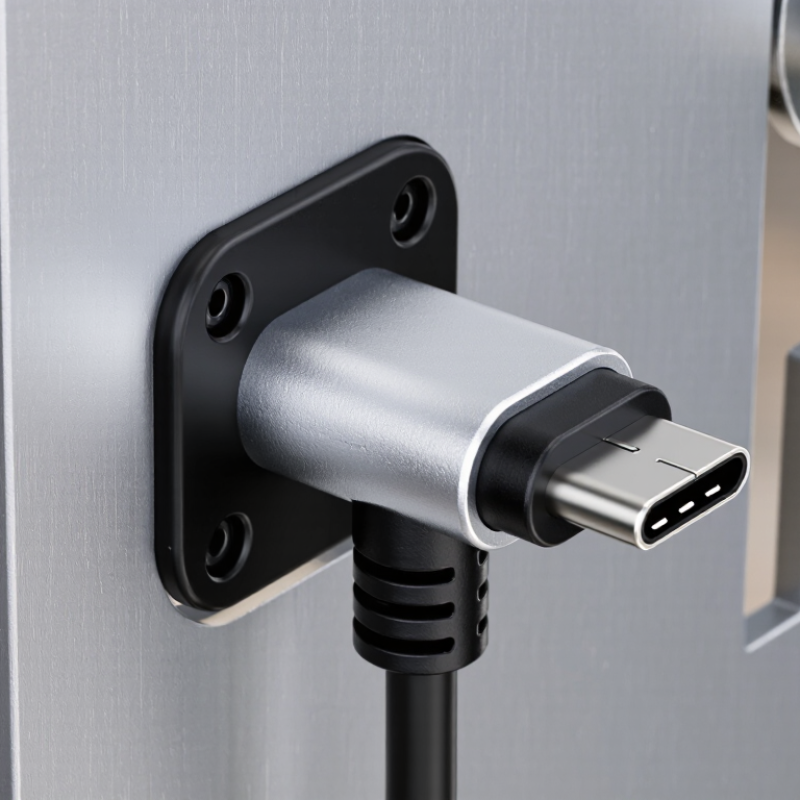
| 1 | Match the connector to the required USB-C functions. | Confirm supported data rates, USB Power Delivery capability, and whether the assembly supports the required USB-C operating modes. Check the product specification rather than relying on the connector shape. | USB-C describes the connector format; it does not, by itself, guarantee a particular data rate, power level, or feature set. |
| 2 | Choose materials suited to the installation environment. | Review the shell, contacts, plating, insulators, and any seals. Consider exposure to moisture, salt, cleaning agents, vibration, and temperature changes. | Material and finish affect corrosion resistance, electrical contact quality, and long-term performance. Suitability depends on the full assembly and its environment. |
| 3 | Check the stated mating durability. | Look for a specified mating-cycle rating and confirm the test conditions. Compare it with how often the connector will be plugged and unplugged. | Mating-cycle life is design-specific. A connector’s appearance or material alone does not establish its durability rating. |
| 4 | Verify panel fit and mounting requirements. | Use the manufacturer’s mechanical drawing to check the panel cutout, mounting method, panel-thickness range, connector orientation, and clearance behind the panel. | Bulkhead designs vary, so a nominal connector type does not guarantee compatible cutout dimensions or adequate installation clearance. |
| 5 | Match the cable to the required data and power performance. | Check the cable’s rated data capability and current or power rating, along with length and connector type. For higher USB Power Delivery levels, verify that the cable is explicitly rated for the intended use. | A USB-C cable’s capabilities are not determined by its plug shape. The cable and bulkhead assembly can limit the performance of the complete link. |
| 6 | Assess sealing and environmental protection. | If an ingress-protection rating is required, confirm the stated rating and test conditions. Check whether it applies when the connector is mated, unmated, or used with a specified cap or seal. | IP ratings are condition-dependent. A rating for one configuration should not be assumed to apply to every installation or mating state. |
| 7 | Review shielding, grounding, and installation details. | Check how the connector shell bonds to the panel, how cable shielding is handled, and whether the installation instructions specify grounding or fastening requirements. | Correct bonding and assembly help maintain a reliable connection and support the intended electromagnetic compatibility performance of the equipment. |



 Close
Close