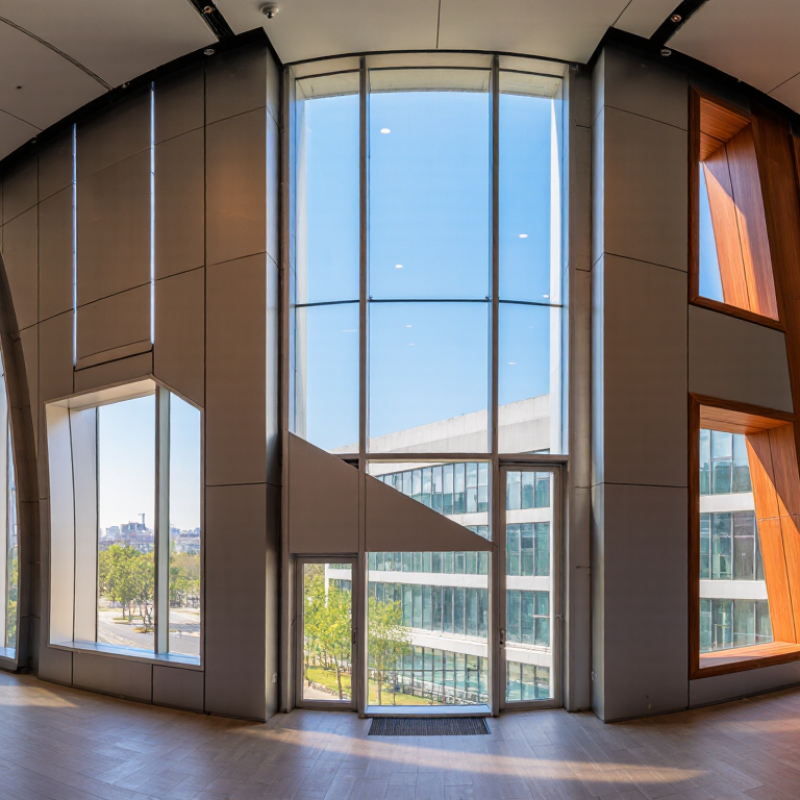
| 1. Document the design intent | Window type, opening style, shape, sightlines, and finish | Arched fixed window with a dark bronze exterior finish and a matching operable casement beside it | Request dimensioned drawings, finish samples, hardware details, and confirmation that the proposed configuration is manufacturable. |
| 2. Confirm opening sizes and tolerances | Rough-opening dimensions, frame dimensions, and installation clearance | Record each opening by width and height in millimetres; identify whether dimensions refer to the frame or the building opening. | Agree on measurement responsibility, allowable manufacturing tolerances, and the final site-measurement approval process before production. |
| 3. Set climate-appropriate performance targets | Thermal transmittance, solar heat gain, air leakage, and water resistance | Specify target values by project location and applicable code; distinguish whole-window U-factor from centre-of-glass values. | Ask for test reports for the proposed window configuration, including frame, glazing, size, and operating type—not just a similar product. |
| 4. Define glazing and safety needs | Glass build-up, coatings, safety glazing, and acoustic goals | For a noise-exposed room, set an acoustic target and evaluate a laminated insulating glass unit; use safety glazing where required by local rules. | Check glass thickness, coatings, spacer, gas fill if specified, safety classification, and the availability of supporting test documentation. |
| 5. Check local codes and approvals | Structural loads, fire or egress provisions, energy rules, and product certification | List the governing jurisdiction and applicable standards for every project location before requesting final quotations. | Confirm that documentation and product evaluations are accepted by the local authority; requirements differ across countries and regions. |
| 6. Plan quantity, packaging, and logistics | Unit counts, size schedule, shipment grouping, protection, and delivery sequence | Provide a window schedule by type, size, floor, and destination; separate prototype, initial, and balance quantities if applicable. | Request crate dimensions and weights, packing method, lead-time assumptions, shipment terms, and a process for reporting transit damage. |
| 7. Validate samples and production controls | Prototype approval, quality checks, traceability, and replacement planning | Approve a representative sample or mock-up before authorizing the full production run, especially for unusual shapes or finishes. | Agree on inspection checkpoints, approved drawings, labelling, defect criteria, spare-parts availability, and procedures for corrective action. |
| Planning note: The specifications above are illustrative starting points, not universal performance values. Confirm final targets with the project design team and applicable local codes before procurement. |



 Close
Close