Top Water Cooler Evaporator Manufacturers Worldwide?
Choosing among the top Water Cooler Evaporator manufacturers worldwide requires more than comparing prices or cooling capacity. A reliable evaluation examines heat-transfer performance, material quality, production consistency, and after-sales support. The best suppliers understand how an evaporator behaves inside a busy dispenser, where warm inlet water, restricted airflow, and repeated cleaning cycles can affect performance.
Wilbert F. Stoecker, a respected refrigeration engineer and educator, described the evaporator as “the component in which useful refrigeration is produced.” This simple observation remains important. A well-designed evaporator draws heat from water efficiently, maintains stable outlet temperatures, and supports dependable operation during frequent dispensing. Copper tubing, stainless-steel surfaces, insulation quality, and refrigerant compatibility all deserve close attention.
Small details matter.
Manufacturers serving global markets must also demonstrate testing discipline. Look for documented pressure testing, corrosion evaluation, thermal-performance data, and consistent dimensional control. Certifications can support trust, but they do not replace practical evidence. Factory audits, sample testing, and field feedback often reveal weaknesses that brochures hide.
This comparison will examine leading Water Cooler Evaporator manufacturers through technical capability, customization, delivery reliability, and service experience. It will also consider less obvious issues, including replacement access, cleaning requirements, and long-term energy use. No supplier is perfect. Some may offer advanced designs but limited regional support. Others may provide strong service while using less efficient components. Readers should question every claim, verify current specifications, and match each manufacturer’s strengths with the real demands of their water-cooling application.
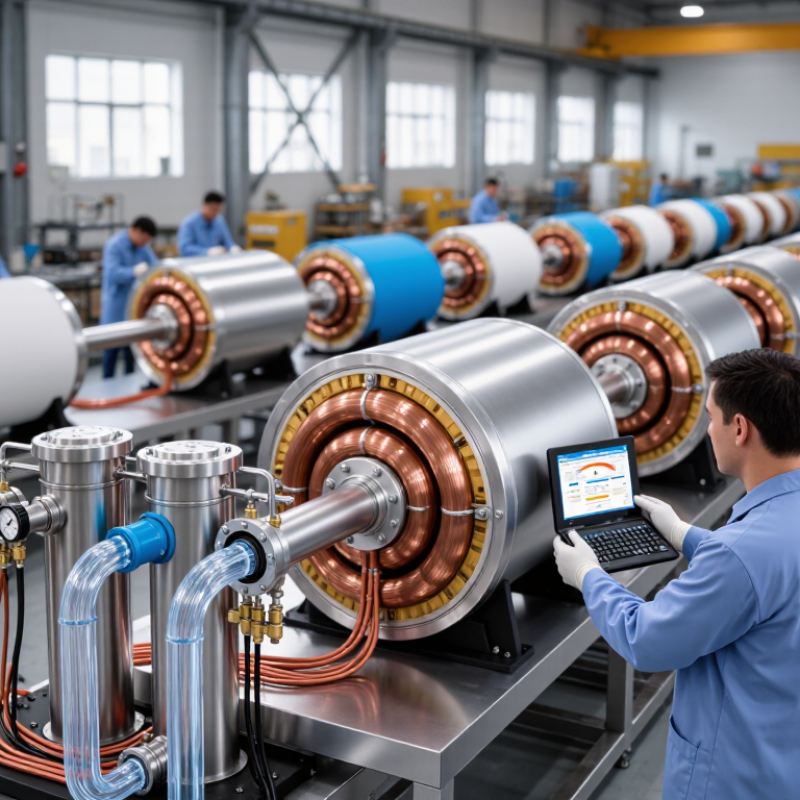
Defining Water Cooler Evaporators: 0–12°C Water and Phase-Change Cooling
A water cooler evaporator is the heat-transfer core that cools drinking water from ambient temperature to about 0–12°C. Inside it, refrigerant absorbs heat while changing from liquid to vapor. The water stays in its own circuit, often flowing through a stainless-steel tube, plate channel, or tank coil. This phase-change process provides steady cooling with less water waste than direct evaporative methods.
When comparing worldwide manufacturers, examine the evaporator before judging the complete cooler. Look for stable outlet temperatures, low pressure drop, cleanable water passages, and strong resistance to corrosion. A well-designed unit may use copper or stainless steel, depending on water quality and hygiene requirements. Weld quality matters. So does insulation around the cold surface, because condensation can damage nearby components.
Practical testing should include flow rate, inlet temperature, refrigerant pressure, and pull-down time. Ask for performance data at several operating conditions, not one attractive laboratory number. Manufacturers with reliable engineering usually explain material grades, brazing methods, leak testing, and quality controls clearly. However, no specification fits every site. Hard water, warm room temperatures, restricted airflow, or poor maintenance can reduce performance. That limitation deserves attention. A perfectly efficient evaporator may still disappoint when the system around it is undersized.
Ranking Global Manufacturers by COP, Cooling Capacity, ΔT, and ISO 9001
Global evaporator rankings should begin with comparable test conditions. AHRI Standard 550/590 defines rating procedures for water-cooled and air-cooled chillers. COP must be calculated from net cooling output and total power input. Cooling capacity should be reported in kW, not vague “high output” claims. ΔT also matters. A common chilled-water design uses about 5–7 K, although actual operation depends on flow and load. Manufacturers with verified data at identical temperatures deserve higher positions.
The ranking can combine four measures: seasonal COP, rated cooling capacity, stable ΔT, and ISO 9001 certification. COP reveals energy efficiency. Capacity shows application range. ΔT indicates heat-transfer performance and control stability. ISO’s 2023 Survey reported more than 1.2 million ISO 9001 certificates worldwide, but certification alone does not prove superior evaporator design. It confirms a quality-management system. That distinction is often missed. The IEA’s cooling analysis also warns that cooling demand may rise sharply by 2050, increasing pressure for efficient equipment. Laboratory values can still disappoint in dusty plants or poorly balanced water circuits.
Tips: Request full test sheets, refrigerant details, flow rates, entering and leaving temperatures, and power measurements. Check whether COP includes pumps and fans. Compare warranty data and field references, not brochures alone. A small ΔT error can distort capacity calculations. I would also repeat the comparison under partial load, because peak-load rankings may not reflect daily performance.
Top Water Cooler Evaporator Manufacturers Worldwide — Anonymous Benchmark
Comparative benchmark based on publicly reported specification ranges for industrial water-cooling evaporators. Manufacturer identities are intentionally omitted. COP and cooling capacity are performance indicators; ΔT is shown as the rated chilled-water temperature difference, while ISO 9001 indicates reported certification status.
Values are representative published-specification benchmarks and should be verified against current manufacturer datasheets, project conditions, refrigerant selection, and certification records.

 Close
Close