Top Electric Heating Wire Manufacturers for Global Buyers
Choosing among the top Electric Heating Wire manufacturers requires more than comparing prices or catalog thicknesses. Global buyers must examine alloy composition, resistance stability, temperature limits, surface finish, and production consistency. A wire that glows evenly in a laboratory may fail inside a kiln, cartridge heater, oven, or industrial furnace.
Dr. Jan-Erik Ståhl, a resistance-heating materials specialist associated with the European heating industry, once observed, “Material selection decides whether heat becomes performance or waste.” This principle remains practical. Nickel-chromium wire can provide reliable oxidation resistance, while iron-chromium-aluminium alloys often support higher operating temperatures. However, the best choice depends on atmosphere, watt density, coil geometry, and expected service life.
Details matter.
A dependable manufacturer should provide traceable material certificates, resistance tolerance data, diameter controls, and batch testing records. Buyers should also inspect drawing capacity, annealing methods, packaging protection, and technical support. These factors reveal manufacturing maturity more clearly than attractive product photographs.
This guide compares leading manufacturers for international procurement teams. It considers product range, technical capabilities, quality systems, customization, delivery reliability, and application experience. The assessment is not absolute. Regional availability, import requirements, and project specifications can change the final decision.
Some suppliers appear excellent on paper. Real performance may differ.
Samples should be tested under actual working conditions before large orders are approved. That extra step may seem slow, but it can prevent uneven heating, premature oxidation, costly downtime, and repeated replacements. Reliable sourcing begins with evidence, not assumptions.
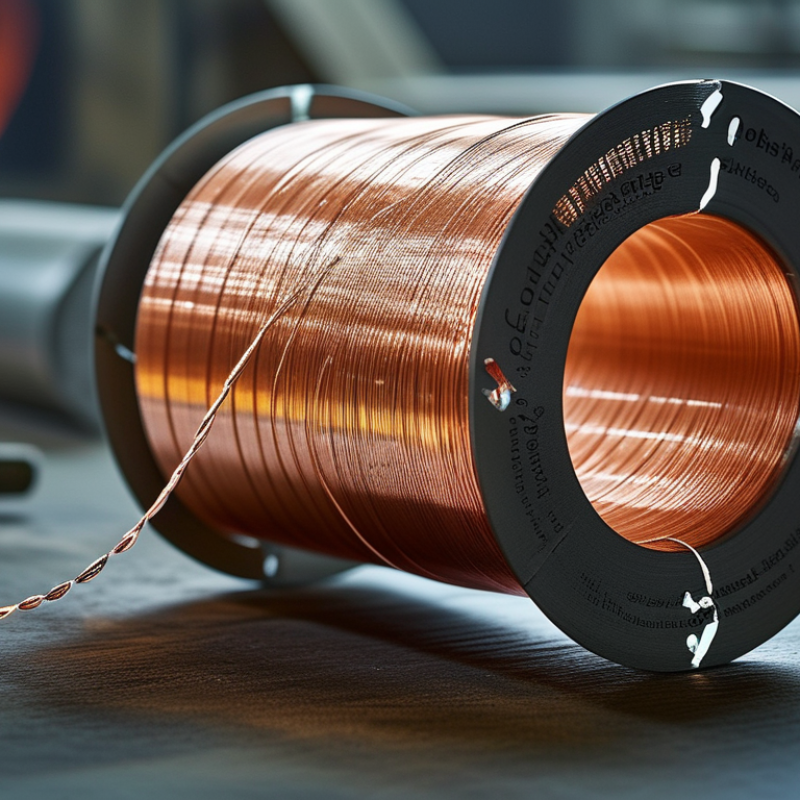
Global Market Scope: Electric Heating Wire Demand and 1,000–1,400°C Use Cases
Global demand for electric heating wire is rising with advanced manufacturing, laboratory research, and industrial furnace upgrades. Buyers increasingly need stable heating at 1,000–1,400°C. Energy efficiency matters, but temperature consistency matters more.
At these temperatures, heating wire supports ceramic firing, metal heat treatment, powder sintering, and controlled laboratory testing. Furnace atmosphere changes wire life significantly. Oxygen, moisture, and chemical vapors can accelerate oxidation. Wire diameter, coil spacing, and surface loading also affect performance. A thicker wire may last longer, but it can respond more slowly.
Global buyers should examine alloy composition, resistance tolerance, maximum operating temperature, and thermal cycling data. Reliable manufacturers provide batch traceability, dimensional inspection, and electrical testing records. They should also explain installation limits instead of promising unlimited service life. A certificate alone is not enough. Real furnace conditions can expose weaknesses that laboratory tests miss. Procurement teams should request sample testing under actual heating rates and atmosphere conditions. This step costs time. It can prevent costly replacement later.
Demand is not uniform across regions. High-temperature processing is expanding, while buyers face stricter energy and safety expectations. Some specifications still look incomplete. That is worth admitting. Better decisions come from comparing measured performance, maintenance records, and application experience rather than choosing only by price.
Material Benchmark: NiCr 80/20 Versus FeCrAl Alloys by Resistivity and Temperature
For global buyers, resistivity is a practical starting point when comparing electric heating wire. NiCr 80/20 commonly measures about 1.09–1.10 μΩ·m at 20°C. FeCrAl alloys often range from 1.35 to 1.45 μΩ·m. These values are reported in ASM Handbook material data and major alloy technical sheets. Higher resistivity lets FeCrAl produce the same heat with less wire length or lower current. That can simplify compact furnace designs.
Temperature changes the decision. NiCr 80/20 usually supports continuous service near 1,100–1,200°C in air. FeCrAl grades can reach approximately 1,300–1,400°C, depending on geometry, atmosphere, and surface loading. FeCrAl forms a protective alumina layer, while NiCr develops a chromium-rich oxide layer. Both need correct operating conditions. A poorly supported wire can sag, even when the alloy rating looks impressive. I have seen designs fail because engineers trusted catalogue limits too literally.
Tips: Ask suppliers for resistivity at 20°C, hot resistance data, maximum surface temperature, and oxidation test conditions. Compare wire diameter, not only alloy names. FeCrAl’s higher resistivity can reduce installed length, but its forming behavior may require more care. NiCr is often easier to shape and repair. The best choice depends on furnace atmosphere, cycling frequency, current capacity, and service life. Published values are useful, not absolute. Batch variation and coil spacing still deserve verification through sample testing.
NiCr 80/20 vs FeCrAl: Resistivity and Maximum Service Temperature
Typical nominal engineering values for heating-wire material selection. Electrical resistivity is measured at 20°C, while maximum service temperature refers to the approximate continuous operating limit in air.
FeCrAl generally provides higher resistivity and a higher maximum service temperature, allowing longer resistance paths and higher-temperature operation. Actual performance depends on wire diameter, atmosphere, surface loading, and operating conditions.
Leading Manufacturer Profiles: Kanthal, TOKUSHU, and Global Heating-Wire Suppliers
Top Electric Heating Wire Manufacturers for Global Buyers
Leading heating-wire manufacturers usually separate themselves through alloy control, process discipline, and documented testing. A Scandinavian producer is known for high-temperature resistance alloys used in furnaces, laboratory equipment, and industrial heaters. Its production teams often track wire diameter within tight tolerances, because a small variation can change electrical resistance and heat distribution.
A Japanese manufacturer focuses on precision heating wire for compact appliances and temperature-sensitive assemblies. Its strengths often include clean surfaces, stable winding performance, and careful batch inspection. Global suppliers add practical flexibility through custom coils, cut lengths, and export-ready packaging. Still, no supplier is perfect. Datasheets may not reflect every operating condition. Buyers should question unclear temperature ratings and request test evidence before approving samples.
Tips:
Compare resistance tolerance, maximum operating temperature, tensile strength, and surface condition. Ask for material certificates and recent inspection records. Test the wire in your actual heater design, not only on a bench. Check how the supplier handles small production changes. A responsive engineer can prevent costly redesigns. Also review packaging details, especially for long-distance shipping, since bent or oxidized wire may fail during installation.
Buyer Selection Matrix: Watt Density, MOQ, Lead Time, and Service Life Data
A buyer matrix should start with watt density, not price. For air heating, engineers often begin near 2–5 W/cm²; direct-contact applications may require higher values. The U.S. Department of Energy notes that electric resistance heating converts nearly all incoming electricity into heat at the point of use. However, poor airflow can create hot spots, oxidation, and early failure. Measure the real surface temperature.
MOQ and lead time expose supply risk. A practical matrix should record standard MOQ, prototype MOQ, tooling fees, and shipment days separately. Many factories quote 15–30 working days for standard wire assemblies, while custom insulation, terminals, or tight resistance tolerances can extend delivery beyond 45 days. These figures need written confirmation. Forecasts are imperfect.
Service life needs test evidence, not optimistic wording. Ask for resistance drift after thermal cycling, insulation breakdown results, and failure data at the intended watt density. ASHRAE Handbook—HVAC Systems and Equipment emphasizes airflow, temperature control, and material compatibility in electric heating design. IEC 60335-1 also provides a recognized safety framework for household and similar appliances. For industrial buyers, request test temperature, cycle count, sample size, and failure criteria. A “10,000-hour life” claim means little without those details. The missing detail is often the real cost.


 Close
Close