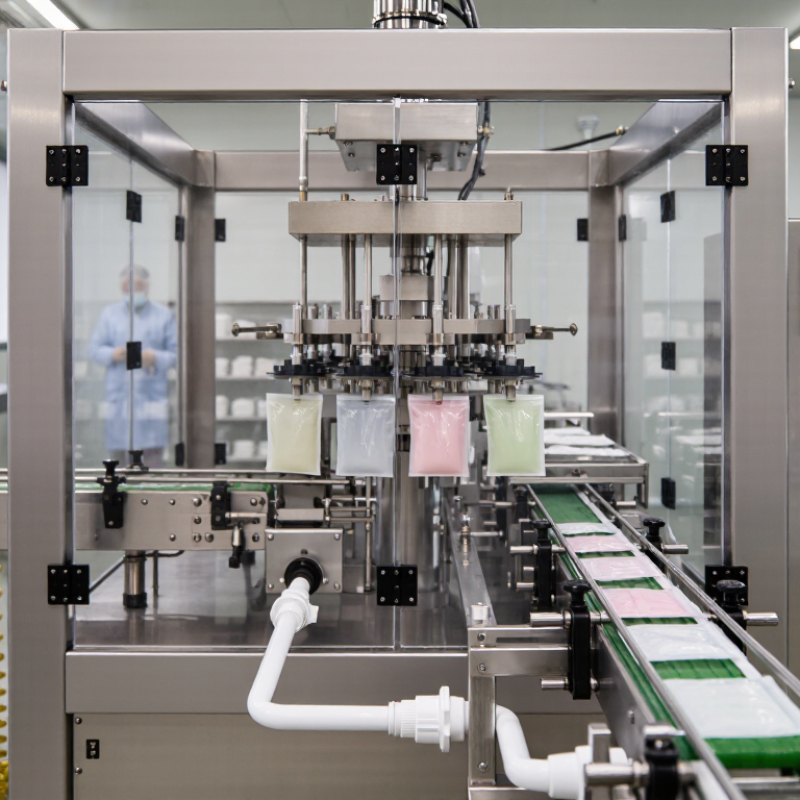
A gel packing machine should match the product you actually make, not just the output figure on a supplier’s chart. Estimate normal and peak demand, then allow time for cleaning, changeovers, and routine stops. A line rated for 60 packs per minute may deliver less during a shift. Test with your own gel and packaging before committing.
Gel behavior matters. A thin gel may drip from a nozzle, while a thick or temperature-sensitive formula can fill unevenly. Check viscosity across the expected production temperature range, and note whether the gel traps air or contains particles. Ask for trials using representative samples. Watch the fill cut-off, container cleanliness, and weight consistency. Small details count. A little residue can make a pouch seal unreliable.
Choose the packaging format early. Sachets, tubes, jars, and bottles need different filling and sealing arrangements. Confirm the machine can handle your target fill volume, package dimensions, and material thickness. Also consider how often operators will switch formats; quick, tool-light adjustments can save time, though they may add cost. Do not rely on a single successful trial. I would want repeated runs and clear records of speed, rejects, and cleaning time. Those figures are not perfect predictors, but they expose assumptions worth questioning.



 Close
Close