How to Choose the Best Car Film PPF for Your Vehicle?
Choosing the right Car Film Ppf begins with evidence, not showroom shine. Grand View Research’s automotive films market analysis identifies rising demand for paint protection, styling, and longer vehicle ownership. That growth matters, but market expansion does not guarantee equal product quality. A glossy sample can hide weak adhesive, uneven thickness, or poor edge durability.
Professional evaluation should examine the film’s material, thickness, optical clarity, and installation support. Thermoplastic polyurethane, or TPU, usually offers better flexibility than older PVC alternatives. Check the technical sheet for thickness in mils, elongation, UV resistance, yellowing performance, and self-healing conditions. A reputable supplier should explain testing methods and warranty limits clearly. ASTM-related testing can provide useful context, although laboratory results may not reflect every climate or driving habit.
Think about daily use. Highway gravel strikes the hood differently from urban door-edge damage. A black vehicle may expose contamination faster than silver paint. Hydrophobic coatings can simplify washing, but they do not replace careful maintenance. No film is perfect. Even premium material can fail after poor preparation, stretched installation, or repeated contact with abrasive dirt.
MarketsandMarkets also reports continued growth across automotive protection and appearance-film applications, reflecting stronger consumer interest in vehicle preservation. However, industry forecasts are not purchase recommendations. They often combine different film categories and regional markets. This guide therefore focuses on practical verification: comparing specifications, reviewing installer experience, inspecting real vehicles, and matching protection zones to your driving environment. The best choice is rarely the most expensive roll. It is the film that performs predictably after installation.
Define Protection Needs Using 6–8 Mil PPF Thickness Standards
How to Choose the Best Car Film PPF for Your Vehicle?
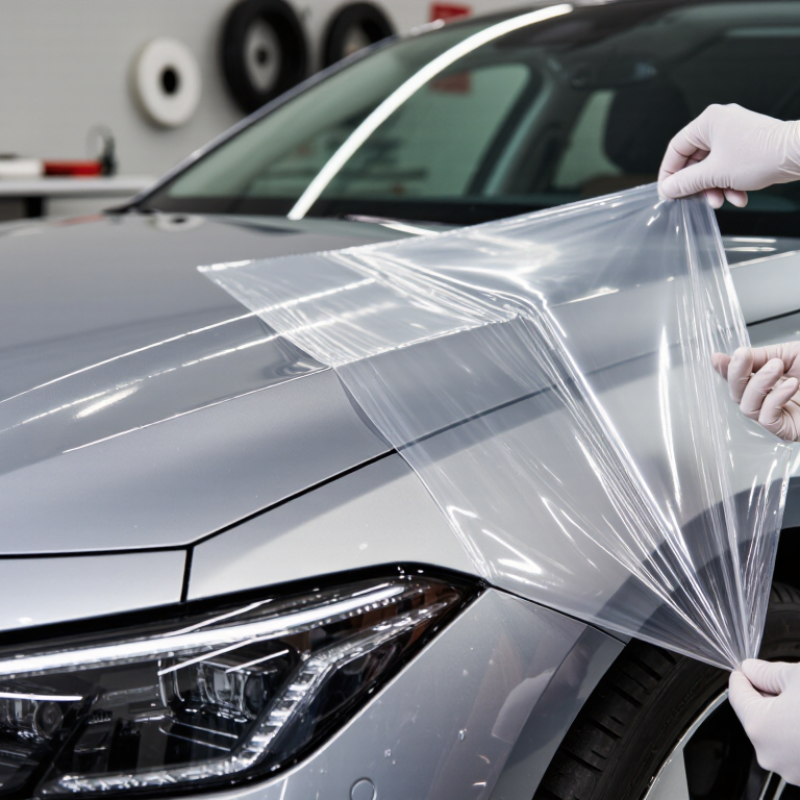
Choosing paint protection film starts with your driving environment, not a glossy sample book. For most daily vehicles, 6 mil PPF offers practical defense against light gravel, road dust, and minor scratches. Six mil equals about 0.006 inches, or 152 microns. It usually follows curved panels more easily and creates less visible edge buildup.
Vehicles facing frequent highway travel may benefit from 7 or 8 mil PPF. These thicker options provide more material against stone impacts on the hood, bumper, mirrors, and front fenders. Eight mil measures approximately 203 microns. The difference sounds small. It matters. However, thickness alone does not guarantee better protection. Adhesive quality, topcoat performance, film clarity, and installation skill also affect results.
I have seen thick film fail early when dirt remained under the edges. That mistake is easy to overlook. A careful installer should inspect paint condition, measure panel shapes, and prepare the surface before application. Thicker PPF can also need more controlled stretching around tight corners. On a clean bumper, 6 mil may look more natural. On a high-mileage vehicle, 8 mil may offer stronger impact resistance. The right choice depends on risk, budget, appearance, and maintenance habits. I would not choose the thickest option automatically. Real driving conditions should decide.
Compare TPU and PVC Films with ASTM D882 Performance Data
How to Choose the Best Car Film PPF for Your Vehicle?
ASTM D882 helps compare tensile strength and elongation in thin plastic films. It measures resistance while a prepared strip is pulled until failure. In one controlled comparison, TPU film may reach 25–40 MPa tensile strength and 300–500% elongation. PVC film may measure around 15–25 MPa and 100–250% elongation. These figures are examples, not universal specifications. Thickness, temperature, conditioning, and test speed can change the result.
TPU usually stretches more smoothly around mirrors, bumpers, and sharp curves. This flexibility can reduce lifting during installation. Its higher elongation may also absorb small impacts from gravel or road debris. PVC often feels firmer and can provide a clean, stable surface on broad panels. However, excessive stiffness may create tension near edges. Watch those corners.
Check the complete ASTM D882 report, not only one impressive number. Confirm specimen thickness, gauge length, conditioning time, and failure mode. A film with high tensile strength may still perform poorly after sunlight, heat, or repeated washing. Ask for weathering data and adhesion results as well. I would also inspect a sample after installation. Laboratory performance is useful, but real doors, dust, cold mornings, and rushed fitting can expose weaknesses. No test perfectly reproduces daily driving.
Evaluate Optical Clarity Through ASTM D1003 Haze Testing
Choosing the best car film PPF requires more than checking gloss under showroom lights. Optical clarity should be verified through ASTM D1003 haze testing. This method measures scattered light passing through the film, revealing a cloudy or milky appearance. Lower haze usually indicates cleaner visibility, especially across headlights, hoods, and dark paint.
Ask for test results from an independent laboratory or a controlled quality department. Confirm the film thickness, test temperature, specimen preparation, and measuring equipment. Small differences in handling can affect readings. A useful comparison should use the same test conditions for every sample. Also inspect the film after installation. Curves, stretch, adhesive flow, and surface texture can change its appearance. I have seen a clear sample look less impressive after poor fitting. Laboratory data matters, but installation experience matters too.
Tips: View a sample at several angles. Place it over black paint. Check bright sunlight and garage lighting. Look for haze, distortion, and uneven texture. Do not rely on a single number. ASTM D1003 testing does not fully predict long-term clarity, edge lifting, or visual changes after washing. A low haze result is valuable evidence, not a complete buying decision. Recheck the installer’s process, because even excellent film can appear cloudy when contamination or excessive stretching is present.
How to Choose the Best Car Film PPF for Your Vehicle? — Evaluate Optical Clarity Through ASTM D1003 Haze Testing
How to interpret: ASTM D1003 is used to measure luminous transmittance and haze of transparent materials. Lower haze generally indicates less forward light scattering, but it is not a complete measure of visual quality. The figures above are illustrative examples, not certified test results or specifications for commercial products. For a fair comparison, use the same test method, instrument setup, specimen conditioning, film orientation, and substrate arrangement, and request the laboratory report for the specific film being considered.
Assess UV Resistance and Yellowing with ASTM G154 Exposure Data
When choosing car film PPF, UV resistance deserves more than a glossy product photo. Ask for ASTM G154 exposure data. This test uses controlled fluorescent ultraviolet lamps, moisture, and heat cycles to stress film samples. It can reveal color change, haze, cracking, and gloss loss before outdoor installation.
Look for the exposure duration, lamp type, irradiance, cycle settings, and test temperature. Also check whether the sample included the adhesive and protective top layer. These details matter. A film tested for 1,000 hours may not perform like one tested for 500 hours if the conditions differ. ASTM G154 provides a testing method, not a universal pass-or-fail lifespan.
Yellowing should be assessed with measured color change, such as b* values, alongside photographs and visual ratings. Low haze and stable gloss are useful signs, but they do not guarantee perfect results under desert sun, coastal salt, or frequent washing. In my experience, installation quality also affects appearance. Trapped moisture, stretched edges, and harsh cleaners can make a durable film look aged.
Read the report carefully. Is it from an independent laboratory? Were multiple samples tested? Were results recorded after each exposure interval? One impressive number may hide inconsistent specimens. I would prefer transparent data over a confident promise. Still, ASTM G154 cannot reproduce every real-world condition, and that limitation deserves attention.
How to Choose the Best Car Film PPF for Your Vehicle?
Assess UV Resistance and Yellowing with ASTM G154 Exposure Data
This chart shows the cumulative exposure profile for ASTM G154 Cycle 1: 8 hours of UVA-340 ultraviolet exposure followed by 4 hours of condensation per cycle. A typical cycle uses 0.89 W/m²/nm irradiance at 340 nm, with UV exposure at 60°C and condensation at 50°C. Longer exposure increases the opportunity to compare gloss retention, color change, and yellowing.
ASTM G154 defines an accelerated weathering procedure rather than a universal pass/fail limit for PPF. Yellowing should be measured before and after exposure using a defined colorimetric method, such as yellowness index testing to ASTM E313. When comparing films, lower yellowing, lower color change, and better appearance retention at the same exposure level indicate stronger UV-aging performance.



 Close
Close