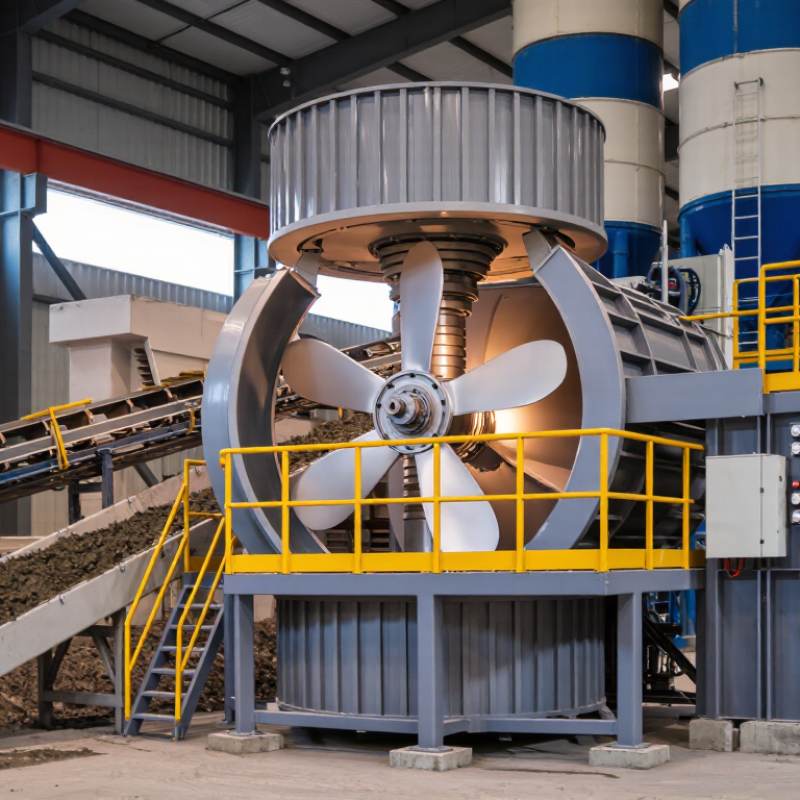
| Capacity | Rated mixing volume | Select a mixer whose rated batch volume matches the required output, while allowing adequate space for aggregate, cement, water, and admixtures to mix freely. | Overfilling can reduce mixing quality, increase power demand, and accelerate wear on paddles, liners, and drive components. | Compare the effective mixing volume—not only the total vessel volume—with the required batch size. |
| Installation | Foundation and structural support | Provide a level, rigid foundation designed for the mixer’s operating weight, dynamic loads, anchor forces, and discharge arrangement. | Insufficient support may cause vibration, misalignment, excessive noise, and premature bearing or gearbox failure. | Review the foundation drawing, anchor-bolt layout, operating load, and local structural requirements before installation. |
| Installation | Access and service clearance | Leave sufficient clearance around inspection covers, discharge gates, lubrication points, motors, gearboxes, and removable wear parts. | Good access reduces service time and allows safe inspection without dismantling unrelated equipment. | Check the general arrangement drawing and confirm that maintenance areas remain accessible after installation. |
| Installation | Electrical supply and grounding | Confirm motor voltage, phase, frequency, short-circuit protection, cable sizing, and protective grounding before commissioning. | Correct electrical design protects personnel and reduces motor overheating, nuisance trips, and equipment damage. | Have a qualified electrician compare the nameplate data with the site power supply and applicable electrical codes. |
| Maintenance | Wear-resistant liners and mixing tools | Choose replaceable liners, paddles, arms, or blades made from materials suitable for abrasive aggregates and the intended concrete mix. | Replaceable wear parts help maintain mixing performance and protect the main shell from abrasion. | Ask for wear-part drawings, material specifications, expected service-life factors, and replacement procedures. |
| Maintenance | Lubrication and inspection schedule | Use clearly defined inspection points and follow the manufacturer’s intervals for bearings, gearboxes, seals, chains, and other drive components. | Routine lubrication and inspection limit friction, heat buildup, leakage, and unplanned downtime. | Confirm that the manual identifies lubricant type, quantity, inspection frequency, and lockout requirements. |
| Maintenance | Cleaning and washout design | Look for accessible inspection doors, effective water connections, smooth internal surfaces, and a discharge path that minimizes material buildup. | Hardened concrete can obstruct the mixer, increase starting torque, and damage internal components. | Inspect the mixer layout and confirm that cleaning can be completed without entering the mixing chamber. |
| Safety | Guards and access-door interlocks | All moving parts, including shafts, couplings, chains, belts, and gears, should be guarded. Access doors should prevent operation when open. | Guards and interlocks reduce the risk of contact with rotating machinery and unexpected start-up. | Check the safety circuit during commissioning and verify compliance with applicable machinery-safety regulations. |
| Safety | Emergency-stop system | Install clearly visible, readily accessible emergency-stop devices near operating and maintenance areas. | An emergency stop allows operators to rapidly stop hazardous motion during an abnormal event. | Test each device and confirm that resetting it does not automatically restart the mixer. |
| Safety | Lockout/tagout provisions | Provide a means to isolate and lock electrical, hydraulic, pneumatic, and other hazardous energy sources before cleaning or maintenance. | Isolation prevents unexpected movement or release of stored energy while personnel work on the equipment. | Confirm that isolation points are labeled, accessible, and included in the site safety procedure. |
| Control | Motor overload and jam protection | Use overload protection appropriate to the motor and drive system, with an alarm or automatic shutdown for excessive current or abnormal torque. | Protection reduces the likelihood of motor, gearbox, shaft, and coupling damage caused by overloading or foreign objects. | Review the control-panel functions and test the trip, alarm, reset, and restart logic under controlled conditions. |
| Control | Variable-speed control | Consider a variable-frequency drive when the process requires adjustable mixing speed, controlled acceleration, or reduced starting current. | Adjustable speed can help accommodate different mix designs and reduce mechanical shock during start-up. | Confirm the available speed range, motor compatibility, ramp settings, and protection functions. |
| Control | Automation and batch monitoring | For repeated production, select controls that can manage ingredient sequencing, mixing time, discharge status, alarms, and batch records. | Consistent control improves repeatability and makes process faults easier to identify. | Request a control-logic description and verify that manual operation remains available for safe testing and maintenance. |
| Documentation | Manuals, spare parts, and operator training | Choose equipment supplied with installation drawings, electrical diagrams, maintenance instructions, spare-parts lists, and safety procedures. | Complete documentation supports correct installation, safer operation, faster troubleshooting, and lower lifecycle cost. | Confirm that documents are available in the required language and that operators and maintenance staff receive practical training. |



 Close
Close