How to Choose a Heat Recirculation Pump in 2026?
Choosing a Heat Recirculation Pump in 2026 is no longer a simple flow-rate decision. Modern homes demand quieter operation, lower electricity use, and more reliable hot-water delivery. A pump that looks suitable on paper may still create noise, wasted energy, or uneven temperatures at the tap.
Dan Holohan, a respected hydronic heating educator, wrote, “Pumping away is not a slogan; it is a design strategy.” His observation remains useful when evaluating domestic hot-water systems. Pipe length, return-line resistance, water temperature, pump controls, and insulation must work together. A stronger motor does not automatically produce better circulation.
Real-world details matter. Imagine a kitchen tap located twelve meters from the water heater. The first liters may run cold each morning, even when the pump operates continuously. That delay can signal poor control settings, inadequate insulation, or an incorrectly sized pump. It may not mean the pump is too weak.
This guide examines how to choose a Heat Recirculation Pump for 2026 applications. It considers variable-speed technology, smart timers, temperature sensors, corrosion-resistant materials, maintenance access, and lifecycle cost. Certification and manufacturer documentation also deserve careful attention. Marketing claims can sound impressive.
There is no perfect selection for every building. A compact apartment, a hotel corridor, and a large family home have different demands. Even experienced installers can overlook balancing. Measure the system carefully. Then question the obvious choice.
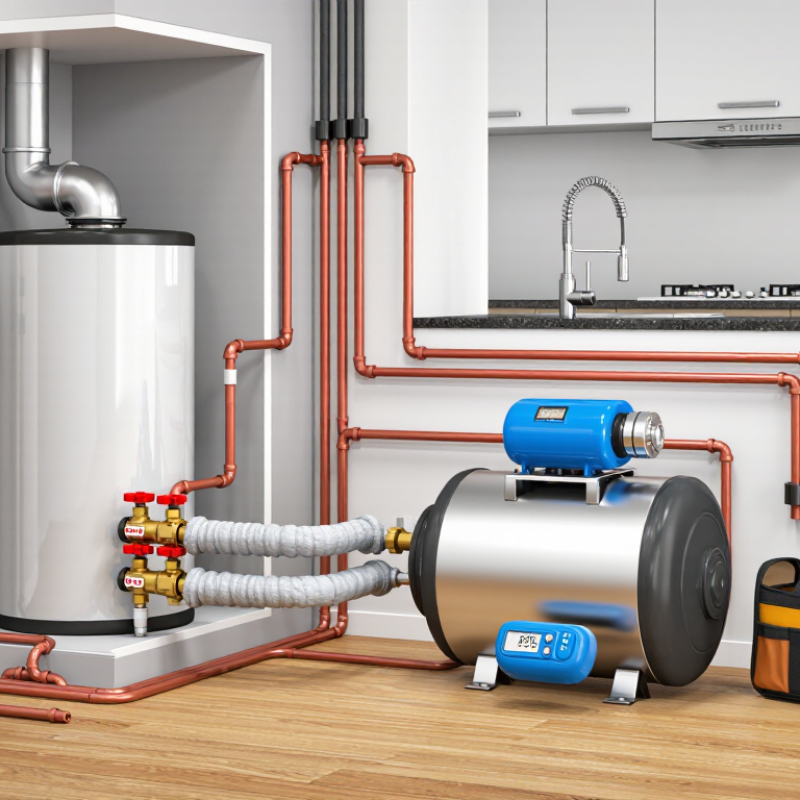
What a Heat Recirculation Pump Does and Why It Matters
How to Choose a Heat Recirculation Pump in 2026?
What a Heat Recirculation Pump Does and Why It Matters
A heat recirculation pump keeps hot water moving through a dedicated return line or approved bypass path. When you open a tap, warm water arrives sooner. Without circulation, cold water may sit inside the pipe for several minutes.
That delay wastes water and tests patience. A recirculation pump can reduce the wait from two minutes to roughly twenty seconds, depending on pipe length and insulation. It does not create heat. It moves heated water from the source back toward the fixtures. This difference matters when sizing the system.
Choose a pump by checking flow rate, pipe resistance, water temperature, connection size, and control method. A small apartment may need gentle circulation, while a large home needs more head pressure. Timers, temperature sensors, and demand buttons can limit unnecessary operation. Continuous running is convenient, but it may increase energy use and accelerate pipe heat loss.
Look for construction suitable for domestic hot water and verify local plumbing requirements. A qualified installer should confirm the return path, valve direction, and insulation quality. The calculation is rarely perfect. Oversizing the pump can create noise, waste electricity, and cause uncomfortable temperature changes. I have found that insulation often deserves as much attention as the pump itself. A powerful pump cannot repair a poorly planned loop.
A heat recirculation pump is selected mainly by required flow rate and system resistance, not by motor size alone. The chart shows the theoretical heat-carrying capacity of water at a 10°C temperature rise, calculated from Q = m × c × ΔT. In a real domestic hot-water loop, choose a pump that can deliver the required flow at the calculated system head while maintaining quiet operation and avoiding excessive energy use.



 Close
Close