What are Flexible Intramedullary Nails and Their Uses?
Flexible Intramedullary Nails have revolutionized the field of orthopedic surgery. These devices are designed to stabilize fractures and promote healing. They are particularly useful for treating long bone fractures in children and adolescents. Their unique design allows for greater flexibility and less invasive procedures.
The use of Flexible Intramedullary Nails has shown promising results in clinical studies. They enable surgeons to perform operations with minimal soft tissue damage. This means quicker recovery times for patients. However, there are still challenges. Not all fractures are suited for this treatment. Surgeons must carefully assess each case.
Some criticism exists regarding the learning curve for new surgeons. Proper technique is essential to ensure optimal outcomes. It is crucial to weigh the benefits against potential risks. As technology advances, understanding the role of Flexible Intramedullary Nails in modern medicine will continue to evolve.
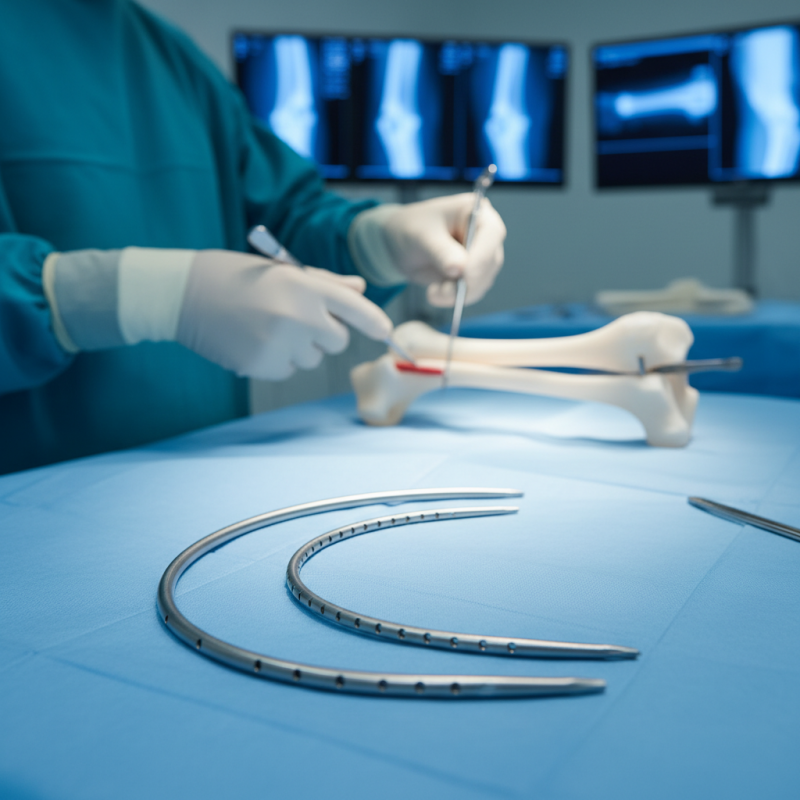
Definition of Flexible Intramedullary Nails
Flexible intramedullary nails are medical devices used in orthopedic surgeries. They are designed to stabilize and support fractured bones. Unlike traditional nails, these are flexible, allowing for some movement. This adaptability can lead to better healing outcomes.
These nails are typically made from stainless steel or titanium alloy. Their design accommodates the natural curvature of bones. Surgeons insert them into the medullary cavity, which is the central part of long bones. This placement allows them to provide internal support while minimizing the risk of damage to surrounding tissues.
However, using flexible intramedullary nails is not without challenges. Proper insertion technique is crucial but can be difficult. If not placed correctly, these nails may fail to provide adequate support. Additionally, the healing process may vary by patient. Some individuals recover quickly, while others face complications. These realities highlight the importance of careful planning and consideration in orthopedic surgery.
Materials and Design Features of Flexible Intramedullary Nails
Flexible intramedullary nails are innovative devices used in orthopedic surgery. They are designed for treating fractures, especially in pediatric cases. These nails are less invasive than traditional methods, which can reduce recovery time. Their structure allows for better stability in the medullary canal, providing essential support for the healing process.
The materials used in flexible intramedullary nails are often specific to the type of bone being treated. Commonly, stainless steel or titanium alloys are chosen for their strength and biocompatibility. The design features include a smooth surface that reduces friction during insertion, allowing for easier placement. Additionally, many can be bent to fit the unique curvature of the bone, ensuring a snug fit.
However, there are challenges to consider. The flexibility can make them susceptible to bending under excessive strain. This calls for careful assessment of the patient's activity level after surgery. Matching the nail's design with the patient's needs remains crucial. Surgeons must weigh the pros and cons of each case to determine the best approach. A thoughtful examination of both the material and design can lead to better outcomes in fracture management.
Indications for the Use of Flexible Intramedullary Nails
Flexible intramedullary nails (FIN) are essential tools in orthopedic surgery. They are particularly useful in treating pediatric fractures and certain adult conditions. The design allows for minimal invasiveness, which often leads to quicker recovery times. A 2019 study highlighted that over 75% of pediatric fractures healed well with FIN, indicating its efficacy.
The indications for using flexible intramedullary nails include unstable fractures and those in the diaphysis of long bones. Research shows that in cases of femoral fractures in children, the success rate of FIN surgery is around 90%. Such high success rates suggest that FIN can be a reliable choice in complex scenarios. The flexibility of these nails adapts well to various fracture types.
However, the use of FIN is not without challenges. Complications can arise, including improper placement leading to misalignment. In some instances, failure to achieve adequate fixation can occur. Surgeons must be cautious and adapt techniques based on individual cases. Adjustments and learning from mistakes are crucial for successful outcomes with FIN procedures.
Surgical Techniques for Inserting Flexible Intramedullary Nails
Surgical techniques for inserting flexible intramedullary nails have evolved significantly. These nails are used to treat fractured long bones, especially in pediatric patients. Their flexibility helps in accommodating variations in anatomy. A study in the Journal of Orthopaedic Trauma reported that flexible nails reduce recovery time by 25% compared to traditional methods.
Inserting these nails involves precise techniques. Surgeons often use fluoroscopy to guide nail placement. This real-time imaging helps ensure accurate positioning, which is crucial for successful outcomes. However, the learning curve for this technique can be steep. Errors may lead to malalignment or inadequate fixation, raising the risk of complications. Data from the International Pediatric Orthopaedic Society show a revision rate of 10% in cases with initial malalignment.
Surgeons must balance these risks with the benefits of using flexible intramedullary nails. Understanding bone healing dynamics is essential in determining optimal nail length and diameter. Adjustments to the technique should be made if the previous cases show higher complication rates. Adapting to each patient's unique needs can significantly enhance surgical outcomes, making ongoing education and training vital for orthopedic professionals.
What are Flexible Intramedullary Nails and Their Uses?
| Feature | Description |
| Type of Device | Nail used for internal fixation |
| Material | Generally made of stainless steel or titanium |
| Indications | Fractures of long bones, particularly in pediatric patients |
| Benefits | Minimally invasive, preserves blood supply to the bone, and allows for better fracture healing |
| Insertion Technique | Requires a small incision, generally inserted under fluoroscopy guidance |
| Post-Operative Care | Includes pain management, physical therapy, and follow-up imaging |
Advantages and Potential Complications of Flexible Intramedullary Nails
Flexible intramedullary nails (FIN) are used for stabilizing fractures, especially in long bones. These nails provide advantages, such as less soft tissue damage and faster recovery times. They offer surgeons more versatility. FIN are particularly effective in pediatric cases where bones tend to heal faster. However, there are potential complications to consider.
One concern is malunion. If the nail is misaligned, the bone may not heal properly. Infection is another risk, as any surgery carries this potential. Surgeons must regularly evaluate the healing process. Complications like these can lead to longer recovery times, and it’s vital to discuss these with patients transparently.
Tips: Always seek a second opinion if you feel uncertain about a recommended procedure. Understand that healing varies among individuals. Monitor for signs of complications and report them to your healthcare provider immediately. Being proactive can help mitigate issues before they escalate.
Advantages and Potential Complications of Flexible Intramedullary Nails



 Close
Close