What Are Filter Cartridges and How Do They Work?
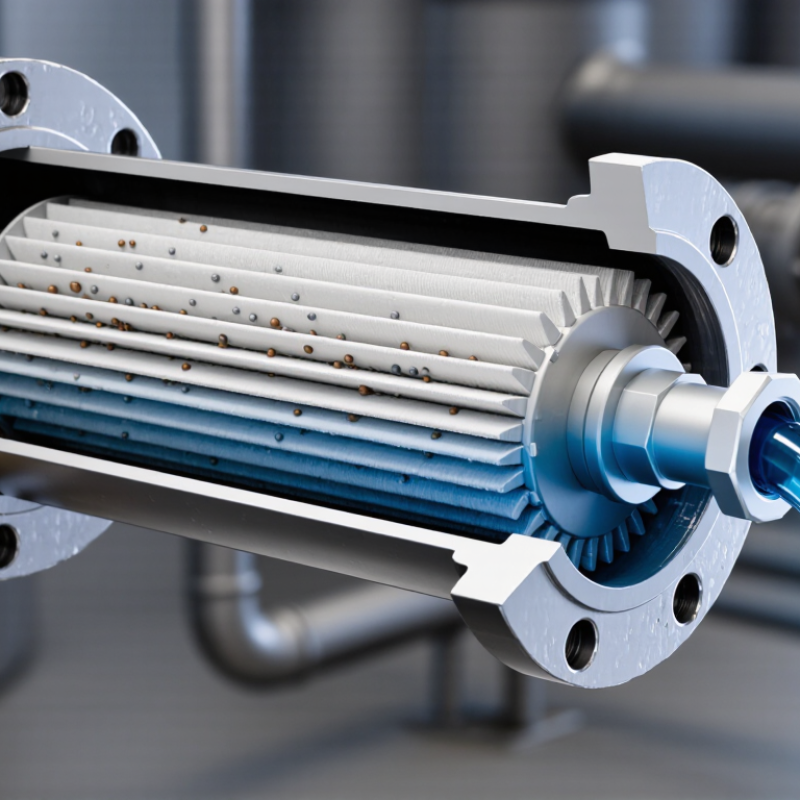
Filter Cartridges are compact, replaceable barriers used to remove unwanted particles from liquids or gases. They sit inside a housing, where the process stream moves through pleated, spun, melt-blown, or membrane media. Contaminants remain trapped inside the material. Cleaner fluid leaves through the outlet.
The principle sounds simple. The details are not. A cartridge’s pore size, media chemistry, pressure rating, and flow rate determine its real performance. A five-micron cartridge does not remove every five-micron contaminant under every condition. Particle shape, viscosity, temperature, and loading also matter. Small differences can become expensive failures.
MarketsandMarkets’ Filter Cartridge Market report identifies water treatment, pharmaceuticals, food processing, and industrial applications as major demand areas. Its 2023–2028 forecast also points to steady market growth, supported by stricter quality requirements and expanding water-reuse projects. Grand View Research similarly reports strong expansion in industrial filtration, especially where manufacturers must reduce downtime and protect sensitive equipment.
Filtration engineer Peter S. Cartwright has offered a practical warning: “The filter is only as good as the system around it.” That observation deserves attention. A cartridge cannot compensate for poor housing design, incorrect installation, or delayed replacement. In a real plant, a clogged cartridge may show rising differential pressure, reduced flow, or visible discoloration. Sometimes, the warning appears too late.
This guide explains what Filter Cartridges are, how their internal media works, and how engineers select them. It also examines ratings, materials, maintenance, and common mistakes. The picture is useful, but not perfect. Actual results depend on testing, operating conditions, and honest performance data.
What Filter Cartridges Are and What They Are Made Of
Filter cartridges are replaceable elements that remove unwanted particles from water, air, fuel, or process fluids. They fit inside a rigid housing, where fluid passes through engineered filter media. A cartridge may use surface filtration, depth filtration, or adsorption. Surface media traps particles on the outer layer. Depth media captures them through a thicker, tangled structure. Activated carbon adsorbs many odors, chlorine compounds, and organic contaminants. It does not destroy every contaminant.
The materials determine performance. Polypropylene is common because it resists moisture and many chemicals. Polyester offers stronger pleated structures and repeated-flow stability. Cellulose can provide economical depth filtration, but it may swell or weaken. Membranes made from PTFE, PES, or nylon provide controlled pore sizes. Ceramic media can support fine filtration and cleaning, although it may crack under impact. Metal mesh is durable and washable. A cartridge is not simply a fine screen.
The 2023 WHO/UNICEF JMP report estimated that 2.2 billion people lacked safely managed drinking water in 2022. Demand for dependable treatment is therefore substantial. Yet a smaller pore rating sounds better, and that assumption is incomplete. Fine media can create rapid pressure loss and shorter service life. The report’s lesson is practical: performance depends on the contaminant, flow rate, contact time, and maintenance. NSF/ANSI standards also separate claims for particulate reduction, taste, and specific chemicals. Specifications can still mislead when users ignore operating conditions.
How Filter Cartridges Capture and Remove Contaminants
Filter cartridges capture contaminants through several physical and chemical mechanisms. A pleated depth cartridge traps sediment as water moves through layered fibers. Larger particles stop near the surface, while smaller particles collect deeper inside. Membrane cartridges use controlled pore sizes to block bacteria, cysts, and fine suspended solids. Activated carbon works differently. Its porous surface adsorbs chlorine, odors, and some organic chemicals. The process depends on contact time, temperature, pressure, and contaminant concentration.
The WHO and UNICEF Joint Monitoring Programme reported that 2.2 billion people lacked safely managed drinking water in 2022. That figure shows why reliable treatment matters, but cartridges are not magic sponges. The U.S. Environmental Protection Agency’s 2024 PFAS drinking-water regulation set limits of 4 nanograms per liter for PFOA and PFOS. Meeting such limits requires verified performance, not vague claims. NSF/ANSI standards also help evaluate material safety and contaminant reduction under controlled testing.
Real installations are less tidy. High sediment loads can clog a cartridge early. Carbon can reach breakthrough without obvious taste changes. A pressure gauge, scheduled replacement, and laboratory testing provide stronger evidence than appearance alone.
Filter selection should match the water report, target contaminant, flow rate, and certified capacity. Sometimes the wrong cartridge still produces clear water. That is the uncomfortable part.
When to Replace and Maintain a Filter Cartridge
A filter cartridge works only while its media can capture particles, chemicals, or microorganisms. Replacement should follow pressure, flow, and water-quality evidence, not a guess based on appearance. The U.S. Centers for Disease Control and Prevention advises changing household water filters according to the manufacturer’s schedule. It also warns that neglected filters can support bacterial growth. A cloudy cartridge is not always exhausted. A clean-looking cartridge may already be saturated.
Track the cartridge’s installation date and daily usage. A sudden pressure drop often signals particle loading. A slow tap, unusual taste, or odor can also indicate exhaustion. For air systems, ASHRAE Standard 52.2 evaluates particle removal across 12 size ranges, from 0.3 to 10 micrometers.
The pressure difference still matters more during routine service. Replace the cartridge when it reaches the specified differential pressure, service life, or capacity limit. NSF/ANSI 42 and 53 test claims for aesthetic effects and selected health contaminants, but certification does not create one universal replacement interval. Usage changes everything. High sediment, hard water, heat, and intermittent operation shorten cartridge life. Maintenance records are useful, but imperfect. A calendar-only schedule can waste media or delay replacement. Inspect seals, sanitize reusable housings, and prevent hands from touching the clean outlet. If test results and filter indicators disagree, investigate before resetting the schedule.



 Close
Close