How to Choose a Pneumatic Pressure Calibrator?
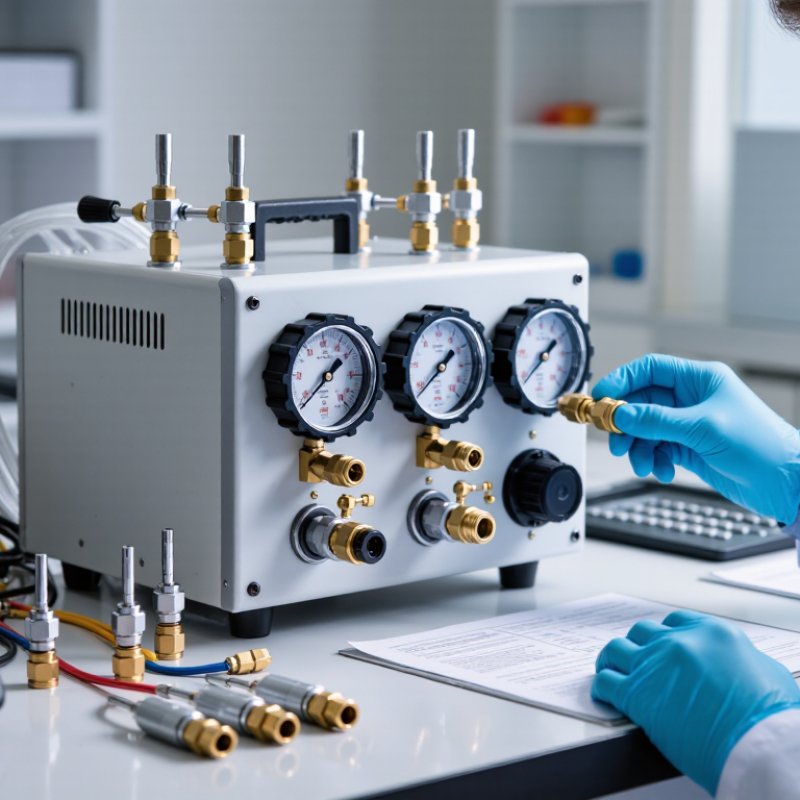
A pneumatic pressure calibrator is only as reliable as its pressure source. The U.S. Department of Energy reports that compressed-air systems may lose 20% to 30% of output through leaks. That loss can create slow pressure recovery and unstable readings. Inspect the compressor, receiver, filters, tubing, and connectors before comparing calibrators. Moisture matters too. Water droplets can damage valves and distort low-pressure control.
Evaluate the control system under real working conditions. A good calibrator should reach the target pressure smoothly, without large overshoot or constant manual correction. Check both coarse adjustment and fine regulation. A practical test is simple: apply several pressure points, pause for 60 seconds, and record the drift. NIST Technical Note 1297 recommends reporting measurement uncertainty with a stated confidence level, commonly about 95% when coverage factor k equals 2. Your test records should include temperature, stabilization time, and reference uncertainty.
Pressure stability is often overlooked. A display can look impressive while the output quietly oscillates. I have seen this happen when a long hose was treated as harmless. It was not. Shorter tubing, stable ambient temperature, and sufficient isolation volume usually improve repeatability. ISO/IEC 17025 principles also support traceable equipment, documented methods, and competent personnel. Still, no specification replaces an on-site trial. The required pressure range, leak rate, and operator technique may expose weaknesses that laboratory brochures never show.


 Close
Close