How to Choose the Right Galvanized Nails for Your Project?
Choosing the right galvanized nails for your project is crucial. These nails are specially coated to resist rust and corrosion. They are ideal for outdoor applications or any area exposed to moisture.
When selecting galvanized nails, consider their size and type. Different projects require different lengths and diameters. For example, roofing projects often need longer nails, while lighter tasks may only require shorter ones. The finish of the nails also matters. Some have a rough texture, which enhances grip, while others are smooth for easier driving.
It's easy to overlook these details. Choosing the wrong galvanized nails can lead to structural issues down the line. You might find yourself faced with rusted, failing nails in just a few months. Take the time to reflect on the specific needs of your project. This will help you make a more informed decision. Galvanized nails are more than just a tool; they are a fundamental part of creating durable and lasting constructions.
Understanding Galvanized Nails: Types and Applications
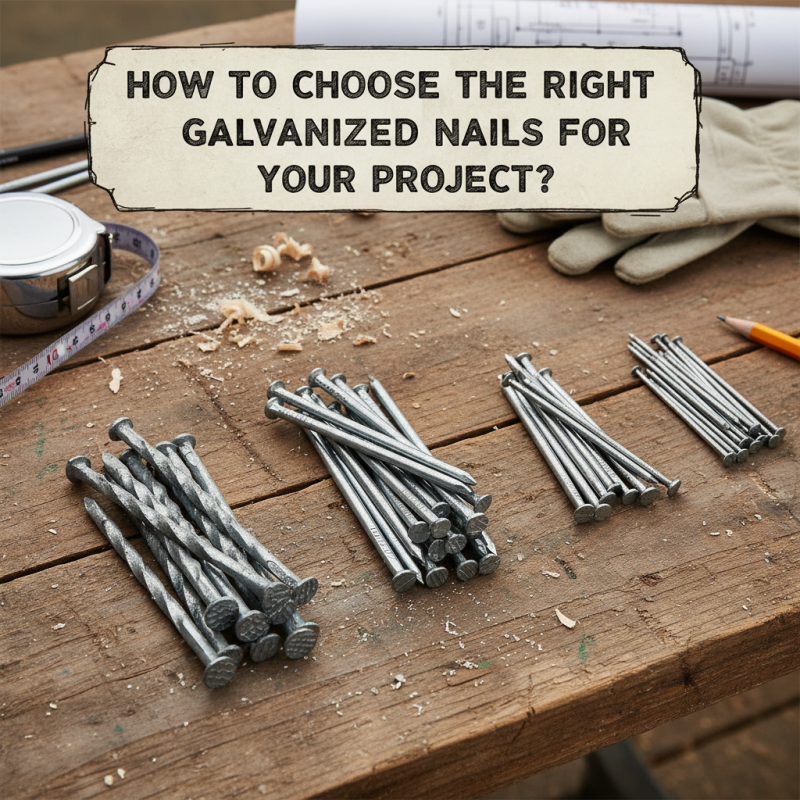
When selecting galvanized nails, it's essential to understand the different types available. Galvanized nails are coated with a layer of zinc to prevent rust. This makes them ideal for outdoor projects. Common types include smooth shank, spiral, and ring shank. Each type has specific applications, affecting their grip and holding power in various materials.
Tips: Consider the nail's length and gauge. A thicker gauge means stronger nails. For decks or fencing, use ring shank nails for better withdrawal resistance. Always check the material compatibility. Some galvanized nails are meant for wood only, while others can be used with metal.
Understanding how these nails work can prevent frustration later. For instance, spiral nails are great for attaching plywood. However, they might not be the best choice for finished surfaces. In that case, smooth shank nails are preferable for a clean look. Reflect on the project's needs before buying. Always account for environmental exposure, as some galvanized coatings are more durable than others. Choose wisely.
Factors to Consider When Choosing Galvanized Nails
Choosing the right galvanized nails is crucial for your projects. Various factors influence this decision. You should consider the type of material you are working with. For example, wood and metal require different nail specifications. According to a report from the Fastener Industry Coalition, using the wrong type can lead to structural issues or reduced durability.
Corrosion resistance is another vital factor. Galvanized nails are coated to resist rust, but the level of resistance varies. Hot-dipped galvanized nails, for instance, offer superior protection compared to electro-galvanized ones. Depending on the environment, choose nails that can withstand moisture or salt exposure.
Tip: Always check the coating thickness. A minimum of 1.5 mils is recommended for most outdoor applications.
Consider the length and gauge of the nails as well. A thicker gauge nail is generally stronger but may require more powerful tools for installation. Misjudging the size can lead to missed fastenings or imbalanced structures. Think about your project specifics.
Tip: When in doubt, consult industry guidelines or a fastener specialist. They can provide valuable insights tailored to your needs. Always remember, the right nail can greatly impact your project's success.
Matching Nail Size and Length to Your Project Needs
Choosing the right galvanized nails for your project is crucial. Nail size and length must match your specific application. For instance, the common 1.5-inch nails are ideal for attaching thin boards. Meanwhile, 2.5-inch nails work better for thicker materials like plywood.
Industry reports indicate that using the right nail length can significantly reduce failure rates. In one survey, 32% of professionals noted that improper nail sizing led to structural issues. If the nails are too short, they may not hold the materials together. If they are too long, they can splinter the wood.
Consider the materials you are using. A thicker board requires a longer nail. A half-inch thickness often needs a nail at least 1.5 inches long. This avoids issues like weak connections or damage. Nail diameter also matters; larger diameter nails provide additional gripping power.
In construction, even a slight oversight can lead to setbacks. Taking the time to choose wisely allows for a more robust build. Make sure to match nail size and length carefully for the best results.
Evaluating Corrosion Resistance and Coating Types
Corrosion resistance is a critical factor when choosing galvanized nails. It directly impacts the lifespan of your project. Various coating types provide different levels of protection. Hot-dipped galvanized nails offer superior corrosion resistance compared to those that are electro-galvanized. Statistics show that hot-dipped varieties can last up to twice as long in harsh environments.
The coating process significantly influences performance. Electro-galvanized nails have a thinner zinc coating, making them suitable for interior use only. They resist corrosion but are not ideal for outdoor projects. The American Iron and Steel Institute highlights that a thicker layer of zinc can withstand exposure to moisture and chemicals. Poor choice can lead to early failure, potentially compromising the entire structure.
Consider your project's environment. Humidity, exposure to chemicals, and temperature fluctuations all affect nail performance. Some projects might require heavier-duty options. A report from the National Association of Home Builders suggests that correctly chosen galvanized nails can enhance durability in timber framing. It's essential to evaluate the specific needs of your project, ensuring that your nail selection aligns with environmental factors for optimal results.
Best Practices for Using Galvanized Nails in Construction Projects
When using galvanized nails in construction projects, it's crucial to follow best practices for optimal results. Galvanized nails are typically coated in zinc, providing protection against rust and corrosion. This is especially important in outdoor applications. A study by the American Galvanizers Association emphasizes that proper selection of these nails can extend the lifespan of a structure by 30% to 50%.
One common mistake is using the wrong gauge. Choosing a nail that’s too thin or too thick can compromise the integrity of your construction. Nails should fit snugly in the materials you’re working with. Using a 16-gauge nail for framing, for instance, is often too heavy for lighter tasks, leading to splitting. Proper pre-drilling helps minimize damage, but many overlook this process.
Environmental factors can also impact nail performance. Humidity and temperature shifts can weaken the bonding properties of the zinc coating. Moisture levels, particularly in coastal areas, can accelerate corrosion. A 2021 report from the National Association of Home Builders noted that improper environmental considerations led to significant structural repairs in 15% of new builds. It’s essential to assess your project's location and choose nails accordingly, as oversight here can lead to unforeseen costs.
How to Choose the Right Galvanized Nails for Your Project?
This chart illustrates the different types of galvanized nails commonly used in construction projects, along with their recommended applications and average lengths. Choosing the right type can enhance durability and performance.



 Close
Close