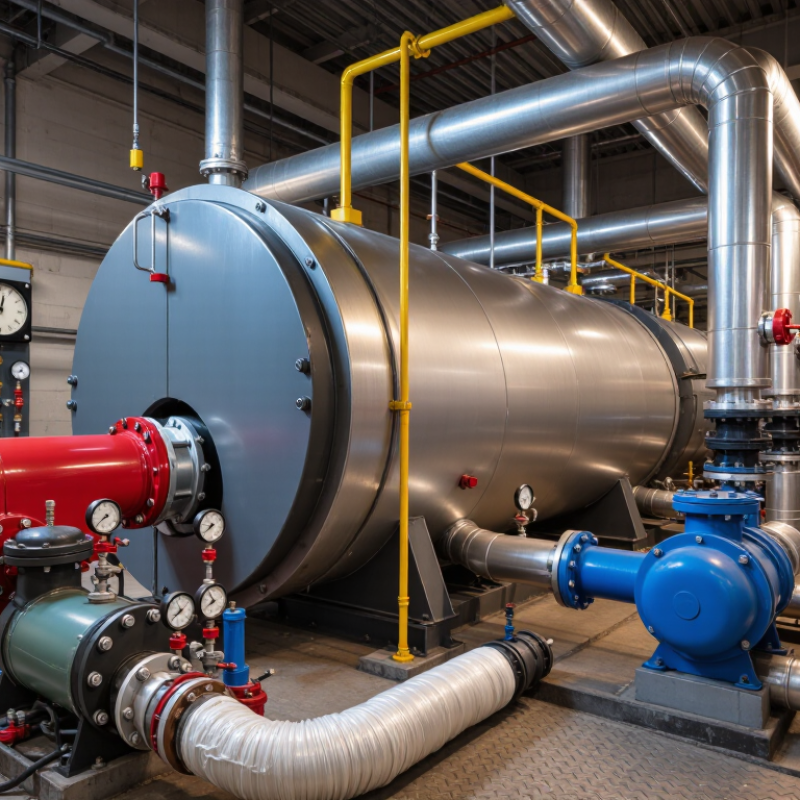
Choosing the right boiler pump starts with system compatibility, not catalogue size.
Match flow rate, head pressure, fluid temperature, pipe diameter, and connection type. A pump that fits physically may still operate poorly. Check whether the boiler requires constant flow, variable flow, or minimum flow protection. The U.S. Department of Energy’s pumping-system guidance identifies potential energy savings of 20–50% through correct sizing and control. Oversizing remains a common mistake. It creates noise, bypass losses, and unnecessary valve throttling.
Energy use also depends on control strategy.
Variable-speed operation can reduce power when heating demand falls. The affinity laws show that pump power changes roughly with the cube of speed. A small speed reduction can therefore make a measurable difference. The International Energy Agency reports that buildings use about 30% of global final energy, so even small circulation loads deserve attention. However, a neat spreadsheet is not enough. Real pipe resistance, air pockets, dirty strainers, and changing water temperatures can disrupt the calculation.
Tips:
Compare the pump curve with the actual duty point. Confirm motor efficiency and control compatibility. Leave service access around the pump. Measure running current after commissioning. Listen for rattling or cavitation during start-up. Installation details matter. Poor alignment, trapped air, or an undersized isolation valve can weaken an otherwise suitable selection. Recheck the system after several heating cycles; the first result may not tell the whole story.


 Close
Close