| Raw Material Capacity | Fresh fish or by-product input | 1–5 metric tons per hour for a small-to-medium plant | Size equipment for average throughput, peak landings, moisture content, and seasonal supply. | Select approximately 15–25% spare capacity if raw material supply is expected to grow. |
| Fish Meal Yield | Finished meal recovered from raw material | Typically about 18–25% of raw fish input, depending on species and composition | Request performance data based on the buyer’s actual raw material analysis rather than generic catalog figures. | Higher yield improves revenue, but excessive drying can reduce protein quality and increase energy use. |
| Final Moisture | Moisture remaining in fish meal | Usually targeted at 8–10% for stable storage | Confirm automatic moisture control, sampling procedures, and uniformity across the product stream. | A stable moisture level reduces spoilage risk and avoids unnecessary thermal energy consumption. |
| Protein Preservation | Thermal exposure and product quality | Use low-temperature or controlled-temperature processing where premium meal quality is required | Compare cooker temperature control, residence time, indirect heating, and laboratory quality results. | Better quality may support a higher selling price but can require a higher initial equipment cost. |
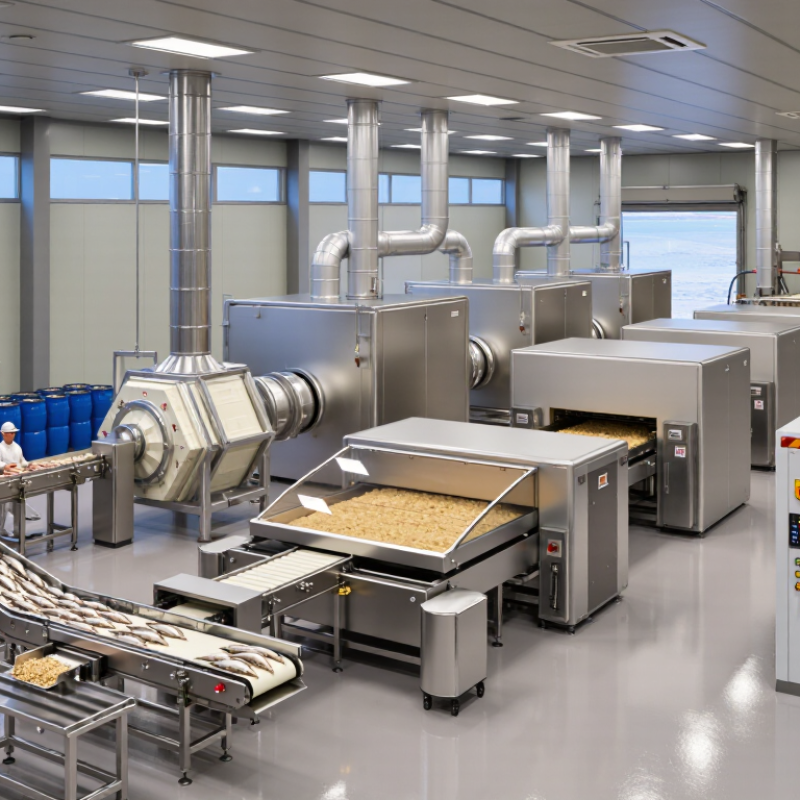
| Core Process Equipment | Required process stages | Cooking, pressing, drying, grinding, screening, conveying, and odor control | Check whether the quotation includes the complete process line or only individual machines. | Incomplete scope can create 10–20% or more in additional installation and integration costs. |
| Indicative Equipment Cost | Capital expenditure for a complete line | Approximately USD 250,000–1,500,000 for small-to-medium processing lines | Compare equivalent capacity, materials of construction, automation, utilities, freight, and commissioning scope. | Use a project-specific quotation; capacity, corrosion protection, and environmental controls cause major price differences. |
| Installation and Civil Works | Costs outside the equipment quotation | Allow approximately 15–30% of equipment purchase cost | Include foundations, building modifications, piping, electrical work, insulation, commissioning, and local permits. | Underestimating site work is a common cause of budget overruns and delayed production. |
| Energy Consumption | Thermal and electrical energy per raw-material input | Compare supplier guarantees using the same moisture, throughput, and operating-hour assumptions | Request separate steam, fuel, electricity, and water figures at rated and reduced loads. | Energy-efficient drying and heat recovery can materially reduce operating cost over the equipment life. |
| Operating Cost Calculation | Cost per metric ton of raw material | Use: labor + energy + maintenance + water + packaging + waste disposal | Build a monthly model using actual local wages, utility tariffs, working days, and raw-material availability. | Separate fixed costs from variable costs to understand the effect of lower seasonal utilization. |
| Labor Requirement | Operators per shift | Often 3–8 operators per shift for a semi-automated small-to-medium line | Confirm automation level, cleaning duties, laboratory checks, material handling, and maintenance coverage. | Automation may increase capital cost while reducing labor dependence and process variation. |
| Supplier Technical Support | Installation, training, and after-sales response | Require documented commissioning, operator training, spare-parts lists, and response commitments | Evaluate service coverage, technician availability, troubleshooting procedures, and remote-support capability. | A lower purchase price may be uneconomical if downtime and imported spare-parts lead times are high. |
| Materials of Construction | Corrosion and hygiene resistance | Use corrosion-resistant steel in wet, salty, and product-contact areas where appropriate | Verify material grades, weld quality, drainage, access panels, and cleanability. | Higher corrosion resistance can reduce repairs and extend service life in marine environments. |
| Environmental Controls | Odor, wastewater, dust, and emissions management | Include condensate handling, odor treatment, dust collection, and wastewater planning | Request emission assumptions and confirm compliance with local environmental requirements before purchase. | Environmental equipment can add 10–25% to project cost but reduces approval and community-risk exposure. |
| Payback Screening | Simple payback period | Target a project-specific payback supported by conservative production and selling-price assumptions | Formula: total installed investment ÷ annual incremental operating cash flow. | Run low, base, and high scenarios for raw-material volume, meal price, energy cost, and downtime. |
| 2026 Expansion Planning | Future capacity and modularity | Reserve space, utilities, control-panel capacity, and connection points for a future 20–30% expansion | Ask whether conveyors, boilers, dryers, and odor systems can be upgraded without replacing the entire line. | Modular design may increase initial planning cost but lowers future expansion disruption and downtime. |
| Procurement Timeline | Time from order to production | Plan approximately 6–12 months for engineering, fabrication, shipping, installation, and commissioning | Obtain a milestone schedule covering design approval, factory testing, delivery, site readiness, and performance testing. | Order critical long-lead components early and include schedule contingency before the 2026 peak season. |



 Close
Close