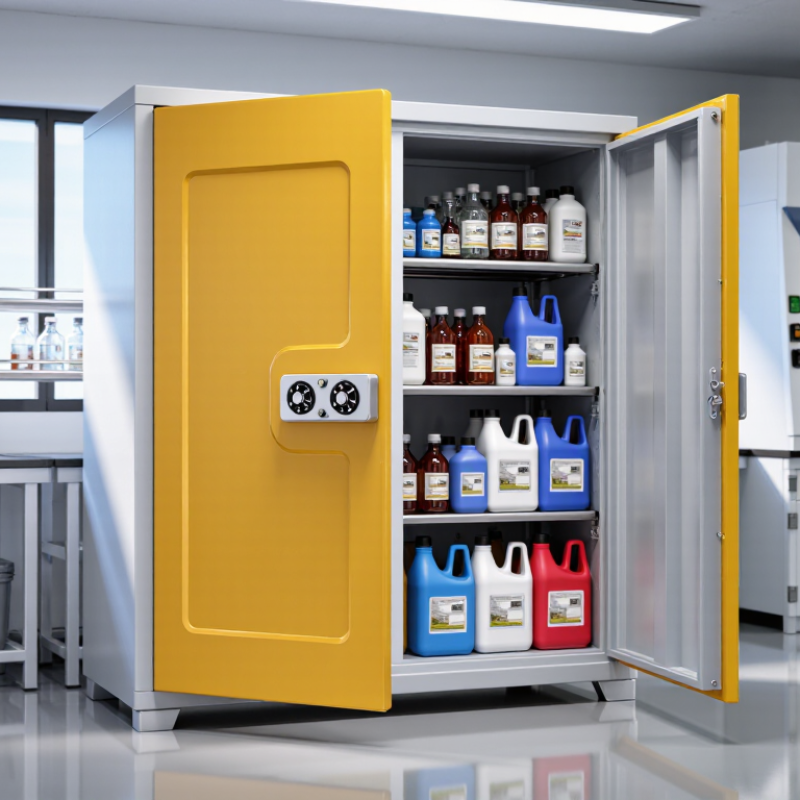
| Fire and flash hazards | Flammable-liquid cabinet | Reduces the likelihood that stored flammable liquids will be exposed to an external ignition source and helps delay fire involvement. | Double-wall construction, protected air space, self-closing doors, spill-retaining shelves, and clear flammable-liquid labeling. | Flammable solvents, alcohols, acetone, toluene, and certain paints or cleaning liquids. | A cabinet does not make flammable liquids nonflammable. Keep ignition sources away and follow applicable quantity limits and local fire-code requirements. |
| Combustible-liquid hazards | Combustible-liquid cabinet | Provides organized, contained storage that can reduce spill spread and unnecessary exposure to heat or ignition sources. | Leak-resistant shelves, raised door sills or a liquid-tight bottom, secure doors, and hazard identification labels. | Some oils, coatings, hydraulic fluids, and other liquids with combustible flash points. | Flash point and storage classification must be confirmed from the current Safety Data Sheet (SDS); not every combustible liquid requires the same cabinet configuration. |
| Corrosive acid hazards | Acid-corrosive cabinet | Controls container damage, leakage, and contact with incompatible materials by providing corrosion-resistant, segregated storage. | Corrosion-resistant interior, leak-containment shelves or trays, secure doors, and acid-specific identification. | Hydrochloric acid, nitric acid, sulfuric acid, and phosphoric acid. | Acids must be segregated from bases, cyanides, sulfides, reactive metals, and other incompatible substances. Nitric acid may require separate oxidizing-acid storage. |
| Corrosive base hazards | Base-corrosive cabinet | Helps prevent leaks and protects nearby equipment and personnel from corrosive contact during routine storage. | Compatible corrosion-resistant surfaces, spill containment, stable shelving, and clear corrosive-material labels. | Sodium hydroxide, potassium hydroxide, ammonium hydroxide, and concentrated alkaline cleaners. | Strong bases should not be stored with acids. Compatibility must be checked for cabinet materials, containers, and nearby chemicals. |
| Oxidizer hazards | Oxidizer cabinet | Separates oxidizing chemicals from fuels and other materials that could intensify combustion or trigger a hazardous reaction. | Dedicated storage, noncombustible or chemically compatible shelving, spill containment, and oxidizer identification. | Hydrogen peroxide solutions, nitrates, permanganates, chlorates, and perchlorates. | Oxidizers should be kept away from flammable liquids, organic materials, reducing agents, and contamination sources. A general-purpose cabinet is not automatically suitable. |
| Toxic or highly hazardous chemical exposure | Secure chemical cabinet | Reduces unauthorized access, accidental contact, and uncontrolled release during storage. | Lockable doors, restricted-access procedures, secondary containment, inventory control, and hazard labels. | Toxic laboratory reagents, certain pesticides, heavy-metal compounds, and highly hazardous process chemicals. | Cabinet storage alone does not control vapor toxicity. Ventilation, exposure controls, PPE, emergency planning, and SDS procedures remain necessary. |
| Reactive and unstable chemical hazards | Specialized reactive-storage cabinet | Provides controlled segregation and reduces the chance of impact, heat, contamination, or contact with incompatible chemicals. | Dedicated compartments where appropriate, secure shelving, temperature controls when required, and prominent hazard labeling. | Water-reactive materials, peroxide-forming chemicals, pyrophoric substances, and certain polymerizing monomers. | Some reactive chemicals require specialized engineering controls, inert-gas systems, refrigeration, or dedicated storage procedures beyond a standard cabinet. |
| Spill and container-failure hazards | Cabinet with secondary containment | Collects small leaks and spills, helping prevent chemical migration to floors, drains, workstations, or incompatible storage areas. | Raised edges, leak-resistant shelves, removable spill trays, liquid-tight bases, and stable container positioning. | Liquid acids, bases, solvents, oils, and laboratory reagents stored in bottles or small drums. | Secondary containment is not a substitute for compatible containers, routine inspections, spill response equipment, or proper disposal procedures. |
| Incompatible-chemical contact | Segregated chemical cabinet system | Reduces the probability that incompatible chemicals will mix during normal storage, a spill, or container failure. | Separate cabinets or compartments, compatibility-based labeling, dedicated trays, and organized inventory placement. | Acids and bases; oxidizers and flammables; water-reactives and aqueous materials; cyanides and acids. | Storage groups must be determined from SDS information and a chemical compatibility chart rather than by alphabetical order alone. |
| Unauthorized access and poor organization | Lockable chemical storage cabinet | Improves access control, inventory visibility, labeling consistency, and housekeeping in laboratories, workshops, and industrial areas. | Lockable handles, adjustable shelves, inventory records, visible hazard labels, and designated storage locations. | Frequently used laboratory chemicals, maintenance chemicals, cleaning agents, and process samples. | Access control must be supported by employee training, written procedures, inspections, and a current chemical inventory. |



 Close
Close