Our company only collects the necessary data and respects your privacy, in accordance with the General Law for the Protection of Personal Data 13.709/2018. By continuing, you confirm that you have read and accepted the Privacy Notice. Privacy Policy.

Medal Pt Br Medal Es

Medal Group

10 Best RO Filtration Systems for Commercial Use

A commercial reverse osmosis purchase is not just a search for the highest gallon-per-day rating. It is a decision about feed-water quality, peak demand, operating hours, and the cost of rejected water. A Ro Filtration System that performs well in a brochure may struggle when incoming water changes or several production lines run at once. Details matter. Think of the shift supervisor checking a pressure gauge, the prefilters waiting for replacement, and the storage tank nearing empty before lunch.

For a useful technical lens, this guide draws on membrane engineer Dr. Mark Wilf’s published work on membrane systems. The following is a paraphrase, not a verbatim quotation: “Match membrane design to feed-water conditions and operating needs, not headline capacity.” That principle helps frame the ten systems compared here. Buyers should examine pretreatment, rated output, recovery, monitoring, service access, and replacement-part availability. Numbers need context. A stated capacity may assume particular water temperature and pressure, conditions a real facility may not maintain.

The strongest choice is rarely the biggest or cheapest unit. It is the system that reliably meets demand while fitting the site’s water profile, staff, and maintenance plan. Some comparisons will remain imperfect; manufacturers do not always report performance under identical conditions. Treat the rankings as a shortlist, then confirm specifications with a qualified water-treatment professional and site-specific water testing. A careful check now can prevent a costly mismatch later.

10 Best RO Filtration Systems for Commercial Use

How Commercial Reverse Osmosis Filtration Systems Work

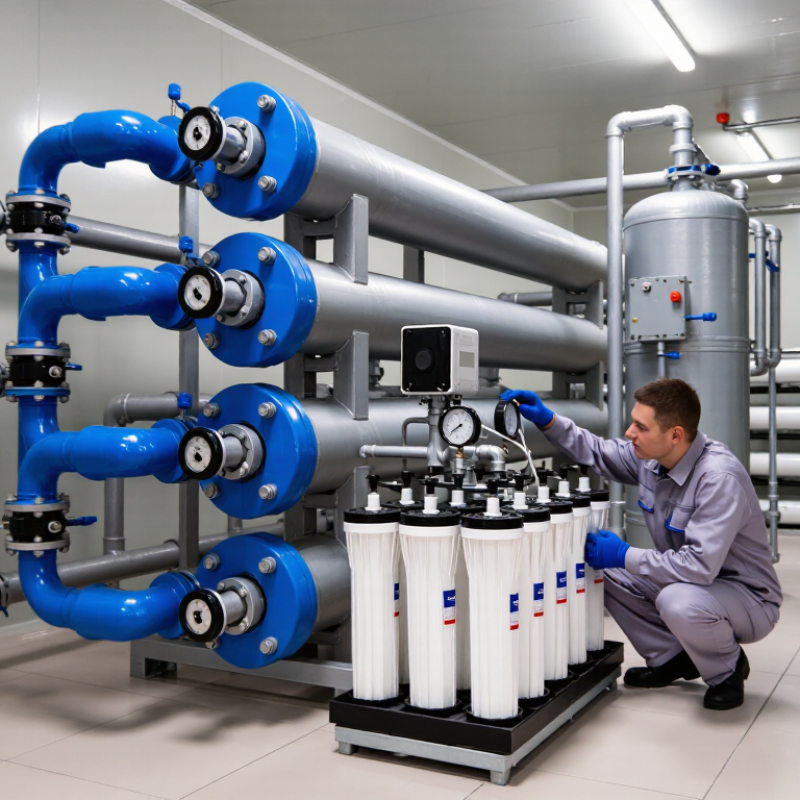
Commercial reverse osmosis (RO) systems reduce dissolved salts by pushing prefiltered water through a semipermeable membrane. Feed water passes through sediment and, when needed, carbon pretreatment before a high-pressure pump sends it into membrane vessels. Pretreatment matters. Fine grit can foul membranes, while chlorine can damage some membrane materials. The right setup depends on a water analysis and the membrane’s operating limits.

At the membrane surface, water passes through while much of the dissolved mineral content remains in a concentrated reject stream. Two outlets. Permeate flows to storage or process equipment; concentrate is discharged or managed according to site requirements. Pressure, temperature, and feed quality all affect output. Operators commonly track conductivity, pressure changes, and flow rates. A sudden shift is a warning, not a diagnosis.

Controls may flush membranes, log alarms, or adjust operation, but automation cannot replace inspection. Staff should check filters, connections, pump noise, and storage-tank sanitation. A clean-looking system can still have a fouled membrane. RO is not a complete maintenance plan. I may be overemphasizing the readings, but they often reveal trouble before production noticeably drops.

10 Best RO Filtration Systems for Commercial Use – How Commercial Reverse Osmosis Filtration Systems Work

Reverse osmosis (RO) uses pressure to push feed water through a semipermeable membrane. The membrane reduces dissolved salts and many other contaminants, producing permeate and a concentrated reject stream. The configurations below represent common commercial system types, not ranked or branded products.

Commercial RO System Type Typical Permeate Capacity Typical Feed Water Indicative Recovery Common Pretreatment Typical Uses How It Fits the Application
Compact light-commercial RO 250–1,000 gallons per day (GPD) Municipal or low-to-moderate salinity brackish water About 50–70% Sediment filtration; carbon treatment when chlorine is present Small cafés, clinics, and low-volume food-service operations A compact arrangement suited to modest demand and limited installation space.
Restaurant and hospitality RO 500–5,000 GPD Municipal water or suitably pretreated well water About 50–75% Sediment filtration, dechlorination where needed, and scale control based on water analysis Restaurants, hotels, beverage stations, and commercial kitchens Provides treated water for multiple points of use; storage tanks can help meet short demand peaks.
Office and campus RO 2,000–20,000 GPD Municipal or brackish groundwater About 50–75% Particle filtration, chlorine removal if required, and antiscalant or softening when indicated Large offices, schools, and institutional drinking-water systems Centralized treatment can supply several users or downstream distribution points.
Boiler-makeup RO 1,000–50,000 GPD Municipal or well water, selected for the boiler’s feed-water requirements About 50–75% Filtration and scale-control pretreatment; softening may be used depending on feed chemistry Commercial and industrial boiler makeup Reduces dissolved solids entering the makeup-water treatment train; additional polishing may be needed for the boiler.
Food and beverage process-water RO 2,000–50,000 GPD Municipal or suitably treated groundwater About 50–75% Sanitary-compatible filtration and dechlorination as needed; pretreatment selected from water analysis Food processing, beverage production, and ingredient-water preparation Can provide a consistent treated-water supply; hygienic design and sanitation procedures matter.
Brackish-water RO for higher dissolved-solids feeds 1,000–50,000 GPD Brackish groundwater or other saline inland sources Often about 50–75%; feed chemistry can require lower recovery Cartridge or media filtration, scale control, and iron or manganese removal when present Facilities using wells with elevated dissolved salts Membrane selection and operating pressure are matched to feed salinity and target permeate quality.
High-recovery brackish-water RO 1,000–50,000 GPD Relatively consistent brackish feed suitable for staged concentration Approximately 65–80% in suitable designs; not appropriate for every feed Thorough filtration and chemistry-based scale control; feed-water testing is essential Sites seeking to reduce reject-water volume where feed quality permits Staging or specialized concentrate management can raise recovery, but scaling risk and concentrate disposal must be assessed.
Single-pass seawater RO 1,000–50,000 GPD Seawater Generally about 35–50% Fine filtration, often including ultrafiltration or equivalent pretreatment, plus seawater-compatible materials Coastal commercial facilities and marine-related operations Uses higher operating pressure than brackish-water RO because seawater has substantially greater salinity.
Containerized or modular seawater RO 10,000–250,000 GPD Seawater or high-salinity source water Generally about 35–50% Intake screening and fine filtration; pretreatment depends on turbidity and biological loading Remote sites, coastal facilities, and temporary or modular water-supply projects Integrates major treatment components in a modular layout; intake quality and reject disposal remain site-specific considerations.
Two-pass RO or RO with EDI polishing 1,000–100,000 GPD, depending on configuration First-pass RO permeate or other suitable pretreated feed Overall recovery varies; often roughly 45–70% for two-pass arrangements First-pass RO pretreatment; additional protection and monitoring for the second pass or EDI stage Laboratories, pharmaceutical support systems, and applications requiring higher-purity water A second RO pass or electrodeionization (EDI) can further reduce ionic content; final quality depends on the complete treatment train.

Capacity and recovery figures are indicative design ranges, not guaranteed specifications. Actual performance depends on feed-water chemistry, temperature, pressure, membrane selection, fouling control, and operating conditions. Confirm design requirements with a qualified water-treatment professional using a current feed-water analysis.

Key Features to Compare in Commercial RO Systems

Commercial RO systems should be compared by daily output, feedwater type, recovery rate, and operating pressure—not membrane count alone. The U.S. National Research Council’s report Desalination: A National Perspective (2008) places seawater RO energy use at roughly 3.5–5 kWh per cubic meter. That range is a useful reference, not a promise for a restaurant or factory: brackish water, temperature, and pretreatment can change actual consumption. Check whether the supplier’s capacity figures match your source water and peak demand. A busy kitchen needs steady flow during service, not just an impressive laboratory rating.

Recovery rate matters. It describes how much feedwater becomes product water, while the remainder carries concentrated salts to drain. Higher recovery can reduce water waste, but may increase scaling risk if hardness and silica are not controlled. The Bureau of Reclamation’s Desalting Handbook for Planners highlights feedwater quality and system design as central planning factors. Ask for a feedwater analysis, stated recovery, and operating-pressure range. Also compare pretreatment requirements, membrane replacement intervals, cleaning steps, and alarms for pressure loss or conductivity changes. Small details count. Who will respond when a filter clogs during a weekend shift? A polished spec sheet may not answer that. I would compare service access and spare-part lead times before choosing; those details are easy to overlook.

Ten Top Commercial RO Filtration Systems at a Glance

Commercial reverse osmosis systems differ by water source, daily demand, and available floor space. This at-a-glance guide compares ten common configurations, not ten universal winners. Actual output depends on feed-water temperature, pressure, and quality.

Light-duty point-of-use units suit a single beverage station. High-flow single-pass systems serve steady kitchen demand, while multi-membrane racks add capacity as needs grow. Two-pass systems provide an extra purification stage for sensitive processes. Brackish-water models handle moderately salty feed water; seawater systems are built for much higher salinity. High-recovery designs reduce concentrate volume, and energy-recovery systems reuse pressure in suitable applications. Skid-mounted units simplify installation, while modular custom systems can fit unusual layouts. That’s the quick view.

A model’s rated capacity can look impressive on paper. Check whether it reflects your actual inlet conditions and operating hours. Ask for expected permeate flow, recovery rate, pretreatment requirements, and membrane replacement intervals. A busy café may value compact servicing access more than maximum output. A food-production site may need tighter water-quality monitoring. Not every facility needs advanced controls, either. That part is easy to overbuy. Have a qualified water-treatment professional test the source water before comparing proposals, and leave room for imperfect demand forecasts.

Choosing an RO System for Your Business’s Water Needs

Selecting a commercial reverse-osmosis system starts with the water your business uses, not the machine’s advertised output. Record daily demand, peak-hour flow, source-water temperature, and feedwater TDS before comparing capacities. An undersized unit may leave a kitchen short during lunch, while an oversized one can cycle inefficiently. Small details matter.

WHO’s Guidelines for Drinking-water Quality describe water below 600 mg/L TDS as generally palatable; above 1,000 mg/L, taste becomes increasingly unpalatable. These are taste observations, not health limits.

Test feedwater for hardness, iron, chlorine, and silica, since each can affect pretreatment and membrane life. Recovery matters, too. A 2009 Water Research review by Greenlee and colleagues reports typical recovery of 35–50% for seawater RO and 75–90% for brackish-water RO. Those figures offer context, not a promise for a restaurant or hotel; feed quality and system design change results.

Ask for permeate output at your actual water temperature and TDS, plus the expected reject-water volume. Check peak demand, storage capacity, and service access. A cramped utility closet can delay filter changes. Even a careful estimate can miss seasonal shifts.

Installation and Maintenance of Commercial RO Systems

Installing a commercial reverse osmosis system starts with the water, not the equipment. Test the feed for hardness, iron, sediment, and chlorine, then select pretreatment suited to those results. A mismatch can foul membranes early. It happens.

Allow clear access to cartridge housings, membrane vessels, and control panels. Leave room to remove a vessel without shifting nearby pipes. Check inlet pressure and expected peak demand; a system sized only for average use may struggle during busy hours. Route the concentrate drain with a visible air gap where appropriate, and install sample points before and after treatment. Those small details make troubleshooting less guesswork.

Maintenance should follow measured performance, not just a calendar. Record feed pressure, pressure across prefilters, product flow, and permeate conductivity at consistent intervals. A rising pressure drop often points to a clogged filter, while changing conductivity may signal membrane scaling or damage. Replace prefilters when readings or operating guidance call for it. Clean membranes only when performance data supports cleaning, and use compatible procedures. Keep a service log, even when readings seem ordinary. Operators sometimes skip it during a rush; later, that missing record makes gradual changes harder to explain. Review the log alongside water use and feed conditions, since seasonal changes can alter system behavior.