Best Coiling and Packing Machines for Efficient Packaging?
In the fast-evolving landscape of packaging technology, the Coiling and Packing Machine has emerged as a pivotal player. According to industry expert Dr. Emily Carter, “Efficiency in packaging begins with the right machinery.” This statement echoes the sentiments of many businesses seeking to enhance their operations. Companies face the challenge of optimizing productivity while managing costs.
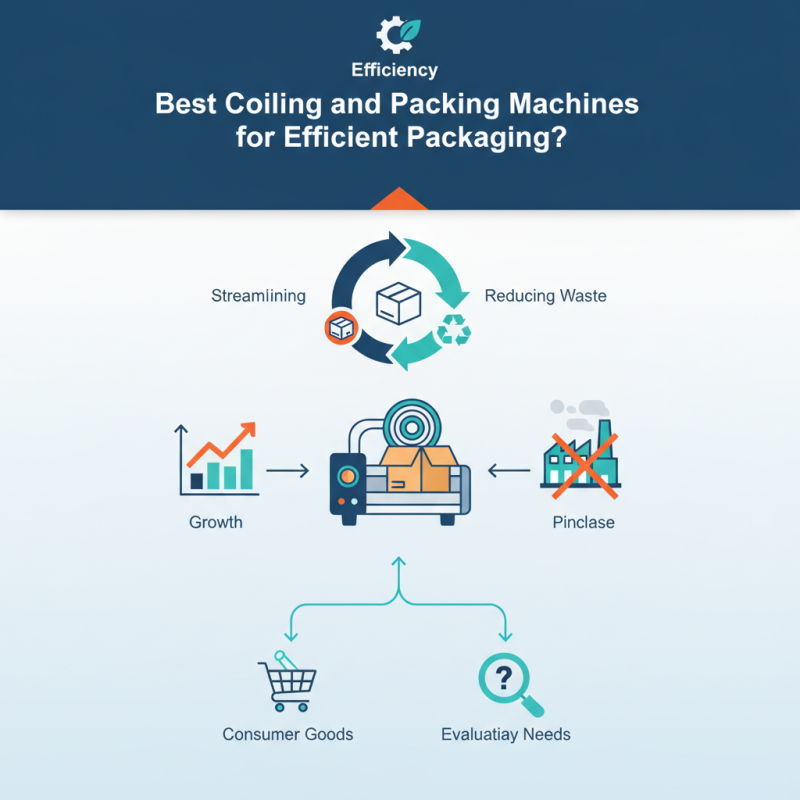
The Coiling and Packing Machine exemplifies this balance. It not only streamlines the packaging process but also reduces material waste. Many manufacturers still struggle with outdated equipment that hinders efficiency. Investing in modern coiling technology is crucial for growth. Outdated methods can lead to inefficiencies and higher production costs, which businesses must confront and rectify.
Moreover, the adaptability of Coiling and Packing Machines is worth noting. They cater to various industries, from consumer goods to pharmaceuticals. However, not every machine meets the unique needs of every business. Companies need to evaluate their specific requirements carefully. Choosing the right machine can be daunting, yet it is a necessary step toward achieving optimal operational efficiency.
Overview of Coiling and Packing Machines in Packaging Industry
Coiling and packing machines play a crucial role in the packaging industry. These machines streamline the process of wrapping and securing products, enhancing efficiency. According to a report by Research and Markets, the global packaging machinery market is expected to grow at a CAGR of 5.2% from 2021 to 2026. This growth highlights the rising demand for advanced coiling and packing solutions.
Many companies still rely on manual packing methods. This can lead to inefficiencies and higher labor costs. A study shows that automated machines can reduce packing time by up to 30%. In addition, errors in manual packing can result in significant waste. This is an area where businesses often overlook potential savings.
The technology behind coiling and packing machines continues to evolve. Newer models feature advanced controls and robotics for better precision. However, not all businesses adopt these innovations promptly. A challenge remains in balancing cost and efficiency. Investing in the latest machinery may require substantial upfront capital. Companies must weigh the benefits against their current operational needs. This ongoing assessment can lead to improved performance over time.
Best Coiling and Packing Machines for Efficient Packaging
| Machine Type | Speed (units/hour) | Coiling Capacity (kg) | Dimensions (L x W x H in mm) | Automation Level | Energy Consumption (kWh) |
| Automatic Coiling Machine | 500 | 100 | 2000 x 800 x 1500 | Fully Automated | 5 |
| Semi-Automatic Packing Machine | 300 | 80 | 1500 x 700 x 1200 | Semi-Automated | 4 |
| Manual Coiling Machine | 150 | 50 | 1000 x 500 x 1000 | Manual | 2 |
| High-Speed Automatic Packing Line | 800 | 120 | 2500 x 900 x 1600 | Fully Automated | 6 |
Types of Coiling Machines and Their Applications in Packaging
Coiling machines play a crucial role in the packaging industry. There are several types of machines tailored for specific packaging needs. For small items, compact coiling machines are ideal. They efficiently handle lightweight products, wrapping them in a protective manner. These machines save time and reduce material waste. Yet, users must be cautious. Sometimes, they may not optimize the spool size for certain items.
In contrast, larger coiling machines are suitable for bulkier packages. These robust machines can manage heavy loads with ease. They often come equipped with advanced technology. This helps ensure precision and consistency. However, they can be expensive to maintain. Users might find that regular adjustments are needed to achieve the desired results.
Different applications are found across industries. In the textiles sector, coiling machines efficiently package rolls of fabric. In electronics, they can wrap circuit boards securely. Each application requires a specific setup, which can be challenging. Mistakes in settings can lead to material damage or inefficient packaging. Fine-tuning these machines is essential for optimal performance.
Key Features to Consider When Choosing a Packing Machine
When selecting a packing machine, consider its capacity. Different machines have various output levels. Choose one that meets your production needs. If your business grows, you might need a machine with higher capacity.
Another key feature is the adaptability of the machine. It should work with different packaging materials. This flexibility allows you to switch between products easily. Think about future products as well. Will the machine accommodate them?
Tips: Always check ease of use. A complex system can slow down operations. Operator training is essential. If a machine is too difficult to use, efficiency suffers. Maintenance is another important aspect. Machines require regular checks and parts replacement. Ensure you understand the upkeep involved before making a decision.
Benefits of Using Automated Coiling and Packing Solutions
Automated coiling and packing solutions streamline the packaging process. They reduce manual labor and improve efficiency. Companies experience faster production rates. Workers can focus on more strategic tasks. This shift leads to higher employee satisfaction.
Using these machines also minimizes errors. Manual packing often leads to inconsistencies. In contrast, automated systems deliver uniform results. They can adapt to various product sizes and shapes, which is an advantage. However, initial setup can be complex, and it requires training.
Automated solutions can be costly initially. Businesses need to weigh the long-term benefits against upfront expenses. Regular maintenance is essential to keep machines in top condition. Sometimes, delays occur due to unexpected breakdowns, affecting workflow. Reflecting on these challenges is crucial to ensure optimal performance.
Efficiency of Automated Coiling and Packing Solutions
Trends and Innovations in Coiling and Packing Technology
The world of coiling and packing technology is rapidly evolving. Over 60% of packaging companies are investing in automation to enhance efficiency. This trend is driven by the increasing demand for faster production rates and lower labor costs. Innovative machines now feature advanced sensors and AI technologies, which allow for precise coiling and packing. These advancements reduce waste and increase productivity.
Some recent industry reports suggest that incorporating machine learning in packing systems can lead to a 30% reduction in errors. This is significant, as even small errors can lead to excess costs and wasted materials. However, the integration of cutting-edge technology presents challenges. Many companies face difficulties in training staff to operate and maintain these sophisticated machines. This can create a gap that undermines the potential benefits of new systems.
Furthermore, the push towards sustainable packaging is reshaping the industry. Reports indicate that 75% of consumers prefer brands that use eco-friendly materials. This shift is prompting manufacturers to rethink their packing processes. Yet, not all innovations meet the expectations for sustainability. The dilemma remains: how can companies remain efficient while also embracing greener practices? Balancing these priorities is a continuous struggle for many in the industry.


 Close
Close