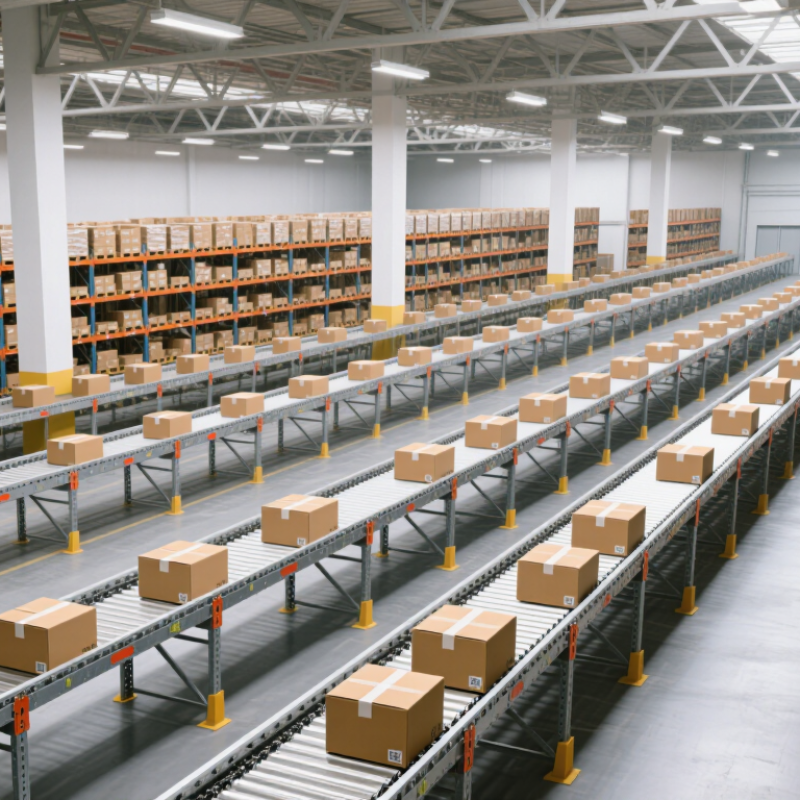
| Gravity Roller Carton Flow Rack | Cartons move from the loading side to the picking side on slightly inclined roller tracks under gravity. | Commonly about 5–80 kg per carton, depending on roller design, carton base, and lane width. | First-in, first-out (FIFO) | Order picking, e-commerce fulfillment, spare parts, food distribution, and fast-moving stock. | Good product visibility, high picking density, reduced walking distance, and automatic carton replenishment. | Requires cartons with reasonably flat and rigid bases; roller spacing and slope must be matched to the load. |
| Wheel Track Carton Flow Rack | Cartons travel over multiple small wheels mounted in parallel tracks. | Usually suitable for light to medium cartons, approximately 3–40 kg per carton. | FIFO | Small-item picking, apparel, consumer goods, light components, and carton-based kitting. | Lower rolling resistance for lightweight packages, flexible lane configuration, and efficient use of vertical space. | Less suitable for very heavy loads, uneven carton bottoms, or damaged packaging. |
| Adjustable Carton Flow Rack | Removable or adjustable dividers and roller tracks allow lane widths and product positions to be changed. | Commonly designed for approximately 5–80 kg per carton, subject to the selected components. | FIFO | Warehouses handling multiple carton dimensions or frequently changing product assortments. | Supports changing SKUs, improves space utilization, and reduces the need for fixed-size storage lanes. | Adjustment takes time, and incorrect lane settings can cause carton jams or unstable movement. |
| Push-Back Carton Flow Rack | A new carton is pushed backward on nested carts or rollers when the front carton is picked. | Often used for medium loads of approximately 10–80 kg per carton. | Last-in, first-out (LIFO) | High-density storage of reserve cartons where FIFO is not mandatory. | Single-aisle access, high storage density, and fewer replenishment aisles than conventional shelving. | Not ideal for date-sensitive inventory; requires controlled loading and unloading to prevent product impact. |
| Pallet-Fed Carton Flow Rack | Pallets are stored on the replenishment side while individual cartons are picked from flow lanes on the opposite side. | Carton lanes commonly handle about 5–80 kg per carton; pallet loads may be approximately 500–1,000 kg per position, subject to design. | FIFO | High-volume distribution centers, supermarket supply, beverage handling, and fast-moving consumer goods. | Combines reserve pallet storage with carton picking and reduces replenishment travel. | Needs more floor height and careful structural design; forklift access must be coordinated with picking operations. |
| Multi-Level Carton Flow Rack | Several levels of carton flow lanes are installed vertically with stairs, platforms, or order-picking access equipment. | Commonly about 5–60 kg per carton, depending on deck, beam, and lane specifications. | FIFO | E-commerce, apparel, medical supplies, small parts, and operations with many active SKUs. | Maximizes vertical space, creates a large number of picking faces, and supports high SKU variety. | Requires appropriate access and safety provisions; replenishment and picking routes must be carefully planned. |
| Flow Rack with Pick-to-Light Integration | Carton flow lanes are combined with electronic lights or displays that identify the picking location and quantity. | Typically used for light to medium cartons, approximately 3–40 kg per carton. | Usually FIFO | High-throughput e-commerce, electronics accessories, pharmaceuticals, and small-item order fulfillment. | Improves picking speed and accuracy while providing real-time task guidance. | Higher initial investment and dependence on power, software, and system maintenance. |



 Close
Close