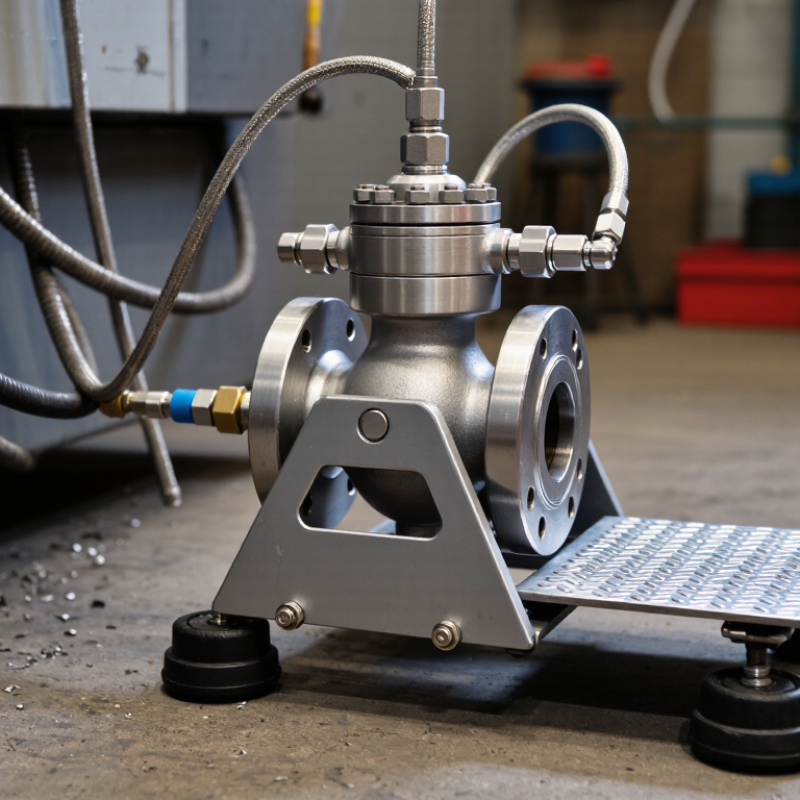
A foot pedal valve is a pneumatic control device operated by the user’s foot. It starts, stops, or redirects compressed air without requiring hand movement.
Inside, a spring-loaded spool or poppet changes the air path when the pedal moves. A three-way valve can pressurize or exhaust one actuator port. A five-way valve can control both directions of a double-acting cylinder. The choice depends on the machine’s movement, pressure, and safety design.
In a typical setup, pressing the pedal sends air to a cylinder. Releasing it may return the spool through spring force, depending on the valve’s configuration. Guards, exhaust silencers, and a locking pedal cover can reduce unintended operation.
ISO 4414 requires pneumatic systems to address safe isolation, stored energy, and controlled exhaust. The U.S. Department of Energy reports that compressed air may consume about 10% of industrial electricity, while leaks can waste 20–30% of compressor output.
That makes correct valve sizing important. A poorly matched valve can cause slow motion, pressure loss, or repeated cycling.
I once assumed a stronger return spring always improved control. It did not. The pedal became tiring, and operators began pressing it from awkward angles.
Practical testing should measure pedal force, response time, leakage, and cylinder behavior under real loads. A clean workshop test is useful, but it can hide dust, oil mist, and vibration found on the production floor.



 Close
Close