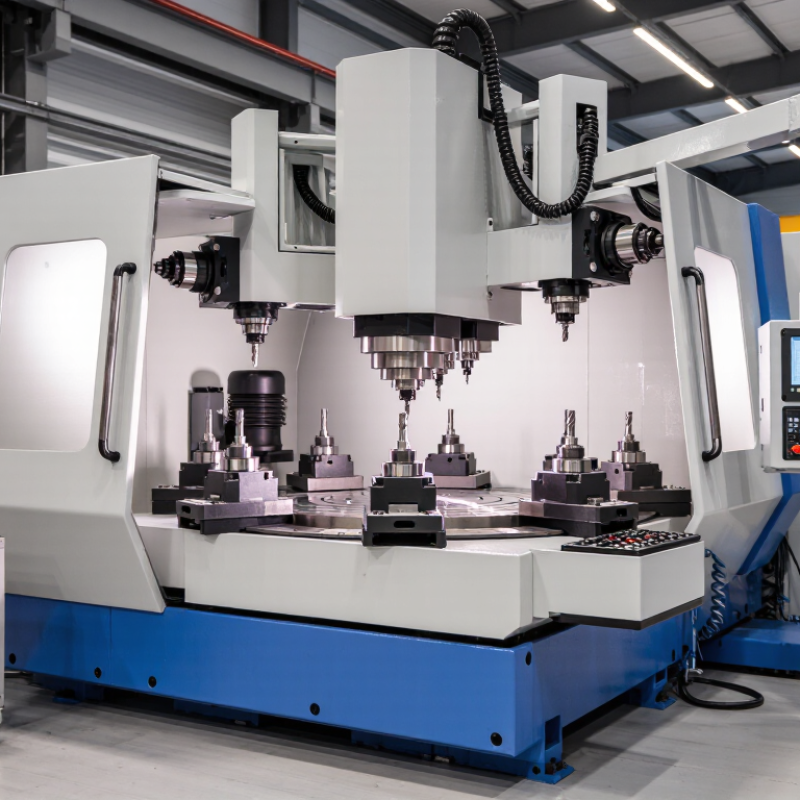
| Equipment Category | Automatic six-sided CNC drilling machine | Designed for panel processing in cabinet, furniture, and interior-fit-out production. The six-sided concept generally covers the top, bottom, front, rear, left, and right faces of a panel. |
| Model Reference | CD-612B-4 | The model designation should be checked against the supplier’s technical sheet because suffixes may indicate spindle configuration, drilling capacity, or production-line arrangement. |
| Typical 2026 Purchase Price | US$35,000–US$75,000 | Indicative equipment-only range for a new six-sided panel drilling system. Final pricing varies with spindle count, automation level, electrical standards, software, tooling, inspection, and delivery terms. |
| Higher-Automation Configuration | US$75,000–US$130,000+ | Applicable when the package includes automatic loading and unloading, barcode or production-data integration, return conveyors, additional drilling groups, or linked production-line controls. |
| Used-Equipment Price Guide | US$15,000–US$55,000 | A broad reference range for used equipment. Condition, operating hours, maintenance records, control-system support, tooling, and transport can materially change the value. |
| Panel Materials | MDF, particleboard, plywood, and laminated furniture panels | The actual material range depends on the cutting tools, clamping method, feed system, and the manufacturer’s recommended processing limits. |
| Processing Directions | Six faces in one automated setup | Six-sided processing can reduce manual repositioning and improve hole-position consistency compared with repeated single-face operations. |
| Common Drilling Functions | Vertical holes, horizontal holes, dowel holes, and connector holes | Available functions depend on the spindle layout and tooling package. Confirm compatibility with cabinet connectors, shelf pins, hinges, and dowel systems before ordering. |
| Typical Workpiece Thickness | Approximately 10–60 mm | This is a common industry reference range for panel drilling equipment; the exact minimum and maximum thickness must be confirmed from the CD-612B-4 specification sheet. |
| Typical Workpiece Length | Approximately 250–3,000 mm | The usable range depends on the infeed design, clamping arrangement, drilling layout, and whether the machine is configured for individual panels or batch production. |
| Typical Workpiece Width | Approximately 100–1,200 mm | Confirm the effective working width, minimum panel size, and edge-clearance requirements before comparing quotations. |
| Spindle-Speed Reference | Approximately 4,000–18,000 rpm | Lower speeds are commonly used for some horizontal drilling operations, while higher speeds may be used for smaller-diameter tools. Actual values depend on spindle type and tooling. |
| Electrical Supply | Three-phase industrial power; commonly 380–415 V, 50 Hz | Voltage, frequency, phase arrangement, and control-cabinet requirements must be matched to the installation site. Regional electrical conversion may add cost. |
| Installed Power Reference | Approximately 15–35 kW | The range may include drilling motors, feed drives, vacuum or pneumatic systems, conveyors, and auxiliary equipment. Request the rated connected load for facility planning. |
| Compressed-Air Requirement | Approximately 0.6–0.8 MPa | Air demand varies by clamping, tool-changing, cleaning, and panel-handling functions. The site compressor should be sized using the supplier’s flow-rate specification. |
| Control and Data Input | CNC control with production-file or cabinet-design data input | Check supported file formats, barcode options, network connectivity, remote diagnostics, and whether software licenses or updates are included in the quoted price. |
| Productivity Reference | Approximately 180–450 panels per 8-hour shift | This is a planning estimate only. Actual output depends on panel size, hole count, drilling pattern, loading method, tool changes, operator workflow, and machine utilization. |
| Tooling and Consumables | Carbide drills, boring tools, collets, and wear components | Tooling is often priced separately. A quotation should identify the included tool set, spare-tool allowance, sharpening requirements, and replacement lead times. |
| Typical Delivery Lead Time | Approximately 8–20 weeks | Lead time depends on machine configuration, customization, production scheduling, inspection, export documentation, and shipping arrangements. |
| Installation and Training Budget | US$2,000–US$10,000 | Budget may cover commissioning, operator training, software setup, travel, and initial process calibration. Remote installation can reduce cost where supported. |
| Freight and Import Allowance | US$3,000–US$15,000+ | Costs depend on machine size, destination, packing, insurance, port handling, customs duties, inland delivery, and local tax treatment. These charges are normally excluded from equipment-only pricing. |
| Recommended Price-Comparison Method | Compare complete installed cost, not machine price alone | Request an itemized quotation covering machine configuration, software, tooling, freight, installation, warranty, training, spare parts, and after-sales service. |
| 2026 Buying Checklist | Verify capacity, accuracy, utilities, software, safety, and support | Before purchase, obtain a sample test using representative panels and drilling patterns, then confirm cycle time, hole accuracy, edge quality, dust control, and changeover procedure. |



 Close
Close