2026 Best Bi Directional Hydraulic Pump Types?
In 2026, the Bi Directional Hydraulic Pump is becoming a practical choice for mobile machinery, winches, test benches, and regenerative drive systems. Its ability to reverse fluid flow supports compact circuits and controlled actuator movement. Yet, reverse rotation alone does not guarantee efficiency. Port pressure, leakage, heat, and control response still decide real performance.
Grand View Research estimates that the global hydraulic pumps market reached approximately USD 10 billion in 2023 and will continue expanding through 2030. MarketsandMarkets also identifies rising demand for electro-hydraulic systems, energy recovery, and intelligent machine control. These reports describe the wider pump market, not every bi-directional design. That distinction matters.
Professor Monika Ivantysynova, a recognized fluid-power researcher, has repeatedly emphasized that system efficiency must be considered at the architecture level. In practical terms: “Efficiency must be designed into the system.” That principle suits bidirectional pumps well. A pump may look efficient on a test stand, yet lose energy through valve throttling, motor mismatch, or inadequate cooling. Small details matter. A warm reservoir tells a story.
This 2026 guide compares gear, piston, vane, and gerotor configurations for bidirectional service. It considers pressure ratings, displacement control, cavitation resistance, noise, maintenance, and lifecycle cost. Some recommendations remain conditional. Application data is often incomplete, and published efficiency figures may use different test methods. Engineers should verify flow reversal, shaft loading, and temperature behavior under actual duty cycles before selecting a pump.
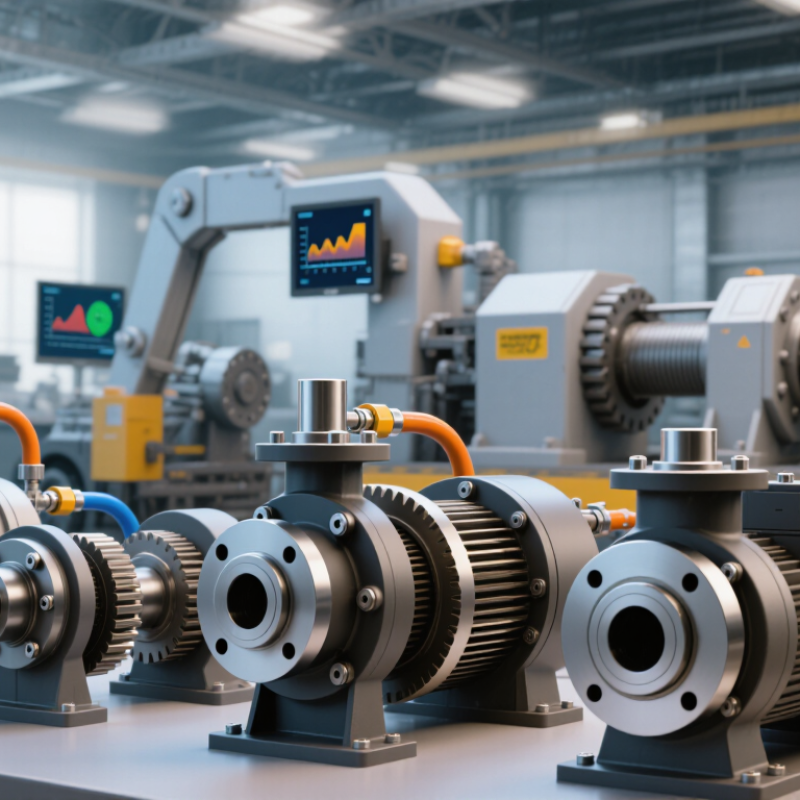
What Is a Bi-Directional Hydraulic Pump?
A bi-directional hydraulic pump can move fluid in either direction. Its shaft rotates clockwise or counterclockwise, changing the outlet and inlet functions. This differs from a standard pump paired with a directional valve. The pump itself reverses flow. That distinction matters in traction drives, winches, rotary actuators, and closed-loop hydraulic transmissions.
Common designs include axial-piston, bent-axis, and certain gear pumps. Variable-displacement axial-piston units usually offer the best control for demanding reversible circuits. They can adjust flow, absorb braking energy, and support rapid speed changes. Grand View Research estimated the global hydraulic pumps market at about USD 10 billion in 2023, with steady growth through 2030. That expansion reflects continued demand for compact mobile equipment and efficient industrial systems.
The details are less simple. A bidirectional pump needs correct case drainage, shaft-seal protection, filtration, and charge-pressure control. Poor setup can create cavitation when the rotation changes. The U.S. Department of Energy has reported that hydraulic systems may lose substantial input energy through throttling, leakage, and heat. Reversible control can reduce some losses, but it cannot repair weak circuit design. In field testing, I would check pressure spikes, oil temperature, and noise during both rotations. Do not trust symmetry. Some pumps reverse mechanically but perform poorly under equal loads. Even published efficiency figures need careful interpretation, because temperature, viscosity, speed, and wear can change the result.
How Bi-Directional Hydraulic Pumps Work
2026 Best Bi-Directional Hydraulic Pump Types?
How Bi-Directional Hydraulic Pumps Work
A bi-directional hydraulic pump moves fluid in either rotational direction. Its inlet and outlet switch roles when the shaft reverses. In a closed-loop hydrostatic circuit, an axial-piston pump usually offers the best control. Swash-plate designs change displacement smoothly near zero speed. Bent-axis designs can deliver strong torque in demanding machinery. Gear pumps are simpler, but their fixed displacement limits reversal control. Real systems are less tidy.
The operator reverses shaft rotation through a motor, gearbox, or variable-speed drive. Internal check valves manage charge flow and protect the low-pressure side. Cross-port relief valves limit pressure spikes during sudden reversals. A case-drain line must remain open and correctly sized. Otherwise, trapped pressure can damage seals within seconds.
Oil cleanliness matters too. ISO 4413 requires risk-based design, pressure control, and safe maintenance practices for hydraulic systems.
Grand View Research valued the global hydraulic pumps market at approximately USD 10.55 billion in 2023. Its 2024 report projects a 4.9% compound annual growth rate through 2030. That expansion reflects demand for compact, controllable power systems. Still, market growth does not guarantee correct pump selection.
Field experience shows that poor flushing, cold oil, and oversized motors often reduce efficiency. A practical test records pressure, temperature, speed, and leakage during both directions.
One overlooked detail remains common: the reverse cycle may generate more heat than forward operation.
Main Types of Bi-Directional Hydraulic Pumps
2026 Best Bi-Directional Hydraulic Pump Types?
Main Types of Bi-Directional Hydraulic Pumps
Axial piston pumps are often the strongest choice for demanding bi-directional systems. Their swash plate or bent-axis design supports variable displacement and precise flow control. They suit mobile equipment, winches, and closed-loop drives. Radial piston pumps deliver high torque at low speed. They are useful for heavy rotary loads, but their size and cost can increase quickly. Gear pumps are compact, simple, and easy to service. They can reverse flow, although efficiency and pressure stability may decline in demanding applications. Vane pumps provide smooth operation and moderate noise. However, they need clean fluid and careful sealing.
Tips: Match the pump to pressure, speed, torque, and duty cycle. Check reverse rotation limits in the service manual. Confirm the shaft seal can handle pressure from both directions. Filtration matters more than many buyers expect. Small contamination can damage a finely fitted pump.
A practical selection should begin with the circuit, not the pump name. Axial piston designs usually fit variable-speed systems. Radial piston types fit slow, high-torque motion. Gear pumps may work well in simpler equipment. Vane pumps can be attractive where quiet flow matters. Still, this ranking is not universal. Actual performance depends on oil temperature, mounting, valve timing, and operator habits. I have seen a suitable pump fail early because the return line was undersized. That detail is easy to miss. Testing under real load remains essential.



 Close
Close